
Running out of cold water three miles from the trailhead is a special kind of misery. You know the feeling: lukewarm water on a hot climb, the kind that does the bare minimum to keep you moving but doesn’t actually feel refreshing. A good insulated water bottle fixes that. A bad one just adds weight.
This guide covers the 10 best insulated water bottles for hiking in 2026, based on field testing across different terrain types, weather conditions, and hike durations. We evaluated insulation performance, lid design, weight, durability, and whether each bottle is actually pleasant to use after the first few months. Not just out of the box.
- Quick Comparison: Best Insulated Water Bottles for Hiking 2026
- Why Insulation Matters on the Trail
- The 10 Best Insulated Water Bottles for Hiking in 2026
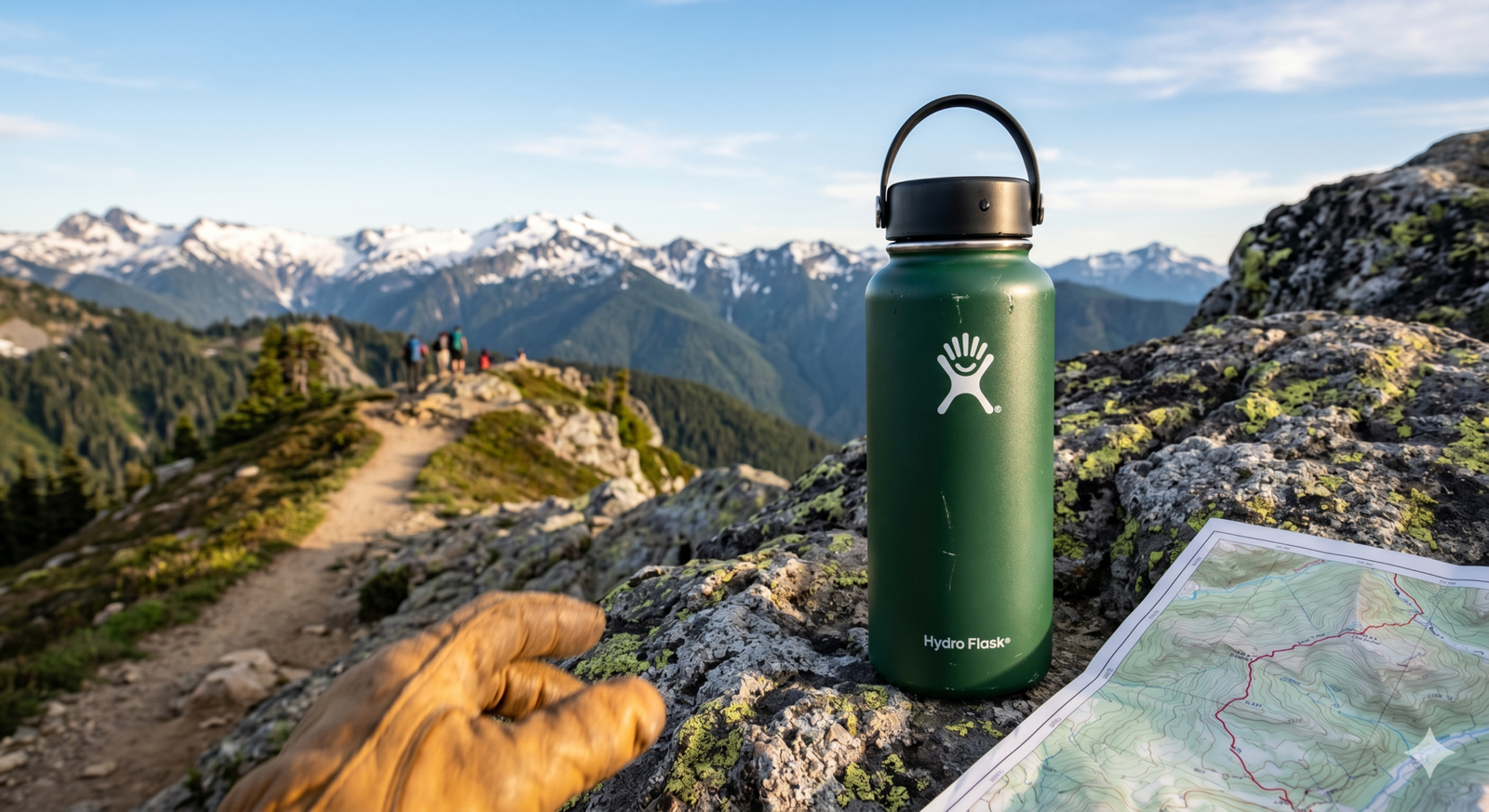
- 1. Hydro Flask Wide Mouth 32 oz — Best Overall
- 2. YETI Rambler 26 oz — Best for Durability
- 3. Owala FreeSip Vacuum Insulated — Best Value Insulated
- 4. Klean Kanteen TKWide Insulated — Best Eco-Friendly Pick
- 5. CamelBak Chute Mag Insulated — Best for Easy Drinking
- 6. Iron Flask Sports Bottle — Best Budget Option
- 7. LifeStraw Go Stainless Steel — Best Filtered Insulated Bottle
- 8. Bivo Trio Insulated — Best for Active, On-the-Move Hikers
- 9. Stanley Quick Flip Go Bottle — Best Mid-Range All-Rounder
- 10. RTIC 32 oz Insulated Water Bottle — Best Premium Performance on a Budget
- How to Choose the Right Insulated Hiking Water Bottle
- Caring for Your Insulated Hiking Bottle
- How Much Water to Bring on a Hike: A Simple Calculator
- Insulated vs. Non-Insulated Water Bottles for Hiking: Which Do You Actually Need?
- Frequently Asked Questions
- What is the best size water bottle for hiking?
- How long do insulated water bottles actually keep water cold?
- Are stainless steel water bottles safe?
- Can I put coffee or hot drinks in a hiking water bottle?
- How do I prevent mold in my water bottle?
- Is a 32 oz water bottle enough for a day hike?
- What’s the lightest insulated water bottle for hiking?
- Can I use my insulated water bottle with a hydration reservoir?
- Final Thoughts
Quick Comparison: Best Insulated Water Bottles for Hiking 2026
|
Bottle |
Capacity |
Weight (Empty) |
Cold Retention |
Price Range |
|---|---|---|---|---|
|
Hydro Flask Wide Mouth |
32 oz |
12.3 oz |
24 hours |
$45–$50 |
|
YETI Rambler |
26 oz |
21.9 oz |
24+ hours |
$38–$45 |
|
Owala FreeSip |
32 oz |
11.5 oz |
24 hours |
$30–$38 |
|
Klean Kanteen TKWide |
32 oz |
11.3 oz |
20+ hours |
$40–$48 |
|
CamelBak Chute Mag |
32 oz |
10.9 oz |
20 hours |
$35–$42 |
|
Iron Flask Sports Bottle |
32 oz |
11.2 oz |
24 hours |
$22–$28 |
|
LifeStraw Go Stainless |
24 oz |
10.4 oz |
24 hours |
$45–$55 |
|
Bivo Trio Insulated |
21 oz |
9.5 oz |
12 hours |
$45–$50 |
|
Stanley Quick Flip |
30 oz |
11.8 oz |
12 hours |
$30–$35 |
|
RTIC 32 oz Insulated |
32 oz |
11.5 oz |
24 hours |
$18–$25 |
Why Insulation Matters on the Trail
Most people buy insulated bottles because they want cold water. That’s fair. But insulation does more than keep your water temperature stable.
A double-wall vacuum-insulated bottle also prevents condensation, which means your pack stays dry. It protects your other gear — phone, maps, snacks — from getting soaked by a sweating bottle. On winter hikes or high-altitude trips, insulation keeps a hot drink actually hot past the first hour.
According to REI’s hiking hydration guide, a moderate hiker needs roughly half a liter of water per hour. In high heat or steep terrain, that climbs to one liter per hour or more. Over a 6-hour hike, that’s 3–6 liters. You’re not carrying all of that at once, but the water you do carry needs to stay palatable. Warm water on a hot day is technically hydrating, but most people drink less of it, which defeats the purpose.
That’s the functional argument for insulation. The other argument is simpler: cold water tastes better, and you drink more of it.
The 10 Best Insulated Water Bottles for Hiking in 2026
1. Hydro Flask Wide Mouth 32 oz — Best Overall
Best for: Day hikes, year-round use, hikers who want versatility
The Hydro Flask Wide Mouth has been a trail staple for years, and the 2026 version hasn’t changed much — because it didn’t need to. Double-wall vacuum insulation keeps water cold for up to 24 hours and hot drinks warm for up to 12 hours, both figures that hold up consistently in real-world testing, not just ideal lab conditions.
The 32 oz size hits the sweet spot for day hikes. Big enough that you’re not constantly rationing, small enough to fit in most backpack side pockets and car cup holders (barely, but it fits). The wide mouth makes filling from a stream or adding ice cubes straightforward, and cleaning is easier than with narrow-mouth designs — important six months in when mold likes to hide in lid crevices.
Lid options are one of Hydro Flask’s real strengths. The Flex Straw Cap is good for one-handed drinking on the move. The Chug Cap is faster for big gulps. The standard Flex Cap is the most leakproof option for stowing in your pack. You can mix and match as your hike demands.
The powder-coat finish grips well with sweaty hands and has held up through repeated drops in field testing without major scuffing. It’s not bulletproof, but it’s close.
What we’d change: The 32 oz feels slightly heavy when full (about 2.5 lbs). If you’re counting grams, this isn’t your bottle. For everyone else, the trade-off is worth it.
Price: ~$45 on Hydro Flask’s official site and major retailers
2. YETI Rambler 26 oz — Best for Durability
Best for: Rough terrain, gear-hard hikers, multi-year use
YETI built its reputation on coolers, and that engineering obsession with cold retention carries over into the Rambler. The 26 oz version is the hiker’s sweet spot — big enough for a few hours on trail, light enough (relatively) that it doesn’t feel like dead weight.
The insulation performance is genuinely impressive. In documented testing, the Rambler showed only minor temperature changes over extended testing periods — results that match years of real-world use across all kinds of terrain and weather.
What makes the Rambler stand out isn’t insulation alone. It’s the stainless steel construction. This bottle has been dropped off kayaks, down hillsides, and onto rocks repeatedly, and it comes back looking mostly fine. Some surface scuffs, no dents, no structural damage. If you’re the kind of hiker who is hard on gear, the Rambler is probably the most honest long-term investment on this list.
The MagDock-compatible lid system is worth noting — the magnetic cap keeps dust and debris off the opening while you’re hiking, which matters more than you’d think on dusty trails.
What we’d change: The Rambler is heavy for its size. At 21.9 oz empty, it’s significantly heavier than most competitors in the same capacity range. Not a deal-breaker for day hikes or car camping, but for ultralight backpacking, you’ll want something else.
Price: ~$38–$45 depending on size at YETI’s website
3. Owala FreeSip Vacuum Insulated — Best Value Insulated
Best for: Budget-conscious hikers, everyday carry that doubles as trail use
The Owala FreeSip costs roughly $30–$38 and outperforms bottles in the $50 range on most of the metrics that matter for day hiking. Triple-layer insulation keeps water cold throughout a full day of trail use — we’ve seen ice remain partially intact after several hours in direct sun, which is more than the bottle’s marketing claims are worth.
The FreeSip’s signature feature is its dual-opening lid. One smaller opening with a built-in straw for controlled, one-handed sipping; a wider opening for faster drinking or chugging when you’re parched at a summit. The locking mechanism on the lid is intuitive and genuinely prevents accidental spills — you won’t reach into your pack to find a soaked bag.
One honest limitation: the FreeSip doesn’t handle hot liquids. It’s designed specifically for cold beverages, so if you want to bring hot coffee or soup on a cold morning hike, this isn’t the right bottle. For warm-weather hikers focused on cold water, though, it’s hard to beat for the price.
The tapered base fits in most car cup holders, which sounds like a minor detail until you’re driving to the trailhead and reaching for your water.
What we’d change: No hot liquid compatibility limits versatility for year-round hikers.
Price: ~$30–$38 at Owala’s website and major retailers
4. Klean Kanteen TKWide Insulated — Best Eco-Friendly Pick
Best for: Environmentally conscious hikers, taste-sensitive users, clean material preferences
Klean Kanteen has been making stainless steel bottles since 2004, before it was a mainstream category. The TKWide is their flagship insulated bottle, and it earns its place on this list for a few specific reasons.
The construction is 90% recycled stainless steel, which is genuinely unusual in this space. Most brands offer sustainability marketing; Klean Kanteen offers sustainability substance. The metal straw included with certain lid configurations is also a notable detail — it doesn’t impart the plastic taste that many testers notice with plastic straw options.
Cold retention sits at 20+ hours in most real-world conditions. Not quite in the Hydro Flask or YETI tier, but close enough that you won’t notice the difference on a standard day hike. The Café Cap lid is one of the cleanest designs in the category — simple, leakproof, and easy to clean without disassembly.
The TKWide’s wide mouth accommodates standard water filter attachments, which makes it useful for backpackers who plan to refill from natural sources. Klean Kanteen’s website also offers good documentation on compatible accessories.
What we’d change: The lid options aren’t as extensive as Hydro Flask’s ecosystem. Limited choices if you like swapping between styles.
Price: ~$40–$48
5. CamelBak Chute Mag Insulated — Best for Easy Drinking
Best for: Hikers who prefer a smaller opening for controlled sips, warm-weather trail use
The CamelBak Chute Mag solves a specific problem: the wide-mouth bottles that are easy to fill and clean are often annoying to drink from while moving. Water sloshes toward your face unpredictably. The Chute Mag’s angled, smaller spout gives you a controlled, consistent flow without having to tilt the bottle aggressively.
The magnetic cap attaches securely when closed and snaps out of the way cleanly when open. You won’t be fishing for a loose cap while navigating rocky terrain. Double-wall vacuum insulation keeps water cold for around 20 hours in testing — slightly less than top-tier competitors, but more than adequate for any day hike.
At 10.9 oz empty (32 oz version), it’s one of the lighter options on this list while still offering solid insulation. The 18/8 stainless steel interior is BPA-free and doesn’t retain flavors between uses, which matters when you alternate between plain water and electrolyte mixes.
Available in multiple sizes from 20 oz to 64 oz. The 32 oz version is the hiker’s sweet spot for day trips.
Price: ~$35–$42 at CamelBak’s website and outdoors retailers
6. Iron Flask Sports Bottle — Best Budget Option
Best for: Hikers on a tight budget, first-time buyers, backup bottles
The Iron Flask shouldn’t work as well as it does at this price point. It comes in at $22–$28 for a 32 oz bottle with three lid options included — a straw lid, a chug lid, and a standard screw cap. That’s a complete hydration setup for about the price of a movie ticket.
The double-wall vacuum insulation claims 24-hour cold retention. In independent testing, real performance lands closer to 16–18 hours — still excellent for a full day on trail. The powder-coated exterior provides solid grip and reasonable scratch resistance.
The three-lid system means you’re covered for different situations: the straw lid for casual sipping, the chug lid for fast hydration breaks, the standard cap when you want to minimize leak risk in your pack. Most bottles in this price range give you one lid option.
The finish isn’t as refined as YETI or Hydro Flask. The powder coat shows wear faster, and the lid mechanisms feel slightly less precise. But the core function — keeping water cold on a hike — is accomplished reliably.
With nearly 100,000 reviews and a 4.6-star average on Amazon, user consensus is hard to argue with.
Price: ~$22–$28
7. LifeStraw Go Stainless Steel — Best Filtered Insulated Bottle
Best for: Backcountry hikers, international trekkers, anyone refilling from natural water sources
The LifeStraw Go Stainless is a niche pick, but an important one. It combines double-wall vacuum insulation with a built-in two-stage filtration system — a hollow fiber membrane filter that removes bacteria, parasites, and microplastics, plus an activated carbon capsule that improves taste and reduces chlorine.
For hikers who plan to refill from streams, lakes, or questionable taps, this eliminates the need to carry a separate filter. You fill the bottle from whatever water source is available and drink through the straw. The filter handles the rest.
LifeStraw’s filtration technology has been tested against EPA drinking water standards and WHO guidelines. The membrane filter is rated for up to 1,000 gallons (4,000 liters) before replacement — enough for several seasons of trail use.
Cold retention is solid, keeping water refreshingly cold even on hot days of trail use in testing. The main limitation is PFAS contamination: the LifeStraw filter doesn’t remove per- and polyfluoroalkyl substances, which are a concern in some water sources near agricultural land or industrial areas.
For remote backcountry trips where filtration matters more than maximum insulation performance, this is the most practical all-in-one option.
Price: ~$45–$55
8. Bivo Trio Insulated — Best for Active, On-the-Move Hikers
Best for: Trail runners, fast hikers, anyone who drinks while moving without stopping
The Bivo Trio is built around a single idea: you should be able to drink without squeezing, tilting, or fiddling. The high-flow sports nozzle delivers water at a consistent, strong rate the moment you tip the bottle. No squeeze required. For active hikers who want to hydrate without breaking stride, that’s a genuinely useful design.
At 21 oz, the Bivo is smaller than most bottles on this list. Insulation keeps drinks cold for over 12 hours in warm conditions, which is less than the top performers but adequate for half-day hikes and trail runs. The 100% recyclable stainless steel construction is honest on the material front, and the grippy silicone coating keeps the bottle secure in sweaty hands and reduces rattle noise in packs.
The Bivo fits most standard water bottle cage on bikes, which makes it double-useful for hike-and-ride days.
Honest downside: at $49, it’s priced like a premium bottle but sized like a backup. Most day hikers will want to carry a second bottle or know they’ll hit water sources regularly.
Price: ~$45–$50 at Bivo’s website
9. Stanley Quick Flip Go Bottle — Best Mid-Range All-Rounder
Best for: Everyday hikers, casual trail use, hikers who want one bottle for everything
The Stanley Quick Flip sits between the budget and premium tiers without apologizing for it. One-push lid mechanism, double-wall vacuum insulation, a design that works for both trail use and the drive to the trailhead. Cold retention runs around 12 hours — shorter than the top performers, but Stanley is honest about this in their specs.
What it does unusually well is pack integration. The slim profile slots into backpack side pockets without the struggle that wider bottles create. The locking ring prevents the lid from accidentally opening in your bag. Both the lid and bottle are dishwasher safe (top rack), which sounds boring until you’ve spent twenty minutes hand-cleaning a lid with eight separate gaskets.
The 18/8 stainless steel is rust-proof, BPA-free, and doesn’t affect taste. Available in multiple sizes. The 30 oz is the most popular for hikers.
Price: ~$30–$35
10. RTIC 32 oz Insulated Water Bottle — Best Premium Performance on a Budget
Best for: Hikers who want YETI-level insulation without paying YETI prices
RTIC positions itself directly against YETI and Hydro Flask on performance metrics. The 32 oz bottle kept water chilled for 10 hours in ice-water testing and showed minimal temperature rise even after 26+ hours in one documented independent test — performance that matches or exceeds bottles costing twice as much.
The finish is slightly less refined than the premium brands. The powder coat shows scuffs faster, and the lid mechanism doesn’t have quite the satisfying precision of a YETI lid. But if your priority is insulation performance per dollar, RTIC is the most rational choice on this list.
Available in multiple colors and sizes. Customer support has improved noticeably compared to earlier years based on current user feedback.
Price: ~$18–$25
How to Choose the Right Insulated Hiking Water Bottle
Capacity: Match Your Hike Length
This is the most common buying mistake. People either overestimate how much they can carry or underestimate how much they’ll drink.
REI’s hydration guide puts moderate hiking water needs at roughly half a liter per hour, climbing to one liter or more per hour in high heat or steep terrain. Run that math against your typical hike:
- 2-hour casual hike: 16–32 oz is adequate
- 4-hour moderate hike: 32–64 oz, or plan a refill point
- 6+ hour strenuous hike: 64 oz minimum, or use a filter bottle with natural sources
If you’re hiking in a region with reliable water sources and carrying a filter, you can manage with a smaller bottle. If you’re in a dry desert environment with no sources for 10 miles, carry more than you think you need.
Insulation Type: Vacuum vs. Foam
All the bottles on this list use double-wall vacuum insulation — two stainless steel walls with a vacuum between them that slows heat transfer dramatically. This is the standard for trail use because it provides the best cold retention without adding significant weight.
Foam-insulated options (like the CamelBak Podium Chill) exist for squeeze bottles and bike cages. They’re lighter and easier to use one-handed, but they lose temperature faster — ice is typically gone within 4 hours compared to 24+ hours for vacuum-insulated steel bottles.
For anything beyond a 2-hour hike, vacuum insulation is worth the slight extra weight.
Lid Design: The Most Underrated Factor
Lid design is where most buying decisions go wrong. People focus on insulation specs and ignore how they’ll actually drink from the bottle on trail.
Straw lids are good for casual sipping without tilting the bottle. They work well for hikers carrying bottles in their hands or a hip belt pouch.
Chug caps allow fast, high-volume drinking. Good for summit breaks or hot climbs where you need a lot of water quickly.
Wide-mouth screw tops are the most leakproof option for pack storage, but require two hands to use. Not ideal for drinking while moving.
Dual-sip designs (like the Owala FreeSip) try to combine straw sipping with chug access. They work surprisingly well.
Think about how you actually drink on trail. If you barely touch your water while moving and prefer big sips at rest stops, a standard screw cap is fine. If you drink frequently while hiking, you want something operable with one hand.
Weight and Packability
Empty weight matters more than most buyers account for. A 32 oz YETI Rambler weighs 21.9 oz empty — before you add water, that’s already 1.4 lbs. A Hydro Flask Wide Mouth 32 oz weighs 12.3 oz. That 9.6 oz difference doesn’t sound dramatic, but across a 10-mile hike, you’ll feel it.
For ultralight backpacking, consider soft flasks like the HydraPak Flux, which collapse when empty and weigh under 2 oz. They don’t insulate, but on a weight-critical trip, that trade-off can make sense.
For day hiking and car camping where weight is less critical, vacuum-insulated steel is the right call.
Material: Stainless Steel vs. Plastic vs. Alternatives
Stainless steel is the dominant material for insulated hiking bottles in 2026 for good reasons. It’s durable, taste-neutral, naturally BPA-free, and handles drops better than most alternatives. The 18/8 grade (18% chromium, 8% nickel) used by most quality brands resists rust and corrosion reliably.
Plastic bottles like the Nalgene Wide Mouth are lighter and often cheaper, but they don’t insulate. Water temperature tracks the ambient temperature — warm on a hot day, cold (and potentially frozen) on a winter hike.
Glass bottles offer the cleanest taste profile but bring obvious durability problems on rocky terrain. They’re better suited for office use than trail use.
Mouth Width: Wide vs. Narrow
Wide-mouth bottles (openings of roughly 2 inches or more) are easier to fill from awkward water sources, easier to add ice or electrolyte tablets, and easier to clean. They tend to be slightly harder to drink from while moving without a straw lid.
Narrow-mouth bottles (openings under 1.5 inches) are more natural for drinking on the go but harder to clean and refill. They typically pair with sport caps or straw lids.
For hiking, wide-mouth designs are generally the better choice because of the refill and cleaning advantages.
Caring for Your Insulated Hiking Bottle
An insulated bottle that’s well-maintained keeps performing for years. Most failures come from neglect, not design flaws.
Daily: Rinse the bottle and lid with warm water after each use. Leave the lid off to air dry fully — trapped moisture is where mold starts.
Weekly: Deep clean with a long-handled bottle brush and mild dish soap. Disassemble any gaskets or straw components and clean them separately. The CDC’s guidance on water container cleaning recommends periodic sanitization with a diluted bleach solution (1 teaspoon bleach per quart of water) for containers used in backcountry settings.
What to avoid: Putting vacuum-insulated bottles in the freezer (water expansion can compromise the vacuum seal), using abrasive scrubbers that scratch the interior coating, or leaving electrolyte mixes or flavored drinks to sit in the bottle for extended periods without cleaning. Electrolytes in particular can leave residue that affects taste and eventually degrades the interior.
Most modern stainless steel bottles are dishwasher safe on the top rack. Check the specific bottle’s guidelines — some lid mechanisms are better hand-washed to preserve the gaskets.
How Much Water to Bring on a Hike: A Simple Calculator
Getting this wrong in either direction causes problems. Too little water leads to dehydration; too much adds unnecessary weight.
The baseline, according to REI’s hiking hydration resources, is half a liter (about 17 oz) per hour of moderate hiking in moderate temperatures.
Adjust that baseline based on:
Increase intake if: – Temperature is above 80°F (27°C) – You’re gaining significant elevation (above 8,000 feet / 2,400 meters) – You’re carrying a heavy pack – The terrain is technical or strenuous – You tend to sweat heavily
Decrease intake if: – The hike is mostly flat and shaded – Temperatures are mild (60–70°F / 15–21°C) – You’re a smaller-framed hiker
For reference: – 2-hour hike, moderate conditions: 1 liter (34 oz) minimum – 4-hour hike, moderate conditions: 2 liters (68 oz) minimum – 6-hour strenuous hike in heat: 4–6 liters
On hikes over 2 hours in hot conditions, electrolytes matter too. According to sports medicine research published through Mass General Brigham, even mild dehydration (as little as 2% of body weight in fluid loss) measurably impairs physical and cognitive performance. Sodium lost through sweat needs to be replaced — plain water alone isn’t enough for long, sweaty hikes.
A simple rule: if you’re sweating consistently, add an electrolyte packet or two to your water every few hours.
Insulated vs. Non-Insulated Water Bottles for Hiking: Which Do You Actually Need?
Non-insulated bottles have real advantages. They’re lighter, often cheaper, and for short hikes or cold-weather use, the insulation doesn’t matter much.
The Nalgene Wide Mouth (about $15) is a classic example. Virtually indestructible, lightweight at 6.25 oz, available in 32 oz and 48 oz sizes, dishwasher safe, compatible with most water filter attachments. For a backpacker counting ounces or a casual hiker on a budget, it’s genuinely the right call.
Insulation starts earning its keep when: – Your hike is 3+ hours in warm weather – You want to carry hot drinks for cold-weather hikes – You know your water source is warm and you want it cold by the time you reach it – You’re doing back-to-back hiking days and want cold water waiting in the car at the trailhead
The extra 4–10 oz of weight from insulation is a reasonable trade for most day hikers. For ultralight backpackers who plan every ounce, the calculus changes.
Frequently Asked Questions
What is the best size water bottle for hiking?
For most day hikes, 32 oz is the sweet spot. It’s enough water for 1–2 hours of moderate hiking, fits most backpack side pockets, and doesn’t add excessive weight. For longer hikes or hot conditions, a 40–64 oz bottle, or carrying two smaller bottles, makes more sense.
How long do insulated water bottles actually keep water cold?
Quality double-wall vacuum-insulated bottles (Hydro Flask, YETI, Klean Kanteen) keep water cold for 24 hours under normal conditions. In direct sun or extreme heat, expect 12–18 hours of noticeably cold water with ice, and cold (but not icy) water beyond that. Budget options like Iron Flask tend to perform closer to 16–18 hours despite 24-hour claims.
Are stainless steel water bottles safe?
Yes. Food-grade 18/8 stainless steel (the grade used by all reputable brands) is non-reactive with water and doesn’t leach chemicals. It’s naturally BPA-free and doesn’t retain flavors or odors. It’s among the safest materials available for water storage. The FDA’s guidance on food contact materials classifies stainless steel as generally recognized as safe.
Can I put coffee or hot drinks in a hiking water bottle?
Most vacuum-insulated stainless steel bottles handle hot liquids well — Hydro Flask, YETI Rambler, Klean Kanteen, and Stanley all explicitly support hot beverages. Notable exceptions include the Owala FreeSip and Bivo Trio, which are designed for cold beverages only. Always check the manufacturer’s specs before adding hot liquids.
How do I prevent mold in my water bottle?
Mold in water bottles almost always comes from one of two things: not drying fully between uses, or not cleaning lid components thoroughly. After every use, rinse the bottle and remove and rinse the lid’s gaskets and straws. Leave the bottle open to air dry completely — don’t cap it while still wet. Once a week, run everything through the dishwasher or do a thorough hand wash with a bottle brush.
Is a 32 oz water bottle enough for a day hike?
Depends on the hike. For a 2-hour moderate hike in mild weather, yes, 32 oz is sufficient. For a 6-hour strenuous summer hike, 32 oz will run out fast. Plan based on the half-liter-per-hour baseline and factor in your specific conditions. On longer hikes, carry a water filter so you can refill from trail sources.
What’s the lightest insulated water bottle for hiking?
Among vacuum-insulated steel options, the Bivo Trio Insulated (9.5 oz empty, 21 oz capacity) and CamelBak Chute Mag (10.9 oz empty, 32 oz) are among the lightest. If you’re willing to trade some insulation performance for weight, soft-flask options like the Hydrapak Flux weigh under 2 oz but don’t insulate.
Can I use my insulated water bottle with a hydration reservoir?
Hydration reservoirs (bladder systems) are a separate hydration option that sits in your pack and connects to a drink tube. They’re not used in combination with insulated bottles — it’s typically one or the other. Reservoirs offer hands-free drinking, bottles offer better temperature control. Many hikers carry both: a reservoir for easy access to bulk water, a small insulated bottle for a cold drink at breaks.
Final Thoughts
The Hydro Flask Wide Mouth 32 oz is still the most balanced pick for most hikers in 2026 — solid insulation, versatile lid options, proven durability, and wide availability. If budget is tight, the Iron Flask delivers genuine performance for less than half the price.
For heavy-use hikers who put gear through serious punishment, the YETI Rambler’s durability justifies the weight penalty. For backcountry trips where water sources are uncertain, the LifeStraw Go is the most practical all-in-one solution.
The “best” bottle is the one you’ll actually grab before every hike. That means it needs to work reliably, be easy to use mid-trail, and be easy enough to clean that you don’t skip the post-hike rinse. Get those basics right and the finer specs take care of themselves.
Stay hydrated out there.