
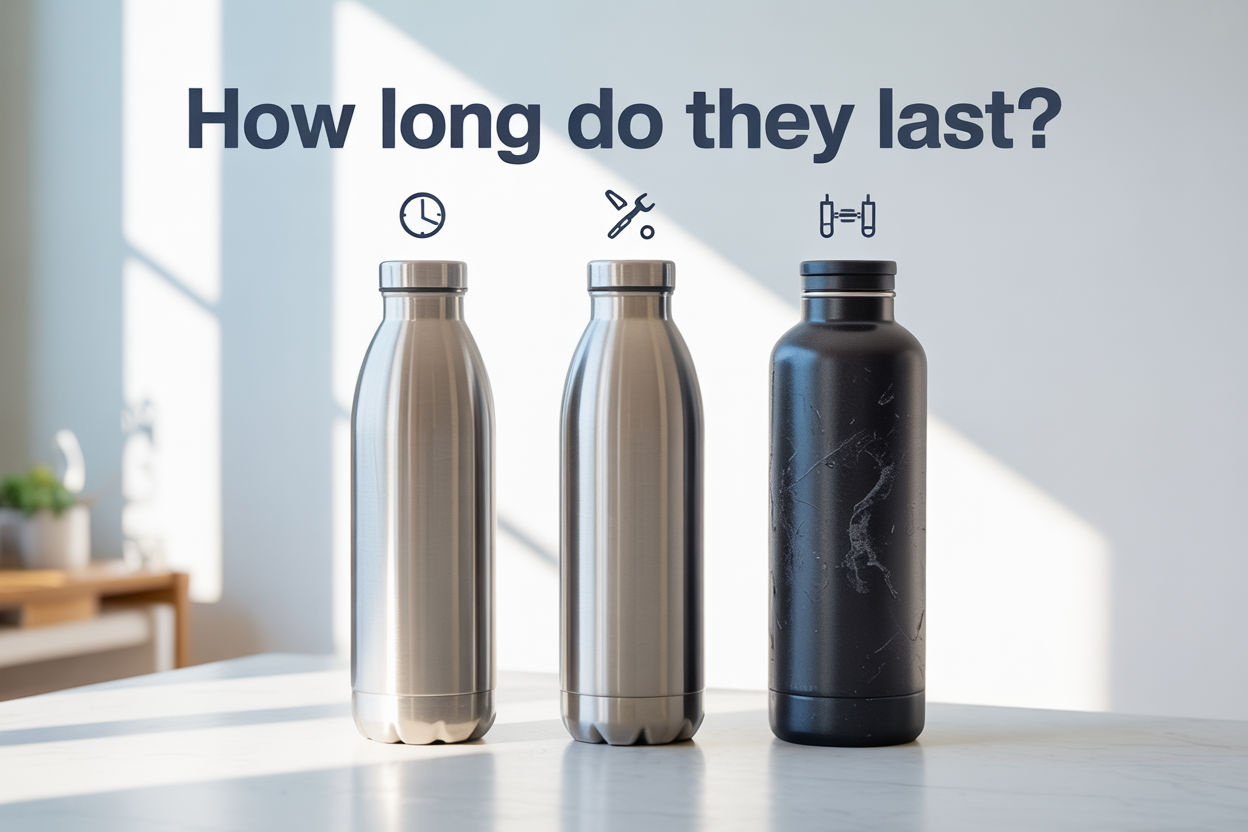
How long do insulated water bottles last? If you’ve invested in a quality insulated bottle, you’ll be happy to know these workhorses can keep you hydrated for 10-15 years or even longer with proper care.
This guide is for anyone who owns an insulated water bottle or is considering buying one – whether you’re an outdoor enthusiast, gym-goer, commuter, or just someone who wants to stay hydrated while reducing plastic waste. We’ll help you understand what affects your bottle’s lifespan and how to get the most out of your investment.
We’ll cover the key factors that impact insulated bottle durability, from daily use patterns to cleaning habits and beverage choices. You’ll also learn essential care practices that can extend your bottle’s life by years, plus clear warning signs that indicate it’s time for a replacement. By the end, you’ll know exactly how to maximize your bottle’s lifespan and understand why these durable companions are worth every penny.
- Understanding Insulated Water Bottle Lifespan
- Key Factors That Impact Bottle Longevity
- Essential Care Practices to Maximize Lifespan
- Clear Warning Signs Your Bottle Needs Replacement
- Advantages of Long-Lasting Insulated Bottles
- Economic and Environmental Value
- Final Thoughts
- FAQs
- How often should I replace my insulated water bottle?
- Can dents affect my bottle's insulation performance?
- What's the difference between cheap and expensive insulated bottles in terms of longevity?
- How do I know if my vacuum seal is still working?
- Is it safe to use an old insulated water bottle?
- Can I repair a damaged insulated water bottle?
- How does water quality affect my bottle's lifespan?
Understanding Insulated Water Bottle Lifespan
Quality Stainless Steel Bottles Last 10-15+ Years with Proper Care
When considering insulated water bottle lifespan, quality stainless steel construction stands as the foundation for exceptional longevity. Premium stainless steel water bottles demonstrate remarkable durability, typically lasting anywhere from 10 to 12 years with appropriate care and maintenance. What’s particularly impressive is that many users report their bottles remaining in excellent condition for over 15 years, showcasing the true potential of well-crafted insulated drinkware.
The key to this extraordinary lifespan lies in the inherent properties of high-grade stainless steel, which resists corrosion, maintains structural integrity under stress, and withstands daily wear and tear. This material choice directly impacts how long water bottles last, making the initial investment in quality construction worthwhile for long-term use.
Premium Brands Outperform Cheaper Alternatives Significantly
The disparity in water bottle quality factors becomes evident when comparing premium brands to budget alternatives. Premium manufacturers invest in superior materials and construction techniques that directly influence insulated bottle durability. These high-end brands utilize thicker gauge steel, which provides enhanced resistance to denting and deformation during everyday use.
Additionally, premium brands employ better welding techniques that create seamless joints and prevent potential failure points. The silicone gaskets used in quality bottles are engineered to maintain their flexibility and sealing properties over extended periods, unlike cheaper alternatives that may deteriorate within months.
This attention to detail means that while cheaper alternatives might only last a few years before showing signs of wear or failure, premium brands continue performing optimally well beyond the decade mark. The investment in quality translates directly to extended vacuum flask longevity.
Vacuum-Sealed Double-Wall Construction Enhances Durability
Double-wall insulated bottles with vacuum seals between two layers of stainless steel represent the pinnacle of thermal bottle design for durability. This vacuum-sealed double-wall construction adds significant structural integrity that extends beyond simple insulation benefits. The dual-layer design creates a more robust framework that helps bottles withstand drops and impacts far better than single-wall alternatives.
The vacuum space between walls serves as both an insulation barrier and a protective cushion, absorbing shock and distributing stress across the bottle’s structure. This construction method ensures that insulated bottles can sustain considerable damage while maintaining their functional integrity. The enhanced structural design means these bottles are highly durable, capable of withstanding occasional drops and impacts that would compromise lesser-built alternatives.
This superior construction directly correlates with extended lifespan, making vacuum-sealed double-wall bottles the preferred choice for users seeking maximum durability and long-term performance from their insulated drinkware.
Key Factors That Impact Bottle Longevity
Daily usage intensity and handling frequency
The frequency and intensity of your daily usage plays a crucial role in determining your insulated water bottle’s lifespan. Frequent use during outdoor adventures, gym sessions, or daily commutes naturally leads to more wear and tear on your bottle. Each drop, bump, and collision can create dents and scratches that may seem cosmetic at first but can eventually compromise the critical vacuum seal that maintains your bottle’s thermal performance.
Active lifestyles that involve hiking, cycling, or sports activities expose bottles to more extreme conditions and handling, which accelerates the aging process. The constant opening and closing of lids, along with repeated temperature changes, puts additional stress on the bottle’s components and sealing mechanisms.
Regular cleaning habits and maintenance routine
Your cleaning habits significantly impact your insulated bottle’s durability and functionality. Leaving liquids inside for extended periods creates an ideal environment for bacterial growth and persistent odors that can become nearly impossible to eliminate. This neglect not only affects hygiene but can also compromise the bottle’s interior surfaces over time.
Using harsh chemicals or abrasive scrubbers during cleaning can damage the interior coatings that help maintain thermal performance and prevent flavor transfer. These protective layers are essential for long-term bottle health, and once damaged, they cannot be easily restored.
Perhaps most critically, neglecting proper lid and gasket cleaning leads to seal degradation. The rubber seals and gaskets require regular attention to maintain their flexibility and sealing properties, which are vital for both thermal performance and leak prevention.
Types of beverages stored in the bottle
The beverages you choose to store in your insulated water bottle directly affect its longevity. Acidic drinks, including citrus juices and carbonated beverages, can gradually affect the interior lining when left sitting for extended periods. While most quality bottles are designed to handle these beverages, prolonged exposure to acidic content can slowly deteriorate protective coatings.
Coffee and tea are generally safe for regular use in insulated bottles, though they may cause staining over time. These stains are typically cosmetic and don’t affect the bottle’s functionality, but they can impact the overall appearance and cleanliness perception.
Quality of materials and construction
The quality of materials and construction varies significantly between brands and price points, directly impacting water bottle quality factors. Premium brands invest in thicker gauge steel construction, which provides better durability and resistance to dents and damage. Superior welding techniques ensure stronger joints and connections that can withstand daily stress and temperature fluctuations.
Higher-quality silicone gaskets resist wear, cracking, and degradation much better than cheaper alternatives found in budget bottles. These premium gaskets maintain their sealing properties longer and are less likely to develop leaks or lose their thermal efficiency over time. The initial investment in quality construction pays dividends in extended lifespan and consistent performance.
Essential Care Practices to Maximize Lifespan
Proper Cleaning Techniques Using Appropriate Tools
Regular cleaning is fundamental to extending your insulated water bottle’s lifespan. Start with warm soapy water and a dedicated bottle brush to reach all interior surfaces effectively. The bottle brush’s long handle and specialized bristles ensure thorough cleaning of the narrow neck and curved bottom areas where residue commonly accumulates.
For deep cleaning sessions, create a mixture of baking soda and vinegar to tackle stubborn odors or stains that regular washing cannot eliminate. This natural combination breaks down mineral deposits and neutralizes lingering smells without damaging the bottle’s interior coating. Allow the mixture to sit for several hours before scrubbing and rinsing thoroughly with clean water.
Thorough Drying to Prevent Mold and Corrosion
After each wash, complete drying becomes critical for maintaining your insulated bottle’s integrity. Pay special attention to the threads where the cap screws on and all lid components, as these areas trap moisture most easily. Trapped moisture creates ideal conditions for mold growth and can accelerate corrosion in metal components.
Air-dry your bottle upside down with the cap removed, allowing gravity to help remove remaining water droplets. Consider using a clean towel to dry threaded areas manually, ensuring no moisture remains in these vulnerable spots.
Regular Inspection of Seals and Gaskets
Inspect seals and gaskets every few months, as these rubber or silicone components experience the most wear during regular use. These small but crucial parts maintain your bottle’s vacuum seal and prevent leaks. Look for cracks, tears, or signs of hardening that indicate deterioration.
Many manufacturers offer inexpensive replacement seals and gaskets, making this maintenance both affordable and straightforward. Regular inspection allows you to catch wear early and replace components before they fail completely.
Avoiding Extreme Temperature Shocks
Protect your insulated bottle from extreme temperature shocks by avoiding rapid transitions between very hot and very cold beverages. This thermal stress can compromise the material integrity over time, particularly affecting vacuum-insulated bottles’ delicate inner structure.
Allow your bottle to gradually adjust to temperature changes when switching between hot and cold beverages. This simple practice significantly reduces stress on the insulation system and extends overall bottle durability.
Clear Warning Signs Your Bottle Needs Replacement
Compromised vacuum seal affecting temperature retention
When your insulated water bottle’s vacuum seal becomes compromised, the most noticeable sign is its inability to maintain temperature effectively. The vacuum layer between the inner and outer walls is crucial for thermal performance, and once this seal is damaged, your bottle will no longer keep drinks hot or cold for extended periods. You’ll notice that hot beverages cool down much faster than usual, and cold drinks reach room temperature within hours rather than maintaining their chill throughout the day. This deterioration in thermal performance signals that the insulated bottle durability has reached its limit, making it time to consider a replacement.
Physical damage creating safety hazards
Dents and structural damage to your insulated bottle can create serious safety concerns that warrant immediate replacement. When the bottle’s surface becomes severely dented or damaged, sharp edges may form that could cause injury during handling. These physical alterations not only compromise the bottle’s integrity but also pose risks to users, especially children. Additionally, significant dents can affect the vacuum seal’s effectiveness and create pressure points that may lead to further deterioration of the bottle’s structure.
Persistent odors despite thorough cleaning
One of the clear water bottle replacement signs is the presence of persistent odors or tastes that remain even after thorough cleaning attempts. When odors become embedded in the bottle’s materials and cannot be eliminated through standard cleaning methods, it indicates that bacteria or other contaminants have penetrated the surface or that the material itself has begun to break down. This compromises both the hygiene and the drinking experience, making the bottle unsuitable for continued use regardless of its thermal performance.
Faulty lid sealing mechanisms
A properly functioning lid is essential for maintaining your bottle’s insulation properties and preventing leaks. When the lid no longer seals correctly, even after replacing gaskets and O-rings, it’s a definitive sign that your bottle needs replacement. Faulty sealing mechanisms can lead to vacuum loss, reduced temperature retention, and potential spills. This issue often develops gradually as the threading wears down or the lid’s structural components deteriorate, ultimately affecting the overall functionality of your insulated drinkware.
Advantages of Long-Lasting Insulated Bottles
Superior Temperature Control for Hours
High-quality insulated water bottles deliver exceptional thermal performance that sets them apart from standard drinkware. The superior temperature control capabilities of these bottles stem from their advanced double-wall construction, which creates a vacuum barrier between the inner and outer walls. This innovative design allows insulated bottles to maintain beverage temperatures for extended periods – keeping cold drinks refreshingly cool for up to 24 hours and hot beverages steaming for up to 12 hours. This extended thermal retention makes them invaluable for long workdays, outdoor adventures, or any situation where consistent beverage temperature matters.
Exceptional Durability Against Drops and Impacts
The robust construction of quality insulated bottles provides remarkable insulated bottle durability that surpasses single-wall alternatives. The double-wall design serves a dual purpose beyond thermal insulation – it creates a protective barrier that helps bottles withstand accidental drops and impacts that would typically damage conventional drinkware. This enhanced structural integrity means your investment in a premium insulated bottle pays dividends through years of reliable performance, even with regular daily use and occasional mishaps.
No Condensation Issues Protecting Belongings
One of the most practical advantages of well-designed insulated bottles is their ability to eliminate condensation formation on the exterior surface. Unlike single-wall bottles that “sweat” when filled with cold beverages, insulated bottles maintain a dry exterior regardless of the internal temperature. This condensation-free design protects personal items in bags, backpacks, and purses from moisture damage, making them ideal companions for work, travel, and recreational activities.
Environmental Benefits Through Reduced Waste
The longevity of quality insulated bottles creates significant environmental advantages through their exceptional reusability. These durable vessels can serve reliably for many years with proper care, dramatically reducing the need for disposable alternatives. Unlike single-use plastic bottles that contribute to mounting waste problems, a single high-quality insulated bottle can eliminate hundreds or even thousands of disposable containers throughout its extended lifespan, making it an environmentally responsible choice for conscious consumers.
Economic and Environmental Value
Cost savings compared to single-use plastic bottles
The financial benefits of investing in a quality insulated water bottle become apparent remarkably quickly. A premium eco-friendly water bottle can pay for itself within months compared to buying bottled water, potentially saving hundreds or thousands of dollars over a 10-year lifespan. This rapid return on investment makes insulated bottles one of the most cost-effective purchases for daily hydration needs.
When you consider that the average person spends $1-3 daily on bottled water, the math becomes compelling. A high-quality insulated water bottle that costs $30-50 upfront can eliminate this recurring expense entirely. Over just one year, this translates to savings of $365-1,095, with the initial investment recovered in mere weeks or months.
Significant reduction in plastic waste contribution
The environmental impact of choosing a durable insulated water bottle extends far beyond personal savings. A single reusable stainless steel bottle can replace thousands of single-use plastic bottles over its lifetime, significantly reducing plastic waste. This dramatic reduction in consumption directly addresses one of our planet’s most pressing environmental challenges.
Consider that the average person consumes 156 plastic bottles annually. Over a 10-year insulated bottle lifespan, this single purchase prevents 1,560 plastic bottles from entering waste streams, landfills, and potentially our oceans. The cumulative effect of widespread adoption of reusable bottles creates measurable positive environmental change.
Long-term investment returns over bottle lifespan
Investing in a durable stainless steel water bottle provides long-term returns through cost savings and sustainable hydration for a decade or more. Beyond the immediate financial benefits, stainless steel is highly recyclable, meaning at the end of its life, it can be repurposed into new products instead of contributing to landfills.
This recyclability factor enhances the long-term value proposition significantly. Unlike plastic bottles that degrade and become waste, stainless steel maintains its material integrity through multiple lifecycles. The initial investment continues delivering value even after the bottle’s primary use ends, as the materials retain worth in recycling markets. This circular approach to consumption maximizes both economic returns and environmental responsibility over the extended insulated bottle lifespan.
Final Thoughts
Quality insulated water bottles represent one of the smartest investments you can make for both your health and the environment. With proper care and regular maintenance, a well-made stainless steel insulated bottle can serve you faithfully for 10-15 years or even longer. By following essential care practices like regular cleaning, proper storage, and timely replacement of gaskets, you’ll maximize your bottle’s lifespan and ensure optimal performance throughout its use.
The economic and environmental benefits are undeniable – a single reusable bottle can replace thousands of single-use plastic bottles over its lifetime, saving you hundreds of dollars while significantly reducing your environmental footprint. When you notice warning signs like compromised insulation, persistent odors, or damaged seals, it’s time to invest in a replacement. Choose a reputable brand with quality construction, and your new insulated water bottle will provide years of reliable, sustainable hydration that proves the best things in life really do last.
FAQs
How often should I replace my insulated water bottle?
Most high-quality insulated water bottles should last 5-10 years with proper care. Replace your bottle when you notice significant dents affecting vacuum insulation, persistent odors that won’t wash out, damaged seals causing leaks, or loss of thermal performance. Signs like rust, cracks in the bottle body, or broken lids indicate it’s time for a new bottle.
Can dents affect my bottle’s insulation performance?
Yes, dents can seriously impact your bottle’s ability to keep drinks hot or cold. The vacuum space between the inner and outer walls creates the insulation barrier. When dents compress this space or damage the vacuum seal, thermal performance drops significantly. Minor surface scratches won’t affect function, but deep dents that change the bottle’s shape usually mean the vacuum has been compromised.
What’s the difference between cheap and expensive insulated bottles in terms of longevity?
Premium insulated bottles typically feature thicker stainless steel walls, better vacuum technology, and superior lid mechanisms. These quality factors directly impact insulated bottle durability. Budget bottles often use thinner materials that dent easily, cheaper seals that fail sooner, and basic vacuum technology that degrades faster. While a $15 bottle might last 2-3 years, a $40-50 quality bottle often performs well for 8-10 years.
How do I know if my vacuum seal is still working?
Test your bottle’s thermal performance regularly. Fill it with ice water and check if it stays cold for 12+ hours, or add hot water and see if it remains warm for 6+ hours. If your bottle loses temperature quickly, the vacuum seal has likely failed. You might also hear liquid sloshing between walls if the vacuum is compromised.
Is it safe to use an old insulated water bottle?
Generally yes, if the bottle shows no visible damage or contamination. Stainless steel doesn’t harbor bacteria like plastic can, and proper cleaning maintains safety. However, replace bottles with deep scratches inside (bacteria can hide there), persistent odors suggesting bacterial growth, or any cracks that could trap contaminants. Regular inspection and proper stainless steel bottle maintenance keep your bottle safe for years.
Can I repair a damaged insulated water bottle?
Most vacuum-related damage can’t be repaired at home. Once the vacuum seal breaks, professional equipment is needed to restore it, which costs more than buying new. You can replace some parts like lids, gaskets, or straws depending on the brand. Many manufacturers offer replacement parts for popular models, extending the bottle’s useful life.
How does water quality affect my bottle’s lifespan?
Hard water with high mineral content can leave deposits that are harder to clean, potentially affecting seals and threads over time. Very acidic or alkaline beverages might accelerate wear on gaskets. Stick to recommended pH ranges for your bottle type, and clean thoroughly after using anything other than water to maximize vacuum flask longevity.
