

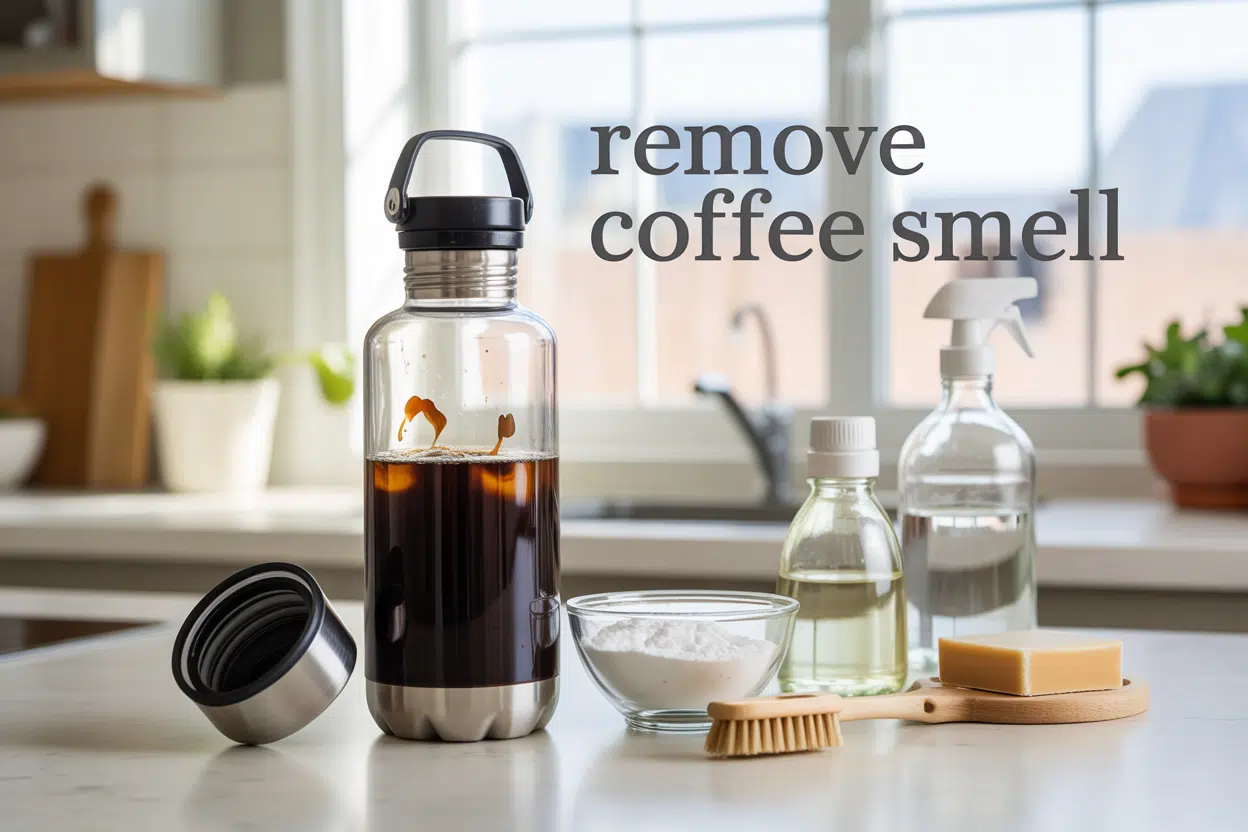
Your favorite insulated water bottle now reeks of yesterday’s coffee, and plain water tastes like stale espresso. This frustrating problem happens to coffee lovers who use their trusty bottles for both hot coffee and cold water throughout the day.
This guide is for anyone who wants to remove coffee smell from water bottle effectively and get back to enjoying fresh-tasting drinks. Coffee odor clings to insulated bottles because of oils and residue that regular rinsing can’t eliminate, but the right cleaning methods will restore your bottle completely.
We’ll walk you through immediate actions to take after coffee use and proven deep cleaning methods that actually eliminate coffee smell from your thermos. You’ll also learn simple prevention strategies to keep your insulated bottle odor-free and ready for any beverage.
- Understand Why Coffee Smell Sticks to Insulated Bottles
- Essential Cleaning Supplies for Odor Removal
- Immediate Actions After Coffee Use
- Deep Cleaning Methods That Work
- Prevent Future Coffee Odors
- Conclusion
- FAQs
- How long does coffee smell typically last in a water bottle?
- Can I use bleach to remove coffee smell from water bottle?
- Why does my water bottle still smell like coffee after washing?
- What's the difference between cleaning plastic vs stainless steel bottles?
- How often should I deep clean my bottle to prevent odors?
- Can coffee stains cause permanent damage to my bottle?
- Are there any natural alternatives to commercial cleaners?
- What should I avoid when cleaning my insulated bottle?
Understand Why Coffee Smell Sticks to Insulated Bottles
Coffee oils penetrate bottle materials
Coffee contains natural oils and compounds that love to stick around long after your last sip. These oils don’t just sit on the surface – they actually seep into the microscopic pores of your water bottle’s material, whether it’s stainless steel, plastic, or rubber seals. The darker the roast, the more oils your coffee contains, which explains why that bold French roast seems to leave a stronger smell than your light breakfast blend.
When you remove coffee smell from water bottle, you’re actually fighting against these embedded oils that have made themselves at home in your container. Stainless steel bottles, while generally non-porous, still have tiny surface irregularities where coffee residue can hide. Plastic bottles are even more vulnerable since they’re naturally more porous, allowing odors to penetrate deeper into the material structure.
The temperature of your coffee makes this problem worse. Hot liquids help oils spread and penetrate surfaces more effectively, which is why your insulated bottle that kept your morning coffee piping hot now holds onto that coffee smell water bottle cleaning challenge.
Narrow openings trap odors
The design that makes your insulated bottle so convenient for drinking creates a perfect storm for odor retention. Those narrow necks and small openings that prevent spills also create areas where coffee residue gets trapped and builds up over time.
Think about it – when you’re drinking coffee, small amounts inevitably splash back or stick to the sides near the opening. These spots are hard to reach during regular washing, so coffee residue cleaning water bottle becomes a real challenge. The threads of screw-on lids create even more hiding spots where coffee oils can accumulate.
Even worse, these narrow spaces don’t get proper air circulation, which means moisture stays trapped along with the coffee residue. This creates an environment where smells concentrate and intensify. Your regular rinse with soap and water just can’t reach all these nooks and crannies effectively, leaving behind the source of that persistent coffee odor.
Double-wall insulation holds smells longer
Your bottle’s insulation technology that keeps drinks hot or cold works against you when it comes to insulated bottle odor removal. The double-wall construction creates an enclosed space that can trap odors between the inner and outer walls if any liquid seeps through tiny gaps or imperfections in the seal.
More importantly, the insulation means your bottle takes much longer to air out completely. Regular single-wall containers can breathe through their walls to some degree, but your insulated bottle is designed to be airtight. This means any coffee smell thermos situation gets locked in without proper ventilation.
The materials used in quality insulation often include foam or vacuum spaces that can harbor odors if moisture finds its way in. While this rarely happens with well-made bottles, even the smallest breach can turn your insulated bottle into a smell-holding chamber that’s incredibly difficult to refresh.
Essential Cleaning Supplies for Odor Removal
Baking Soda for Natural Deodorizing
Baking soda stands as your most powerful ally when you need to remove coffee smell from water bottle interiors. This common household ingredient works like magic because it neutralizes acids and absorbs stubborn odors rather than just masking them. Coffee leaves behind acidic compounds that create that persistent smell, and baking soda’s alkaline nature directly counters these acids.
Create a paste using three tablespoons of baking soda mixed with just enough water to form a thick consistency. This paste works better than loose powder because it stays in contact with the bottle walls longer. Let this mixture sit in your insulated bottle for at least two hours, though overnight works even better for really tough coffee odors. The longer contact time allows the baking soda to pull out deep-seated smells from the bottle’s interior surfaces.
For regular maintenance, add two tablespoons of baking soda to warm water, shake vigorously, and let it sit for 30 minutes before rinsing. This simple routine prevents coffee residue cleaning water bottle sessions from becoming major projects.
White Vinegar for Breaking Down Oils
White vinegar excels at eliminating coffee smell thermos bottles because it cuts through the oily residues that trap odors. Coffee contains natural oils that stick to your bottle’s interior, creating a film that holds onto smells long after you’ve emptied the container. Vinegar’s acidity dissolves these oil deposits effectively.
Mix equal parts white vinegar and warm water to create your cleaning solution. Fill your bottle halfway with this mixture, then add a handful of uncooked rice or small pebbles. The rice acts as a gentle abrasive that helps scrub away oil films when you shake the bottle. Shake vigorously for two minutes, then let the solution sit for one hour.
For extra-stubborn odors, use straight vinegar and let it work overnight. The smell of vinegar might seem strong initially, but it dissipates completely when rinsed properly, taking the coffee odor with it. Always rinse thoroughly with clean water after using vinegar to prevent any residual taste.
Dish Soap for Deep Cleaning
Quality dish soap designed for cutting grease becomes essential for coffee odor insulated bottle cleaning. Coffee contains oils and proteins that regular water can’t remove, and these substances create the perfect environment for odor-causing bacteria to thrive. Dish soap breaks down these compounds at a molecular level.
Choose a grease-cutting dish soap rather than gentle or moisturizing formulas. Add one teaspoon of soap to warm water and create a sudsy solution. The key lies in letting the soapy water work for at least 15 minutes before scrubbing. This contact time allows the surfactants in the soap to penetrate and lift away coffee residues.
For bottles with narrow openings, add soap and water, then shake energetically to create maximum foam coverage on all interior surfaces. The mechanical action of shaking combined with the soap’s chemical action provides thorough cleaning that reaches every corner of your bottle.
Bottle Brushes for Hard-to-Reach Areas
Specialized bottle brushes make the difference between surface cleaning and complete odor elimination. Standard cleaning methods often miss the threads around the cap area, the bottom corners, and the narrow neck where coffee residue accumulates most heavily. These hidden spots become odor factories if left uncleaned.
Invest in a set that includes different brush sizes: a long-handled brush for the main chamber, a smaller brush for the neck area, and a tiny brush specifically designed for threading and cap cleaning. Flexible brushes work better than rigid ones because they conform to your bottle’s shape and reach into curved areas.
When using brushes, work in circular motions rather than just up-and-down scrubbing. This technique ensures you contact all surfaces and dislodge particles trapped in microscopic scratches where bacteria can hide. Pay special attention to any areas where you feel resistance – these spots likely harbor the most buildup and contribute significantly to persistent odors.
Immediate Actions After Coffee Use
Rinse with hot water immediately
The moment you finish your coffee, grab that bottle and head straight to the sink. Hot water becomes your best friend here because it helps dissolve oils and prevents coffee residue from setting into the bottle’s surface. Run the hottest tap water you can safely handle into your insulated bottle, filling it about halfway. Give it a good swirl to reach all surfaces, especially around the neck where coffee oils love to cling.
Don’t just do a quick rinse and call it good. Let that hot water sit in the bottle for 30-60 seconds before swirling again. This gives the heat time to break down the coffee compounds that create lingering smells. Pour out the water and repeat this process 2-3 times for best results. The key is acting fast – coffee oils become much harder to remove once they cool and solidify on your bottle’s interior.
Remove all coffee residue completely
After your initial hot water rinse, inspect every inch of your bottle for remaining coffee residue. Coffee leaves behind more than just liquid – tiny particles and oils stick to surfaces and create the perfect environment for odors to develop. Pay special attention to the bottom of the bottle where sediment settles and the threading around the cap area.
Use a bottle brush with firm bristles to scrub away any visible coffee stains or residue. The brush should reach all the way to the bottom and get into those curved areas where your hand can’t reach. Don’t forget about the cap and drinking spout – these areas trap coffee particles that many people miss during cleaning.
For stubborn residue, create a simple paste using baking soda and water. This gentle abrasive helps lift coffee particles without scratching your bottle’s interior. Scrub thoroughly with your bottle brush, making sure to clean coffee residue from every surface. Rinse again with hot water until the water runs completely clear.
Air dry with cap off
Once you’ve removed all visible coffee residue, proper drying prevents moisture from trapping odors inside your bottle. Turn your clean bottle upside down on a drying rack or clean towel, leaving the cap completely off. This position allows gravity to help drain any remaining water while promoting maximum airflow.
Never put the cap back on a damp bottle – trapped moisture creates the perfect breeding ground for bacteria and mold, which makes coffee smells even worse. Leave your bottle open for at least 4-6 hours, or overnight if possible. Good air circulation helps eliminate any remaining moisture that could contribute to odor development.
Position the bottle in an area with good ventilation, away from direct sunlight which can damage some insulated bottles. Some people like to prop their bottles at an angle using a dish rack to ensure complete drainage while still allowing airflow through the opening.
Deep Cleaning Methods That Work
Baking Soda Paste Scrubbing Technique
Create a powerful cleaning paste by mixing three tablespoons of baking soda with just enough water to form a thick consistency. This natural abrasive works wonders to remove coffee smell from water bottle interiors without scratching the surface. Apply the paste generously inside your insulated bottle, paying special attention to the bottom and any grooves where coffee residue tends to hide.
Use a bottle brush or old toothbrush to scrub the paste in circular motions, working it into every corner. The alkaline properties of baking soda neutralize acidic coffee oils that cause persistent odors. Let the paste sit for 15-20 minutes before scrubbing again, then rinse thoroughly with hot water. For stubborn smells, repeat this process twice.
Vinegar and Hot Water Soaking Method
Fill your bottle halfway with white vinegar and top off with hot (not boiling) water to create an effective coffee odor insulated bottle cleaning solution. The acetic acid in vinegar breaks down coffee oils and eliminates bacteria that contribute to unpleasant smells. Secure the lid and let this mixture work its magic for at least two hours, though overnight soaking delivers better results for deeply embedded odors.
After soaking, add a handful of rice or small pebbles to the mixture and shake vigorously for 30 seconds. This creates an abrasive action that helps remove any remaining residue. Empty the bottle and rinse multiple times with hot water until the vinegar smell disappears completely.
Denture Tablet Fizzing Treatment
Drop two denture cleaning tablets into your bottle and fill with warm water. The enzymatic action and fizzing bubbles created by these tablets effectively eliminate coffee smell thermos containers by breaking down organic matter and neutralizing odors. This method works particularly well for narrow-necked bottles where scrubbing is challenging.
Allow the tablets to fizz and dissolve completely, typically 30-45 minutes. The oxygen-based cleaning agents in denture tablets are specifically designed to remove stains and odors from hard-to-reach places. Swirl the solution occasionally to ensure even coverage, then rinse thoroughly with clean water.
Rice and Soap Shaking Method
Combine one-quarter cup of uncooked rice with a few drops of dish soap and warm water to clean coffee stained water bottle interiors through mechanical action. The rice acts as a gentle abrasive that scrubs away coffee residue while the soap breaks down oils causing the smell. This technique works especially well for bottles with wide mouths.
Seal the bottle and shake vigorously for two to three minutes, ensuring the rice mixture reaches all surfaces. The rice grains will scour away stubborn coffee buildup in areas your brush can’t reach effectively. Empty the contents, rinse thoroughly, and inspect for any remaining residue before air-drying completely.
Prevent Future Coffee Odors
Clean bottle after every use
The single most effective way to prevent coffee odors from setting in is to clean your insulated bottle right after each use. Coffee oils and residue begin bonding to surfaces within minutes of contact, especially in the warm, enclosed environment of an insulated bottle. Rinse your bottle with hot water immediately after finishing your coffee, even if you’re planning a thorough cleaning later.
For daily maintenance, use warm soapy water and give the bottle a good shake to dislodge any coffee particles. Pay special attention to the threads where the cap screws on, as coffee residue loves to hide in these grooves. If you’re away from home, at least rinse with cold water to remove the majority of coffee oils before they have time to penetrate the bottle’s surface.
Store with cap removed
Proper storage plays a huge role in preventing coffee smell water bottle cleaning issues. Always store your clean, dry bottle with the cap off or loosely attached. This allows air to circulate freely, preventing moisture buildup that can trap odors and encourage bacterial growth.
Trapped moisture creates the perfect environment for coffee oils to intensify and develop that stale, sour smell that’s so difficult to eliminate. When you store bottles sealed tight while still damp, you’re essentially creating a greenhouse effect that amplifies any remaining coffee residue.
Place your bottle in a well-ventilated area, preferably upside down on a drying rack to ensure complete moisture evaporation. This simple habit dramatically reduces the likelihood of developing persistent odors that require intensive insulated bottle odor removal methods.
Use dedicated coffee-only bottles
Consider designating specific bottles exclusively for coffee use. This prevents cross-contamination of flavors and makes it easier to maintain each bottle for its intended purpose. Coffee-dedicated bottles can be seasoned over time, actually improving their performance for hot beverages.
When you use the same bottle for coffee, water, and other beverages, you’re constantly fighting flavor transfer. Even the most thorough cleaning might not completely eliminate coffee taste from bottle surfaces, affecting your next drink’s flavor profile.
Apply protective coatings when possible
Some insulated bottles benefit from protective treatments that create a barrier against odor absorption. Food-grade silicone sprays or specialized bottle coatings can help prevent coffee oils from penetrating surface materials. Always check manufacturer recommendations before applying any treatments to ensure warranty compliance and safety.
Conclusion
Coffee smells stick around in insulated bottles because oils and residue get trapped in small spaces and on surfaces that are hard to reach. The good news is that a few simple ingredients like baking soda, white vinegar, and dish soap can work wonders when you use them the right way. Acting fast after drinking coffee and doing a proper deep clean every so often will keep your bottle fresh and ready for whatever you want to drink next.
Don’t let a lingering coffee smell stop you from enjoying your favorite water bottle. Try the cleaning methods we’ve covered, and you’ll be surprised at how easy it is to get that fresh, clean scent back. Your taste buds (and your water) will thank you for taking the time to properly clean and maintain your bottle.
FAQs
How long does coffee smell typically last in a water bottle?
Coffee smell can linger in your insulated water bottle for weeks or even months if left untreated. The oils from coffee beans penetrate the bottle’s interior surfaces, especially if it’s made of plastic or has rubber seals. Stainless steel bottles generally hold odors for shorter periods, but without proper cleaning, even they can retain that stubborn coffee aroma for extended periods.
Can I use bleach to remove coffee smell from water bottle?
While bleach is effective for sanitizing, it’s not recommended for regular coffee odor removal from water bottles. Bleach can be harsh on bottle materials and may leave its own chemical smell that’s difficult to eliminate. Stick to gentler methods like baking soda, white vinegar, or dish soap for safe and effective coffee smell water bottle cleaning.
Why does my water bottle still smell like coffee after washing?
Your bottle might still smell like coffee because regular dish soap doesn’t break down coffee oils effectively. Coffee residue gets trapped in tiny crevices, threads, and rubber seals where basic washing can’t reach. The insulated design of these bottles also creates spaces where odors hide. You need specialized cleaning methods to completely remove coffee taste from bottle surfaces.
What’s the difference between cleaning plastic vs stainless steel bottles?
Plastic bottles are more porous and absorb odors more readily than stainless steel. They require longer soaking times and may need multiple cleaning cycles to eliminate coffee smell thermos odors completely. Stainless steel bottles respond faster to cleaning methods but need attention to their rubber gaskets and threading where coffee oils accumulate.
How often should I deep clean my bottle to prevent odors?
Deep clean your insulated bottle odor removal routine should happen weekly if you use it for coffee daily. For occasional coffee use, a thorough monthly cleaning prevents buildup. Always rinse immediately after each use and perform a quick vinegar rinse if you notice any lingering smells developing.
Can coffee stains cause permanent damage to my bottle?
Coffee stains won’t damage the structural integrity of quality insulated bottles, but they can cause permanent discoloration, especially in plastic bottles. More importantly, old coffee residue creates bacterial breeding grounds and makes future odor removal more challenging. Address stains quickly to maintain your bottle’s hygiene and appearance.
Are there any natural alternatives to commercial cleaners?
Absolutely! Baking soda and white vinegar are your best natural allies for coffee stained water bottle cleaning. Lemon juice works great for both cleaning and leaving a fresh scent. Rice with dish soap creates an abrasive action that scrubs away stubborn residue. These natural methods are safer for regular use and won’t leave chemical residues.
What should I avoid when cleaning my insulated bottle?
Never use abrasive scrubbers or steel wool that can scratch surfaces and create more places for odors to hide. Avoid putting your bottle in the dishwasher unless it’s specifically dishwasher-safe, as high heat can damage seals and insulation. Don’t use harsh chemicals like ammonia or chlorine-based cleaners that can leave their own odors and potentially damage bottle materials.
