
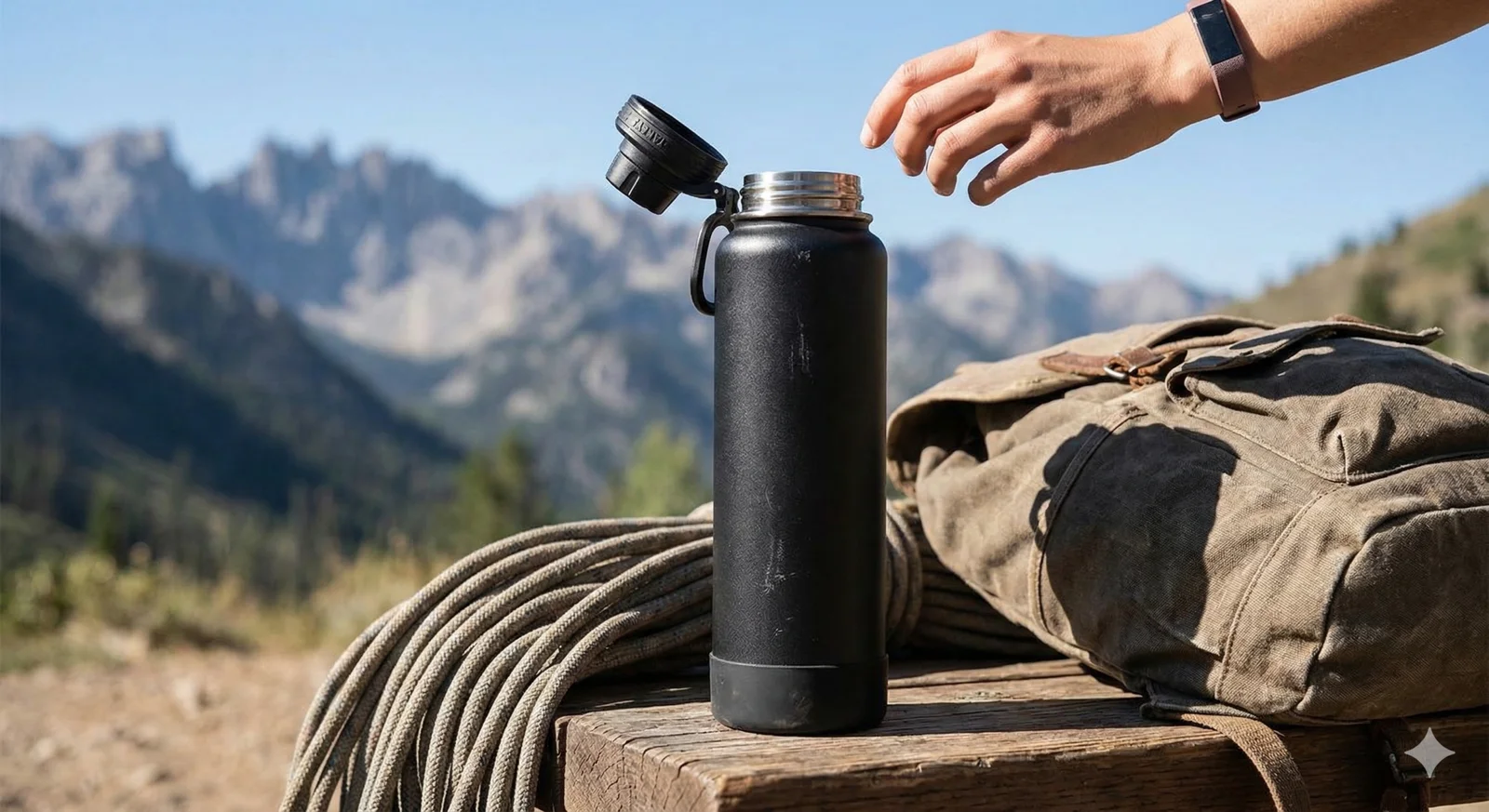
The reusable water bottle market is aggressively crowded. Between the heavy-duty dominance of Yeti, the lifestyle appeal of Hydro Flask, and the viral trendiness of Owala, it takes a lot for a brand to genuinely stand out. Enter the Takeya Actives line.
If you are tired of your water bottle denting after a single drop, or you are frustrated by lids that smack you in the nose every time you take a sip, you have probably had your eye on a Takeya. But does it actually hold up to daily wear and tear, or is it just another stainless steel clone?
In this review, we are cutting through the marketing fluff. We will break down exactly how long the ice really lasts, the genius behind its famous spout lid, and the one major maintenance flaw you need to know about before you add it to your cart.
The Quick Verdict: TL;DR
If you are in a rush and just want the bottom line: The Takeya Actives is one of the best value-for-money insulated water bottles on the market today. It offers premium features—like a built-in silicone protective bumper and an arguably superior twist-cap spout—at a price point that routinely undercuts its biggest rivals. It is highly recommended for commuters, gym-goers, and anyone who prefers a high-flow drinking spout over a built-in straw.
However, if you strictly want a bottle that you can blindly throw into the dishwasher without occasionally doing deep-cleaning maintenance on small silicone gaskets, you might want to look at a simpler design.
Quick Specs Overview:
- Material Build: Crafted from 18/8 food-grade stainless steel with BPA-free plastic lids.
- Thermal Technology: Uses double-wall vacuum insulation to eliminate heat transfer via conduction and convection.
- Temperature Retention: Officially rated to keep beverages cold for 24 hours and hot for 12 hours.
- Durability Feature: Comes standard with a removable silicone bumper (boot) to prevent dents and loud clanking when set down.
- Cup Holder Compatibility: The 18oz, 22oz, and 24oz sizes will fit in standard car cup holders. The 32oz, 40oz, and 64oz models are too wide.
Takeya Actives vs. Originals: Which Should You Buy?
If you are browsing Amazon or standing in the aisle at Target, you will likely see two distinct Takeya models sitting side-by-side: the Takeya Actives and the Takeya Originals. While they share the exact same stainless steel body, there are two crucial upgrades on the Actives model that make it the superior choice for most buyers.
First, the Actives line comes standard with a removable silicone bumper (often called a boot) on the bottom. Second, the Actives line features a fully insulated lid. The Originals lineup, by contrast, lacks the silicone bumper and utilizes a standard, uninsulated plastic lid.
The Verdict: Spend the extra few dollars for the Actives. The insulated lid prevents condensation from forming at the top of your bottle on hot days, and the silicone boot is a game-changer for durability and noise reduction.
Performance, Durability, and Specs
The Spout Lid and Ergonomics
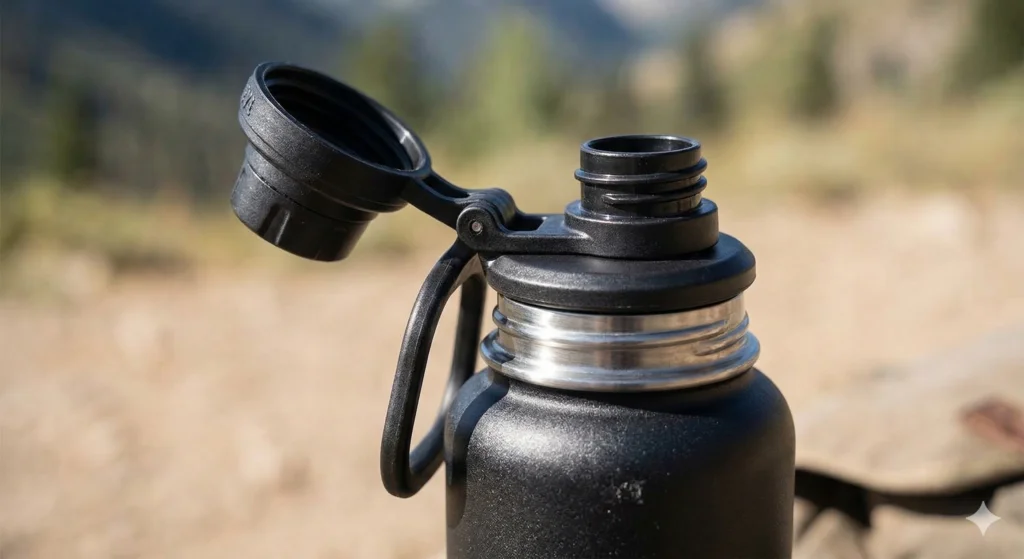
The primary reason to buy a Takeya over its competitors is the lid. While many brands force you to choose between a wide mouth (which often spills down your shirt while walking) and a narrow mouth (which is impossible to put ice into), Takeya offers the best of both worlds.
The Takeya Spout Lid twists off to reveal a wide mouth for easy cleaning and ice loading, but the actual drinking mechanism is a narrow, high-flow spout. The true genius, however, is the hinge-lock cap. When you twist the small cap open to take a sip, you push it backward until it audibly clicks. This locks the cap in place so it does not swing forward and smack you in the nose. Furthermore, the wide, flexible swivel-loop handle makes it incredibly comfortable to carry with one or two fingers, unlike the rigid plastic loops found on older bottle designs.
Insulation: Does It Really Keep Ice Cold?
Takeya claims their double-wall vacuum insulation keeps drinks cold for 24 hours and hot for up to 12 hours. In real-world, daily application, these numbers hold up remarkably well.
The science behind this is straightforward: a vacuum space between two stainless steel walls removes the air needed for conductive and convective heat transfer. Because the Actives model also features an insulated lid, the cold cannot easily escape from the top.
Pro Tip: If you want your ice to truly last 24 hours, you need to “pre-chill” the bottle. Stainless steel naturally absorbs temperature. If you pull a room-temperature Takeya from your cabinet and fill it with ice, the steel will immediately melt a portion of that ice to cool itself down. Swirl some ice water in the bottle for a minute, dump it, and then fill it for the day.
Durability and the Drop Test
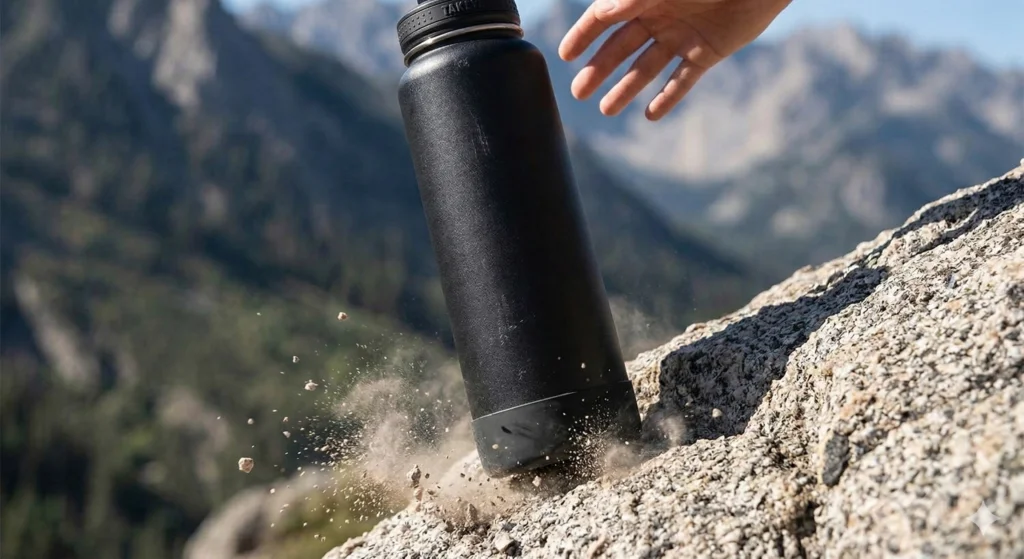
Constructed from heavy-duty 18/8 food-grade stainless steel, the bottle is built like a tank. It is finished with a textured powder coat that gives you a solid grip even when your hands are sweaty at the gym.
However, stainless steel bottles share one universal weakness: if you drop them on concrete, the bottom edges will dent, causing the bottle to wobble every time you set it down. This is where the Takeya Actives silicone bumper earns its keep. It acts as a shock absorber. Not only does it protect the bottle from catastrophic dents on the trail, but it also provides a “quiet set down.” If you regularly set your water bottle on a glass desk, granite countertop, or a quiet library table, the silicone boot eliminates that obnoxious metal clanking sound.
Maintenance: How to Clean Your Takeya Bottle
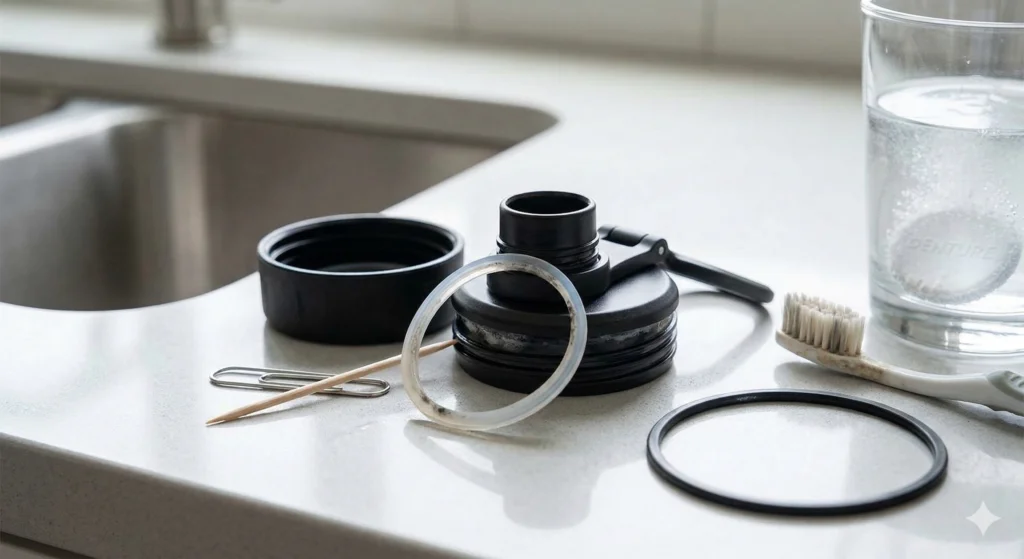
If you spend enough time browsing online reviews, you will eventually see the same recurring complaint about insulated bottles: “My lid smells like old soap” or “There is black mold growing under the rubber ring.” This is not a defect specific to Takeya; it is a reality of any leak-proof water bottle that utilizes silicone gaskets to create a watertight seal. If you only rinse your bottle with water or quickly run a soapy sponge over the top, moisture gets trapped underneath these rings, creating the perfect environment for mildew.
Fortunately, Takeya’s official bottle care guidelines offer a simple solution. Spout lids contain two silicone O-rings (one large ring for the main cap, and a smaller one for the drinking spout). Here is how to maintain them:
- Remove the O-Rings: Gently pull on the tab to remove the large O-ring. For the smaller spout ring, you will need to use an unfolded paperclip, a toothpick, or a fork to gently pry it out of its groove.
- The Vinegar Soak: Drop the silicone rings into a cup filled with a 50/50 solution of warm water and white vinegar. Let them soak overnight to kill bacteria and strip away trapped odors.
- Dry Completely: Rinse the rings in fresh water and let them air dry completely on a paper towel before reinstalling them flat-side down.
Note: While Takeya states their lids are top-rack dishwasher safe, the stainless steel bottle base should always be hand-washed. The extreme heat of a dishwasher can ruin the vacuum seal, ruining the bottle’s insulation properties.
Takeya vs. The Top Competition
When making a purchase, you are rarely just evaluating a Takeya in a vacuum. You are likely comparing it directly against the other titans of the hydration industry. Here is how it stacks up.
Takeya vs. Hydro Flask
Hydro Flask popularized the modern aesthetic of the insulated bottle. However, the Hydro Flask Wide Mouth bottle standardly comes with a simple screw-off cap. If you want a chug cap or a straw lid, you often have to buy it separately.
Takeya wins heavily on out-of-the-box value because their premium Spout Lid comes standard. Both bottles utilize 18/8 stainless steel and offer nearly identical thermal performance. The Ultimate Hack: If you already own a Hydro Flask but hate the lid, Takeya lids are widely known to thread perfectly onto wide-mouth Hydro Flasks. Many users buy a Takeya replacement lid specifically to upgrade their older Hydro Flask.
Takeya vs. Owala FreeSip
Owala is currently dominating the market thanks to the patented Owala FreeSip spout, which allows users to either sip upright through a built-in straw or tilt back to chug from a wider opening.
If convenience and drinking versatility are your top priorities, Owala takes the crown. However, Owala’s complex lid mechanism has more moving parts (including a spring-loaded button and a rubber stopper) that are harder to clean and more susceptible to breaking if dropped. Takeya’s simpler, heavy-duty hinge-lock cap is significantly more durable for rugged use, and Takeya typically holds ice longer than the standard FreeSip.
Takeya Originals vs. Yeti Rambler
Yeti builds drinkware for the most extreme environments. The Yeti Rambler with the Chug Cap is an absolute tank. Unlike Takeya, Yeti Rambler bottles are explicitly advertised as 100% dishwasher safe from top to bottom, making them vastly easier to maintain for busy individuals.
The tradeoff here is weight and price. Yeti bottles are constructed with thicker steel, making them noticeably heavier to carry around all day. If you want a lighter bottle for the gym or your daily commute—and prefer a quiet set-down courtesy of a silicone bumper—the Takeya Actives is the better everyday companion.
The Pros and Cons
To summarize the performance and daily usability of the Takeya Actives insulated water bottle, here is a quick breakdown of its biggest strengths and notable weaknesses.
Pros:
- Superior Spout Lid: The hinge-lock mechanism prevents the cap from hitting your face, and the twist-off wide mouth allows for easy ice loading.
- Included Protective Boot: The standard silicone bumper prevents dents, extends the life of the bottle, and ensures a quiet set-down on hard surfaces.
- Excellent Value: Premium features (like the insulated lid and silicone boot) are included in the base price, whereas competitors often charge extra for these accessories.
- Ergonomic Carry Handle: The wide, flexible loop is comfortable for long walks or carrying across the gym.
Cons:
- O-Ring Maintenance: The silicone gaskets require regular removal and deep cleaning to prevent mold and odors.
- Aesthetics: The design is highly functional and sporty, but it lacks the trendy, minimalist aesthetic of some viral lifestyle brands.
- Weight: While lighter than a Yeti, the stainless steel body and thick rubber boot make it heavier than single-wall or plastic alternatives.
Conclusion
The reusable water bottle market is filled with overpriced status symbols, but the Takeya Actives proves that you do not need to spend a fortune to get top-tier performance.
By combining phenomenal ice retention, a heavy-duty stainless steel build, and arguably the best drinking spout in the industry, the Takeya Actives easily earns its spot as a top recommendation for daily hydration. The inclusion of the silicone bumper and the insulated lid right out of the box provides unmatched value compared to brands that nickel-and-dime you for basic accessories.
While the lid does require occasional deep cleaning to keep the O-rings fresh, this is a small price to pay for a completely leak-proof, high-flow drinking experience. If you want a reliable, rugged, and intelligently designed bottle for the gym, the trail, or the office, the Takeya Actives is well worth the investment.
Frequently Asked Questions
Are Takeya water bottles lead-free?
Takeya utilizes 18/8 food-grade stainless steel for their insulated bottles, which is naturally free of lead, BPA, and toxic-leaching plastics. Furthermore, if you are strictly avoiding metals altogether, Takeya’s glass water bottle line is explicitly certified as completely lead-free.
Do Takeya bottles fit in car cup holders?
Yes, but it depends entirely on the size you purchase. According to Takeya’s official sizing guidelines, any bottle with a diameter of 3.15 inches or smaller is cup-holder friendly. This means the 18oz, 22oz, and 24oz models will fit perfectly in most standard vehicle cup holders. The larger 32oz, 40oz, and 64oz models are too wide and will need to ride on the passenger seat.
Are Takeya lids interchangeable with Hydro Flask?
Yes. One of the most popular “hacks” in the hydration community is using a Takeya Spout Lid as a replacement on a Hydro Flask Wide Mouth bottle. The threading and diameter on the Takeya lid align perfectly with standard wide-mouth Hydro Flasks, Nalgenes, and Several Simple Modern bottles.
Are Takeya water bottles dishwasher safe?
Takeya recently updated their official care guidelines to state that most of their powder-coated stainless steel bottles are technically dishwasher safe. However, they explicitly warn that harsh dishwasher detergents and extreme heat can degrade the powder coating over time. The safest route for longevity is to wash the stainless steel body by hand. The plastic lids and silicone rings, however, are top-rack dishwasher safe. (Note: Bottles with metallic finishes like Rose Gold or Brushed Stainless Steel are strictly hand-wash only).
Do Takeya bottles sweat or form condensation?
No. Because the bottles utilize double-wall vacuum insulation, the exterior temperature of the bottle is completely isolated from the internal temperature of the liquid. You can fill the bottle with ice water and leave it on a wooden desk all day; the exterior will remain room temperature and completely sweat-free.
