
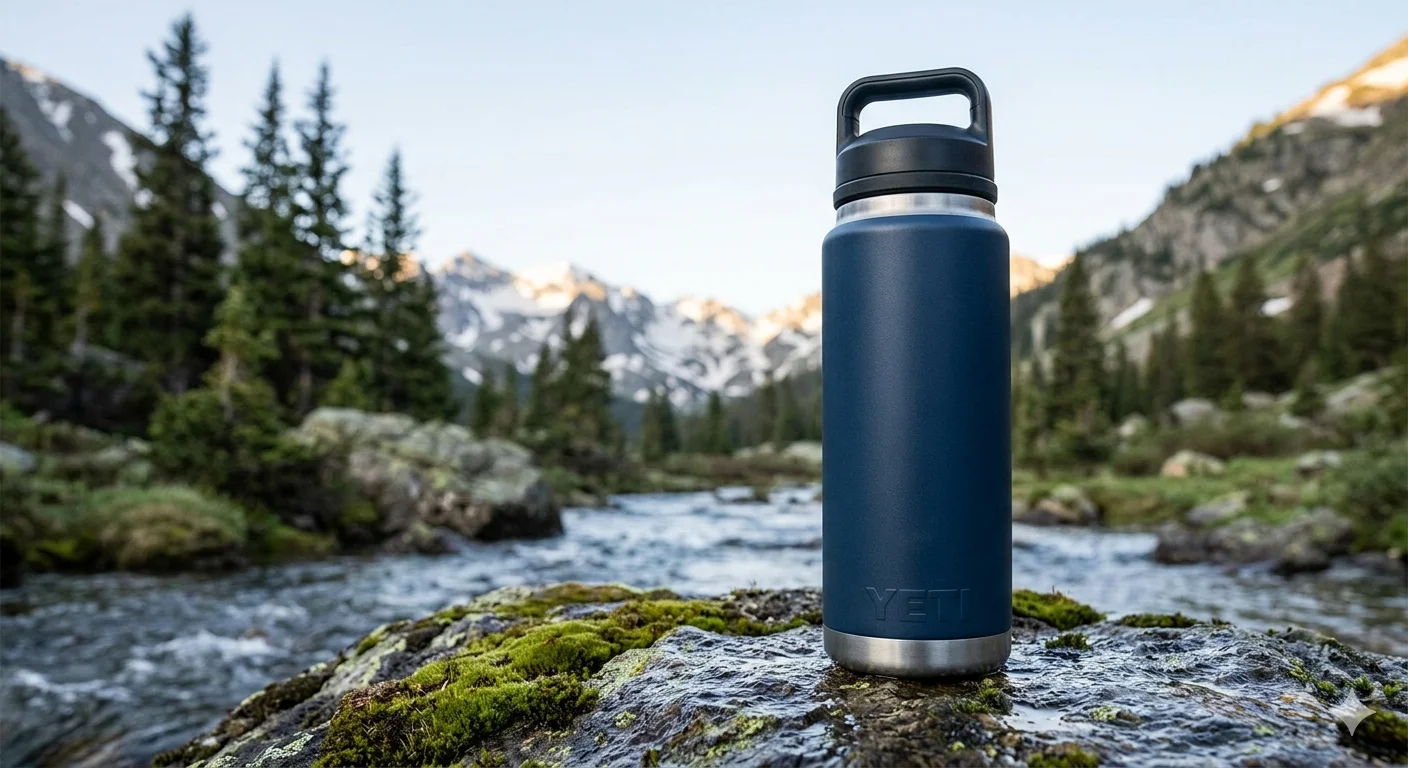
If you have spent any time outdoors, at a gym, or even just scrolling through social media recently, you have undoubtedly seen a YETI Insulated water bottle. Over the last few years, premium hydration gear has transformed from a simple utility into a genuine lifestyle status symbol, with YETI leading the charge for the rugged, adventure-ready crowd.
But behind the heavy marketing and the recognizable logo lies a serious question: are these bottles actually worth the $40 to $55 price tag? YETI claims their Rambler series is virtually indestructible, built with 18/8 kitchen-grade stainless steel that resists punctures and rust. They also promise unparalleled double-wall vacuum insulation to keep ice frozen for days. As someone who tests and reviews hydration gear constantly, I needed to know if the everyday performance actually matches the premium hype.
What We Are Covering
In this review, I am putting the YETI Rambler to the ultimate test to see if it deserves a permanent spot in your daily carry. We are going to strip away the branding and look purely at functionality, durability, and overall value.
Here is exactly what we will cover:
- Real-World Durability: Can it survive drops, dents, and daily abuse?
- Temperature Retention: The rigorous hot and cold insulation tests.
- The Famous Lids: A deep dive into why the YETI Chug Cap is so highly praised.
- The Flaws: The weight, the bulk, and the notorious car cup holder dilemma.
- The Alternatives: How it stacks up against major rivals you might also be considering.
Let’s find out if the YETI Rambler is the last water bottle you will ever need to buy, or if you are just paying for the name stamped into the steel.
The Bottom Line & Quick Specs
Before diving into the granular details, here is the quick verdict: The YETI Rambler is an incredibly rugged, over-engineered piece of hydration gear that excels in harsh environments. However, its heavy weight and bulky dimensions mean it is not the perfect fit for everyone.
How We Tested the YETI
To ensure this review provides genuine value, the YETI Rambler (specifically the popular 26 oz model) was subjected to rigorous everyday use and stress testing. We evaluated its temperature retention by tracking ice melt over a 24-hour period, a process that relies heavily on the physics of double-wall vacuum insulation to minimize heat transfer by conduction or convection.
We also conducted practical drop tests onto hard surfaces to verify the resilience of its 18/8 stainless steel construction. Finally, we tested its ergonomics during daily commutes, gym sessions, and outdoor hikes to see how it handled real-world environments compared to the other bottles we frequently review here at Water Bottle Info.
Quick Pros and Cons
If you are short on time and need to make a fast purchasing decision, here is exactly what you need to know:
Pros:
- Indestructible Build: Withstands drops, dings, and rough handling better than almost any other premium brand on the market.
- 100% Dishwasher Safe: Unlike many insulated bottles that require careful hand-washing to protect the vacuum seal, YETI officially guarantees their bottles are safe for the dishwasher.
- The Chug Cap: Provides a smooth, spill-proof drinking experience without exposing the mouthpiece to exterior dirt and grime.
- Exceptional Insulation: Keeps ice solid for well over 24 hours and coffee piping hot for an entire workday.
Cons:
- Extremely Heavy: Weighing in at over 1.4 lbs (empty) for the 26 oz size, it is significantly heavier than single-wall or plastic alternatives.
- Cup Holder Incompatibility: Most sizes (like the 26 oz, 36 oz, and larger jugs) are too wide to fit into standard car cup holders.
- Premium Price Tag: It requires a significant upfront investment compared to budget-friendly dupes.
Who Should (and Shouldn’t) Buy This Bottle
Who Should Buy It:
- Outdoor Enthusiasts: If your gear regularly gets tossed into truck beds, dropped on rocks, or covered in mud, the YETI is built specifically for your lifestyle.
- Trades Workers and First Responders: Anyone who needs reliable hydration to survive a rugged 12-hour shift without the bottle denting, leaking, or breaking.
- Those Who Hate Hand-Washing: If you want a premium bottle that you can just toss on the bottom rack of the dishwasher at the end of the day, this is the one.
Who Shouldn’t Buy It:
- Ultralight Hikers and Runners: If counting ounces is a priority for your pack, the sheer weight of the Rambler will be a major deterrent.
- The Daily Commuter: If your absolute top priority is a bottle that slots perfectly into your sedan’s cup holder for a morning drive, you will be frustrated by anything larger than the 18 oz Rambler.
Standout Features: What Makes YETI So Special?
Extreme Durability & Ergonomics
When you pick up a YETI Rambler, the first thing you notice is how substantial it feels. The bottle is constructed from premium 18/8 stainless steel, a specific metal alloy containing 18% chromium and 8% nickel. The high chromium content creates a passive oxide layer that gives the bottle exceptional rust and corrosion resistance, while the nickel adds immense structural strength.
This means that whether you drop it on concrete, toss it into the bed of a pickup truck, or accidentally bang it against gym equipment, the Rambler is designed to endure. While lighter, single-walled aluminum bottles might puncture or dent deeply from a simple fall, the heavy-duty walls of the YETI generally escape with nothing more than a superficial scuff to its exterior “Duracoat” color finish.
Vacuum Insulation Performance
The core reason you buy a premium reusable bottle is for its temperature retention. YETI utilizes double-wall vacuum insulation, a structural design that literally removes the air between the inner and outer steel walls of the bottle.
Because heat relies on molecules to travel, the vacuum acts as a formidable barrier. It completely eliminates heat transfer through conduction (direct contact) and convection (fluid or gas movement). During our 24-hour ice test, the YETI Rambler performed flawlessly. Ice cubes remained solid overnight in a room-temperature environment, and the bottle’s exterior never broke a sweat, meaning you can safely throw it into a backpack with expensive electronics without worrying about condensation damage.
The Famous YETI Chug Cap
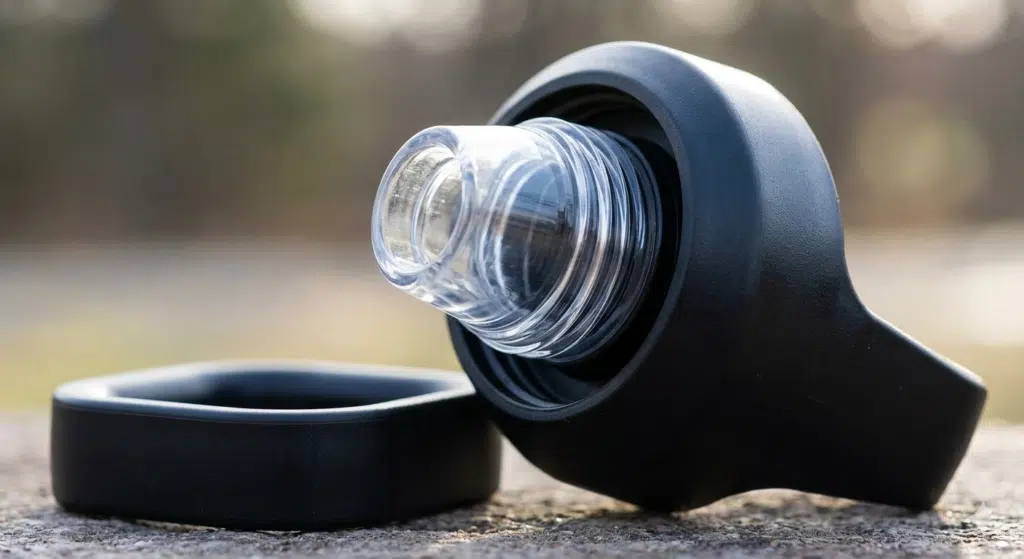
While the steel body gets a lot of the credit, the lid is arguably the best feature of the Rambler ecosystem. The shatter-resistant Chug Cap solves a major problem found in standard wide-mouth bottles: spilling water down your shirt when trying to drink on the move.
The Chug Cap is a two-piece system. The bottom piece screws directly into the wide mouth of the bottle and features a clear, narrow drinking spout that allows for controlled, fast-flowing hydration. The top piece is a heavy-duty cap featuring YETI’s iconic “TripleHaul” handle, which twists off with a quick half-turn. This design keeps the drinking spout protected from dirt and grime when closed, making it far more hygienic for outdoor use than exposed straw lids or flip-tops.
Common YETI Complaints: Where It Falls Short
As impressive as the YETI Rambler is, no product is perfect. When you prioritize extreme durability and multi-day ice retention, you inevitably have to make compromises in other areas. Based on extensive testing and consistent feedback from the outdoor community, there are two significant drawbacks you need to consider before making a purchase.
The Weight and Bulkiness
The number one complaint regarding the YETI Rambler series is the sheer weight. The same thick, 18/8 stainless steel walls that make the bottle nearly indestructible also make it incredibly heavy to carry around all day.
To put this into perspective, the official specifications list the empty weight of the 26 oz Rambler at 1.4 lbs. Once you fill it with 26 ounces of water (which adds roughly 1.7 lbs) and a handful of ice, you are carrying over 3 pounds of dead weight. For gym-goers throwing it into a duffel bag or tradesmen keeping it on a job site, this is a non-issue. However, if you are a backpacker, a runner, or someone who relies on a lightweight tote bag for your daily commute, the Rambler will feel like a brick. If minimizing your base weight is a priority, you will likely find YETI’s steel offerings frustratingly heavy.
The Car Cup Holder Problem
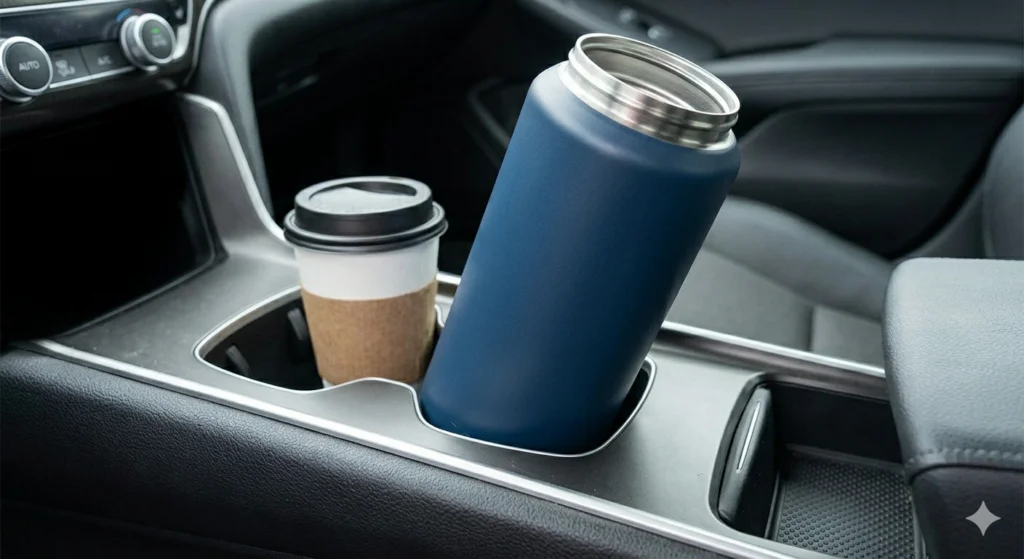
The second most common frustration is compatibility with vehicle interiors. If you rely on your car’s center console to hold your drink during your morning commute, you need to pay very close attention to which YETI size you purchase.
The vast majority of standard car cup holders are designed with a diameter of roughly 2.7 to 3.15 inches. The 26 oz YETI Rambler has a base width of 3.4 inches, meaning it absolutely will not fit in a standard console. It will either sit precariously on top of the rim or roll around on your passenger seat. If cup holder compatibility is a strict requirement for you, your only option within the YETI bottle lineup is to size down to the 18 oz Rambler (which has a 3.0-inch diameter) or switch from a screw-cap bottle to one of their tapered travel mugs.
YETI Rambler vs. The Competition
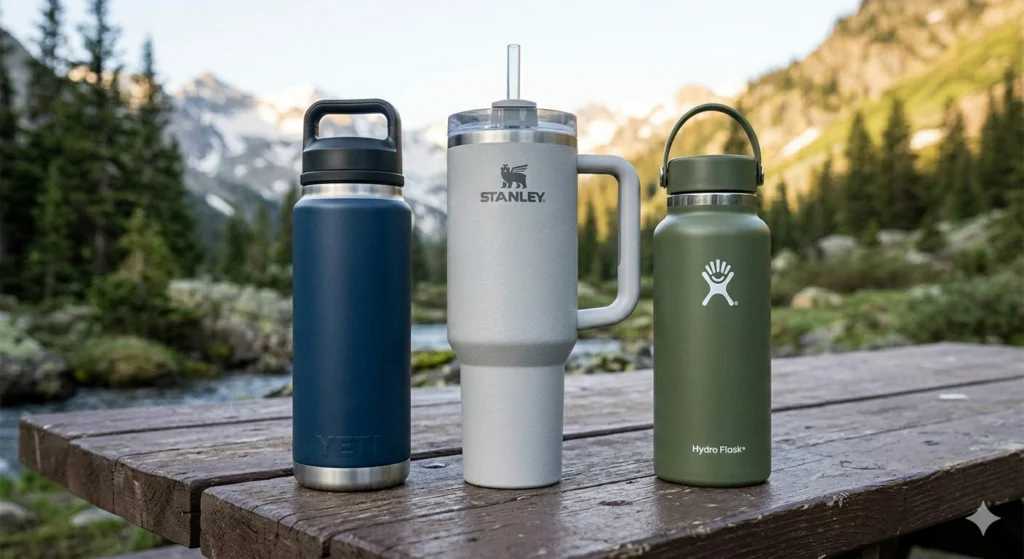
In the premium insulated water bottle market, the YETI Rambler rarely stands alone in a buyer’s mind. It is constantly compared against the other two giants of the hydration industry: Stanley and Hydro Flask. To give you the clearest picture of where your money is best spent, here is how YETI stacks up against its biggest rivals.
YETI vs. Stanley
The rivalry between YETI and Stanley has dominated social media in recent years, primarily driven by the massive popularity of the Stanley Quencher. However, these two brands cater to very different lifestyles.
The Stanley Quencher H2.0 FlowState Tumbler dominates the daily commute and aesthetic market. Its major advantage over the YETI Rambler is its ergonomic, tapered base. Stanley specifically designed the Quencher with a 3.15-inch base diameter to be perfectly cup holder compatible, solving the biggest complaint users have with the wide-bodied YETI Rambler.
However, YETI wins decisively in ruggedness and spill prevention. The Stanley Quencher uses a straw lid that, while highly convenient, is only splash-resistant; if you knock it over onto your car seat, it will leak. In contrast, the YETI Rambler bottle features a screw-on lid that is 100% leakproof, meaning you can confidently throw it sideways into a backpack without ruining your laptop.
YETI vs. Hydro Flask
If YETI is the heavy-duty truck of water bottles, Hydro Flask is the lightweight sports car. Hydro Flask has long been the go-to choice for hikers, students, and anyone who carries their bottle by hand all day.
Both bottles use exceptional temperature retention technology. While YETI relies on its thick steel vacuum, Hydro Flask uses their proprietary TempShield double-wall vacuum insulation to achieve similar 24-hour ice retention in a much lighter package. A 32 oz Hydro Flask is noticeably slimmer and lighter than a 36 oz YETI Rambler, making it vastly superior for long treks.
Historically, YETI had a major advantage because it was one of the few brands that was entirely dishwasher safe. However, Hydro Flask recently updated its manufacturing process, and all of their powder-coated bottles are now dishwasher safe as well, leveling the playing field. Ultimately, the choice between the two comes down to weight versus indestructible heft: choose Hydro Flask for lightweight mobility and color options, but choose YETI if you are rough on your gear and prefer the superior drinking experience of the Chug Cap.
The Steel Rambler vs. The Plastic Yonder
For years, YETI was synonymous exclusively with heavy-duty stainless steel. However, the brand recently expanded its hydration lineup by introducing the YETI Yonder, a lightweight plastic alternative. If you are torn between the classic steel Rambler and the new plastic Yonder, your decision ultimately comes down to whether you prioritize temperature control or carrying weight.
When to Choose the Stainless Steel Rambler
You should stick with the classic YETI Rambler if temperature retention is your primary goal. The Rambler series utilizes double-wall vacuum insulation to keep ice frozen for days and coffee piping hot for hours.
You should also choose the Rambler if you are exceptionally rough on your gear. While both bottles are tough, the 18/8 kitchen-grade stainless steel of the Rambler is designed to survive heavy impacts, like being dropped out of a truck or tumbling down a rocky embankment, without shattering. The trade-off, as mentioned earlier, is the significant weight penalty and the fact that the larger sizes are not cup holder friendly.
When to Choose the YETI Yonder
The YETI Yonder was created specifically to solve the biggest complaint about the Rambler: the massive weight. According to YETI’s official specifications, the Yonder is exactly 50% lighter than Rambler bottles of equivalent size. For example, the 34 oz (1 Liter) Yonder weighs a mere 0.67 lbs empty, making it a fantastic choice for backpackers, rock climbers, and travelers who need high water capacity without being weighed down.
Furthermore, the Yonder is crafted from a highly durable, BPA-free material featuring 50% recycled plastic, making it shatter-resistant.
However, there is a massive catch that buyers need to understand: the Yonder is completely uninsulated. It will not keep your water cold, you cannot put hot beverages in it, and it will break a sweat (condensation) if you put ice inside it on a hot day. Choose the Yonder only if you need a lightweight vessel for room-temperature hydration during intense physical activity.
Final Verdict: Where to Buy Your YETI
If you are looking for an ultralight vessel for long-distance trail running, or a bottle specifically designed to slide effortlessly into your sedan’s cup holder, the YETI Rambler is likely going to cause you frustration. However, if your top priorities are unparalleled ice retention, a leakproof Chug Cap that is genuinely a joy to drink from, and a structural build that can survive being dropped on concrete repeatedly, the YETI Rambler stands in a league of its own.
While the $40+ price tag is undeniably steep for a water bottle, it is an investment in longevity. The fact that the entire Rambler lineup is dishwasher safe and backed by an official 5-year YETI warranty against manufacturing defects provides significant peace of mind that you will not be replacing this bottle next season.
Where to Secure the Best Price
Because YETI strictly controls its pricing, you will rarely find massive discounts on current colors. However, depending on your preferred retailer perks, here are the most reliable places to purchase an authentic YETI Rambler and avoid the counterfeit market:
- For Fast Shipping and Easy Returns: Purchasing directly through the YETI Amazon Storefront is the most convenient option if you want to take advantage of Prime shipping speeds.
- For Outdoor Enthusiasts: If you are a co-op member looking to earn dividends on your gear purchases, buying through REI’s hydration department is an excellent route.
- For Exclusive and Seasonal Colors: If you want a customized bottle or the latest limited-edition “Duracoat” releases, purchasing straight from the official YETI website is your best bet.
Ready to upgrade your hydration setup? Choose the size that fits your lifestyle and grab your YETI Rambler today to finally experience the hype for yourself.
Frequently Asked Questions (FAQ)
Are YETI water bottles actually worth the money?
The short answer is yes, provided you actually need the durability. When browsing through communities dedicated to long-lasting gear, the consensus among everyday users and outdoor enthusiasts is that YETI is a genuine “Buy It For Life” investment. While you are certainly paying a premium for the brand name, you are also paying for a heavy-duty bottle that will easily survive a decade of drops, hot dishwasher cycles, and rough use without losing its vacuum seal.
Is anything better than a YETI?
“Better” is entirely subjective and depends heavily on your specific needs. If your top priority is keeping weight down for hiking, or if you prefer a vast array of bright, customizable colors, many hydration enthusiasts argue that lighter alternatives like Hydro Flask or the highly ergonomic Owala FreeSip are superior choices for daily urban carry. However, for sheer ruggedness, leak prevention, and multi-day ice retention, YETI remains the gold standard.
What is the best size YETI water bottle to get?
For the vast majority of people, the 26 oz Rambler is the sweet spot between hydration capacity and portability. If you absolutely need your bottle to fit in a standard car cup holder, you are restricted to the 18 oz size. On the other hand, if you are actively tracking your hydration and trying to hit specific health goals without constantly searching for a refill station, the 36 oz or 46 oz jugs are excellent choices. If you aren’t entirely sure how much water you should be drinking throughout the day in the first place, you can use our site’s daily water intake calculator to find your personalized baseline before choosing a bottle capacity.
What is the difference between a YETI Rambler and a Tumbler?
This is a major point of confusion for new buyers that often leads to spilled coffee. According to YETI’s official design guidelines, Rambler Bottles (which use screw-on caps like the Chug Cap) are 100% leakproof and safe to toss freely into a backpack or gym bag. Rambler Tumblers (which use the magnetic MagSlider lid) are only splash-resistant. If a Tumbler tips over in your bag, the pressure will inevitably cause it to leak.
Will a YETI change the taste of my water?
No, a clean YETI will not alter the taste of your beverage. YETI uses premium 18/8 food-grade stainless steel, which is highly non-reactive. Unlike some plastics that can leach a chemical taste over time or lower-quality metals that leave a lingering metallic tang, 18/8 steel preserves the flavor integrity of your water, coffee, or sports drink perfectly.
