
There is an overwhelming number of insulated water bottles on the market today, and the struggle to find one that doesn’t leak in your gym bag, leave a lingering plastic taste, or shatter after a single drop on the trail is incredibly real.
We put the top CamelBak models to the test to see exactly how they hold up to daily wear and tear. From evaluating the actual flow rate of their unique valves to testing ice retention in high heat, and tackling the universally dreaded mouthpiece cleaning process, we have evaluated the reality of using these bottles every day.
Whether you are a cyclist looking for a reliable cage fit, a hiker needing a rugged purification vessel, or just looking for continuous hydration at your office desk without the spills, this guide breaks down the clear winners for 2026.
- About CamelBak & Design Differences
- Top CamelBak Water Bottles Reviewed
- Performance in Use & The Insulation Test
- CamelBak vs. The Competition
- Frequently Asked Questions (FAQ)
- What are the problems with Camelbak Podium bottles that you have?
- Are water bladders worth investing in instead of multiple bottles?
- Is it safe to put boiling water into CamelBak BPA-free water bottles?
- Why would my CamelBak water bottle start leaking for no apparent reason?
- What are the pros and cons of Camelbak style hydration systems for running?
- Side Entry bottle cage with easy release for Camelbak Podium 24oz?
About CamelBak & Design Differences
What makes CamelBak the best choice for outdoor hydration?
The brand’s reputation was built entirely around the concept of effortless, hands-free hydration. The company’s legacy literally began in 1989 when a paramedic invented the first hands-free hydration system using an IV bag and a tube sock during a gruelling 100-mile bicycle race. Today, that intense focus on utility and rapid access to water remains their strongest selling point across all product lines.
Modern CamelBak bottles stand out because of their materials. Their hard-sided models are predominantly crafted from Eastman Tritan Renew, a highly durable, 50% recycled plastic material that is explicitly engineered to be BPA-free, shatter-resistant, and safe for commercial dishwashers. Unlike cheap, generic plastics that retain a lingering taste or degrade under UV light, CamelBak’s material choice ensures long-term outdoor viability. For extreme temperatures, they also offer double-wall vacuum-insulated stainless steel models designed specifically for maximum ice retention.
Camelbak Podium VS a Regular Water Bottle
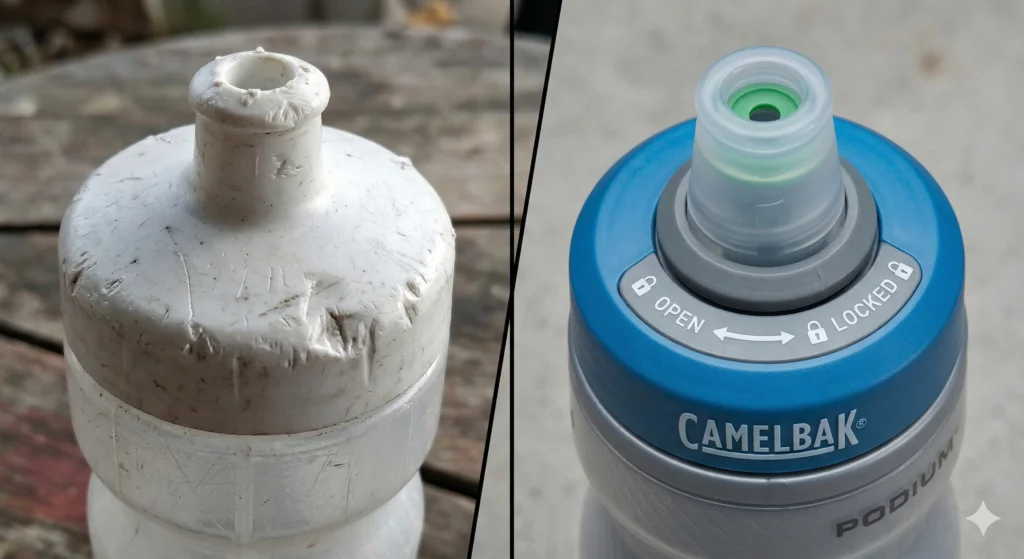
For decades, traditional sports and cycling water bottles relied on a basic push-pull top. You had to pry it open with your teeth, squeeze the rigid plastic body, and manually slam the cap shut on your chin to prevent leaks. It was functional, but highly prone to spilling and breaking over time.
The CamelBak Podium series entirely redefined this mechanism. Instead of a pull-top, the Podium utilizes a unique, high-flow self-sealing Jet Valve constructed from medical-grade silicone. When you squeeze the flexible body of the bottle, the valve opens to deliver a rapid, targeted burst of water. The moment you release pressure, it instantly seals itself back shut. There is no fumbling with your teeth, and zero splashing while riding over rough terrain.
Furthermore, unlike a standard bottle, the Podium features a twist “lockout” dial at the base of the cap. Turning this dial completely shuts off water flow, providing a genuinely leak-proof transport mode when you throw the bottle horizontally into a backpack.
Top CamelBak Water Bottles Reviewed
Camelbak Chute Mag (Best Overall Bottle)
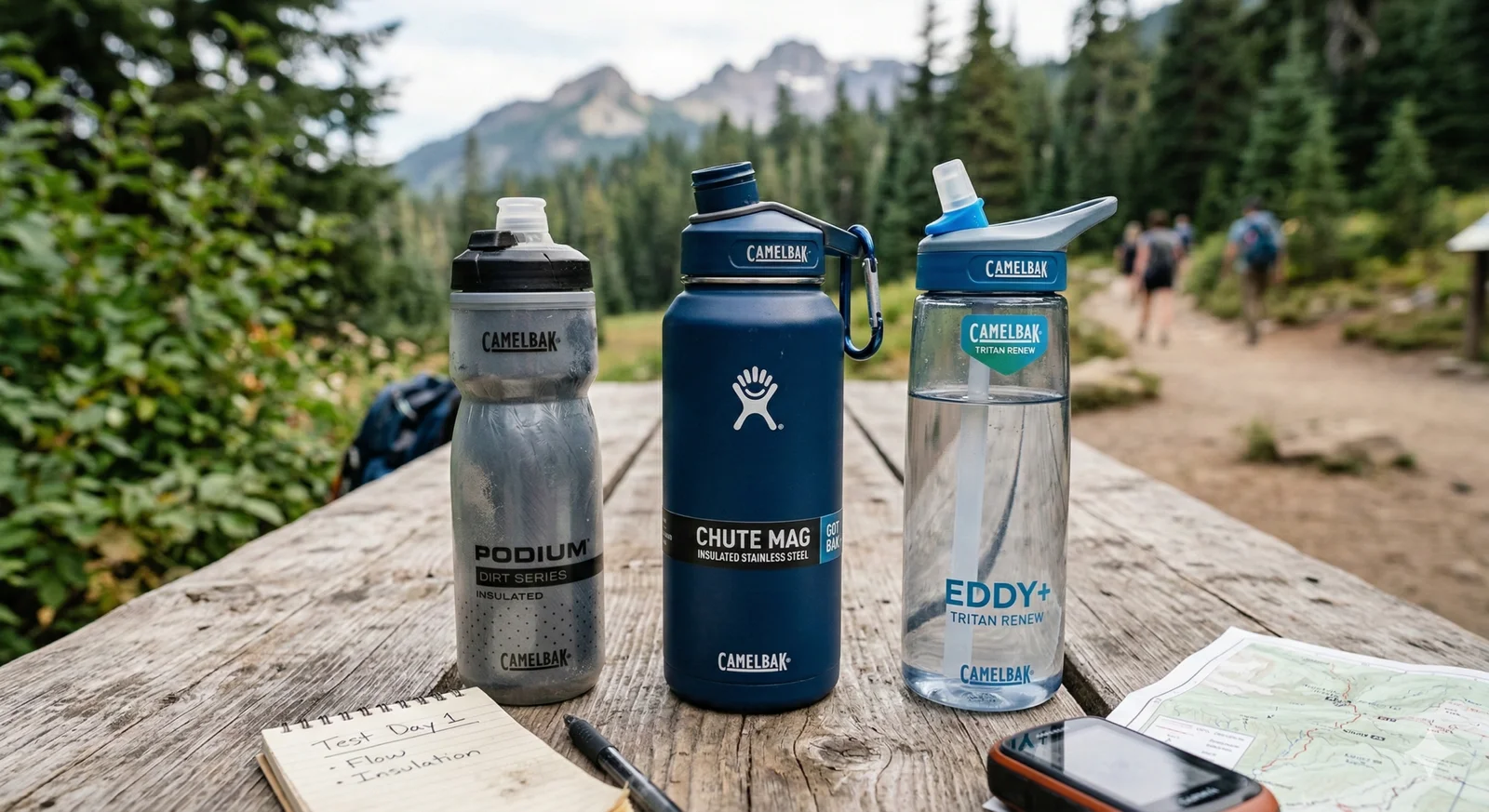
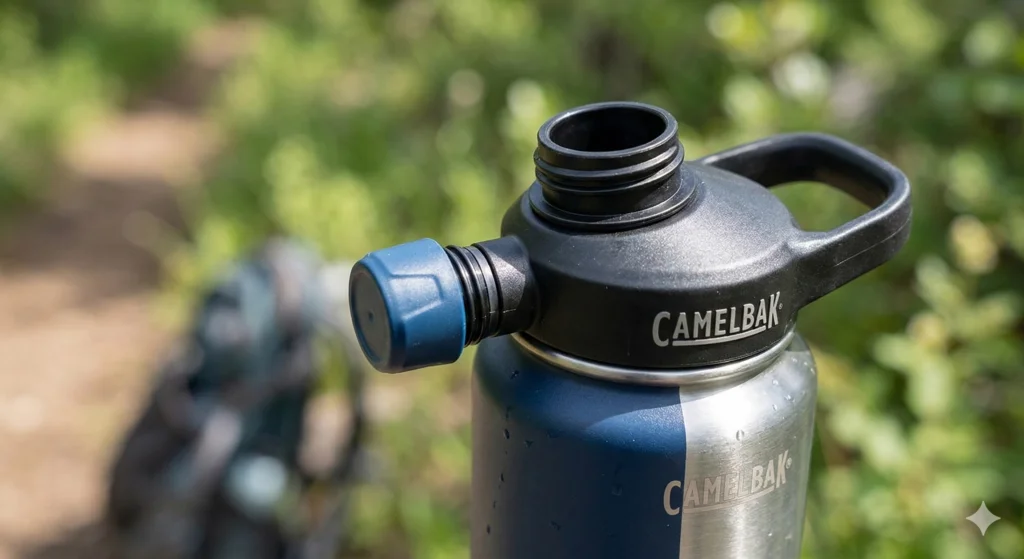
For daily, rugged use, the CamelBak Chute Mag stands out as the most versatile option in the lineup. Its defining feature is a high-flow angled spout designed to deliver water rapidly without the mess of a wide-mouth opening. What truly elevates this model is the ingenious magnetic top that securely stows the cap out of your face while you drink, eliminating the annoyance of a lid swinging back onto your nose.
The Chute Mag is available in both a lightweight, shatter-resistant Tritan Renew plastic—which is crafted from 50% recycled material to resist odors and stains—and a double-wall vacuum-insulated stainless steel variant. In our experience, the insulated 32oz version excels at temperature retention, capable of keeping drinks cold for up to 32 hours and hot for 12 hours while maintaining a completely sweat-proof exterior. If you need a single, dependable bottle for the office, the gym, and the trail, this is the one.
CamelBak Podium Chill & Ice Series
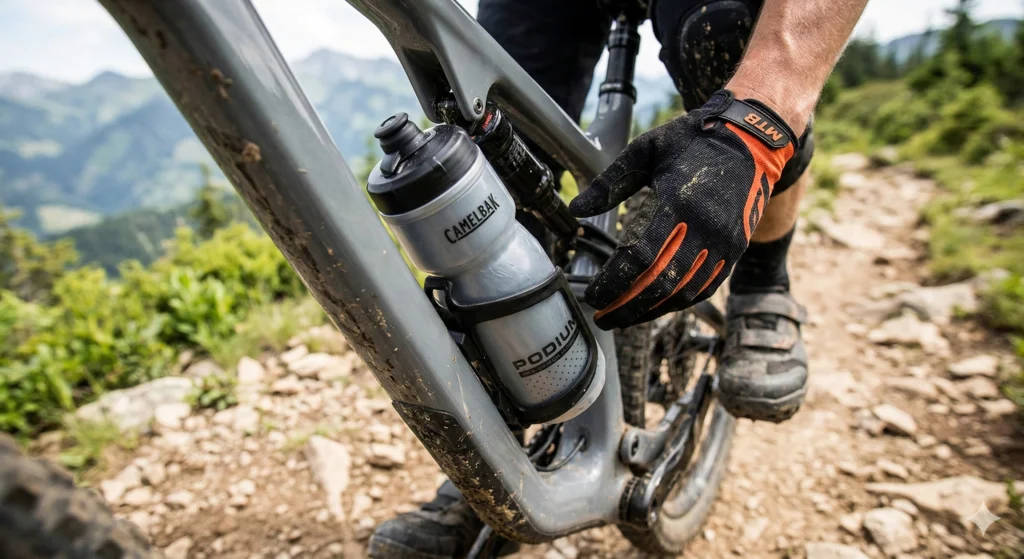
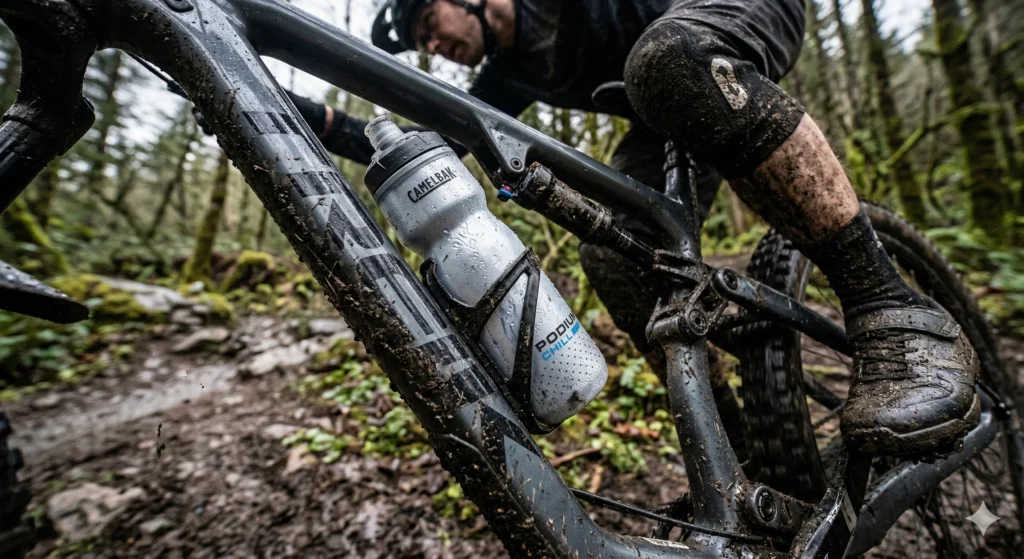
If you are a cyclist, standard water bottles simply do not cut it. The Podium Chill and Podium Ice series are explicitly engineered to fit securely into standard bicycle bottle cages without rattling. Unlike hard-sided bottles, the Podium series uses an easy-to-squeeze polypropylene body that allows you to force a high-flow stream of water into your mouth with minimal effort.
The real magic is in the lid. The self-sealing Jet Valve maximizes flow rate but completely eliminates splatters and spills while riding over rough terrain. For insulation, the Podium Chill uses a double-walled construction designed to keep water cold twice as long as regular sport bottles. If you frequently ride in blistering heat, stepping up to the Podium Ice provides even greater thermal protection. Just remember to engage the positive lockout dial on the cap before tossing it into a gym bag to prevent accidental squeezing and leaking.
CamelBak Eddy+ Bottle Filtered by Lifestraw
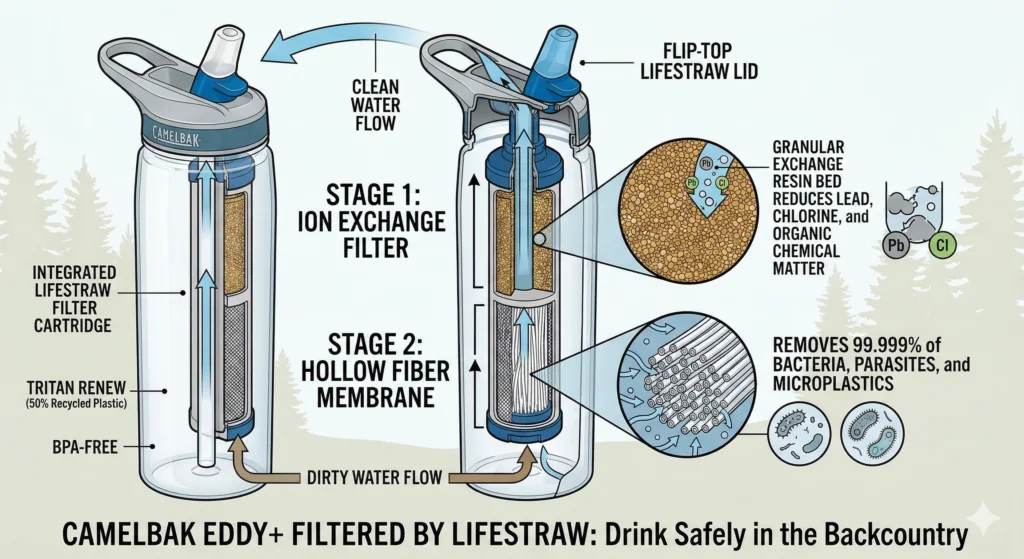
For hikers, backpackers, and travelers venturing off the grid, carrying a separate water filter and drinking vessel can be cumbersome. The Eddy+ Filtered by Lifestraw solves this by integrating a two-stage filtration system directly into the straw.
This system is a game-changer for backcountry hydration. The first stage utilizes a Hollow Fiber Membrane that actively removes 99.9999% of bacteria, parasites, and microplastics from your water source. The second stage uses an Ion Exchange Filter to significantly reduce lead, bad taste, chlorine, and other organic chemical matter. You simply scoop water from a stream, flip up the classic Eddy+ silicone bite valve, and sip safely. While the flow rate is naturally slower due to the heavy-duty filtration process, the peace of mind it provides in remote locations makes it an invaluable piece of survival and hiking gear.
Performance in Use & The Insulation Test
What’s good about CamelBak bottles?
Across all of our testing, CamelBak’s greatest strength lies in its sheer ergonomics and high flow rates. Whether you are squeezing a Podium bottle on a bike or using the magnetic stowed cap on the Chute Mag, you never feel like you are fighting the bottle to get water out.
Durability is another massive high point. Drops on concrete and rocky trails rarely cause more than superficial scratches on both the stainless steel and Tritan plastic models. This ruggedness is backed by CamelBak’s renowned Got Your Bak Lifetime Guarantee, which covers manufacturing defects in materials and workmanship for the lifetime of the product. Knowing that a broken zipper or a defective cap seal will be replaced builds a tremendous amount of trust for buyers looking for a long-term investment.
What’s not so good?
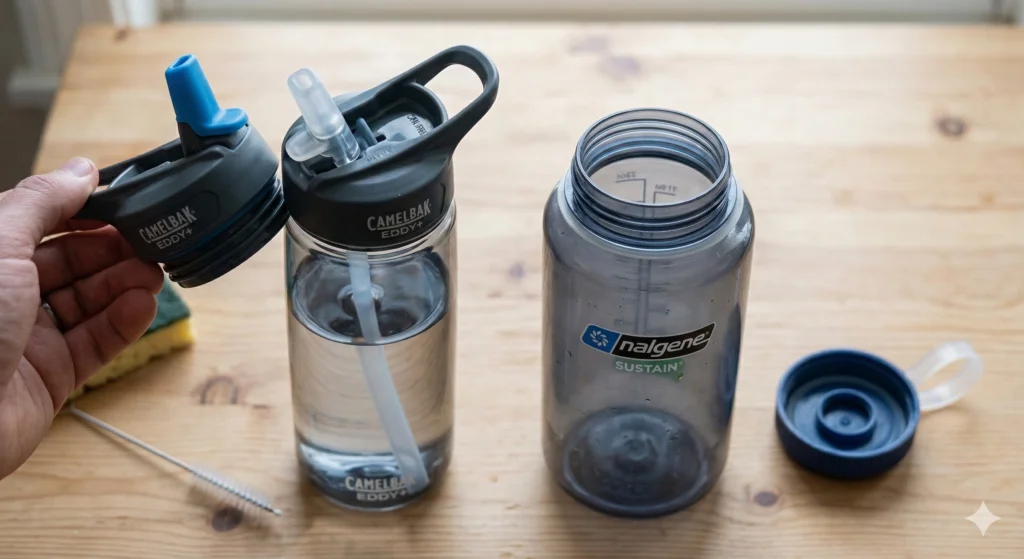
The single biggest complaint among CamelBak users—and one we experienced firsthand—is the rigorous cleaning process required for their bite valves.
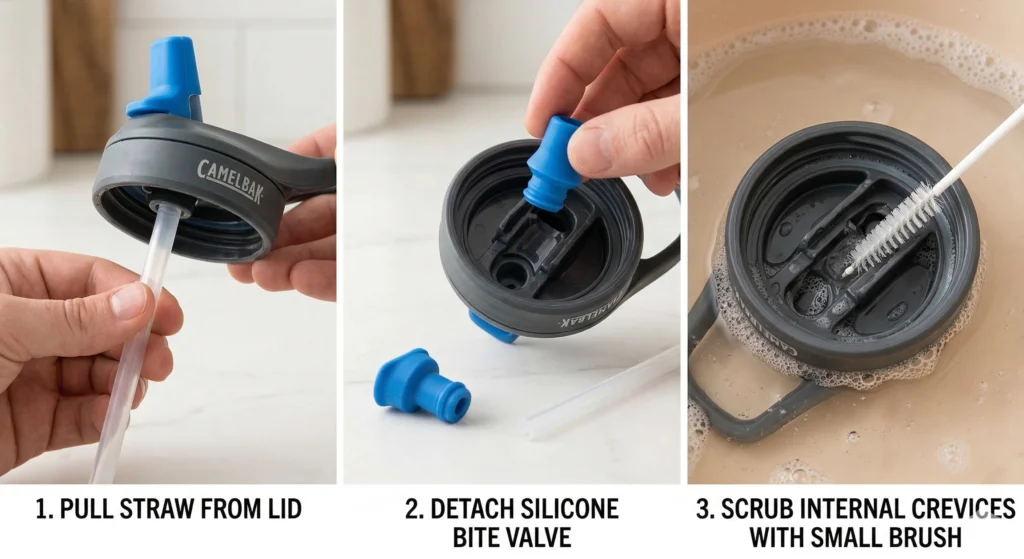
Because the Eddy+ and Podium lids use intricate, medical-grade silicone valves to prevent leaks, moisture easily gets trapped inside the small crevices. If you only rinse the bottle or exclusively run it through the dishwasher without fully disassembling it, mold will inevitably grow inside the mouthpiece. To prevent this, CamelBak explicitly requires users to periodically pull the bite valve and straw entirely out of the cap for a deep clean, soaking them in warm, soapy water and scrubbing the interior. It is undeniably a tedious chore compared to washing a simple wide-mouth bottle.
Material Quality & Insulation
When purchasing a CamelBak, you are generally choosing between two highly capable materials: Tritan Renew plastic or double-wall vacuum-insulated stainless steel.
The plastic models are ideal for ultralight backpacking or the gym, as they will not weigh you down. However, if temperature control is your priority, the insulated stainless steel models are exceptional. In our heat tests, the 32oz insulated Chute Mag successfully kept ice water cold for up to 32 hours and hot beverages warm for 12 hours, all while maintaining a completely dry, sweat-proof powder-coated exterior.
CamelBak vs. The Competition
Who makes the best product: Camelbak, Nalgene, or Klean Kanteen?
When comparing CamelBak to other titans of the hydration industry, the “best” product entirely depends on your tolerance for lid complexity versus your need for rapid hydration.
Nalgene is the undisputed king of indestructible simplicity. Like CamelBak’s hard-sided bottles, modern Nalgenes are crafted from highly durable Eastman Tritan Renew plastic, making them shatter-proof and lightweight. However, Nalgene’s classic wide-mouth design features zero moving parts, making it infinitely easier to clean and completely immune to the mold issues that plague CamelBak’s bite valves. The trade-off is that Nalgene lacks the spill-proof, one-handed drinking experience that makes CamelBak the superior choice for driving or walking.
On the other hand, Klean Kanteen competes aggressively in the metal bottle category. As a certified B Corporation dedicated to eliminating single-use plastics, Klean Kanteen’s stainless steel vessels are incredibly rugged and feature eco-friendly powder coatings. While Klean Kanteen wins on environmental pedigree and minimalist design, CamelBak’s sports-focused ergonomics—particularly the squeezable Podium for cycling and the magnetic Chute Mag cap—still offer a much better experience for high-intensity active users.
CamelBak vs. Yeti and Ello Alternatives
When it comes to extreme temperature retention, Yeti is the heavyweight champion of the market. Yeti’s popular Rambler series is constructed from thick, 18/8 kitchen-grade puncture-resistant stainless steel. In our comparative experience, Yeti offers slightly better multi-day ice retention than CamelBak’s insulated options. However, this comes at a significant weight penalty. Yeti bottles are notoriously heavy and bulky, making them ideal for basecamp or a truck cab, but terrible for cycling, running, or ultralight backpacking where CamelBak shines.
If your primary use case is the office or the yoga studio, Ello is a formidable alternative. Ello specializes in stylish, everyday hydration, frequently utilizing odor-free glass wrapped in protective silicone sleeves or sleek stainless steel. Glass provides the absolute purest water taste, completely avoiding the faint rubbery flavor sometimes reported with new CamelBak silicone bite valves. Ello’s lids are also famously easy to clean. However, for sheer ruggedness and drop survival on a mountain trail, CamelBak’s shatter-resistant Tritan and vacuum-insulated steel remain the superior outdoor choice.
The Bottom Line on CamelBak Bottles
Best Uses & Investment
When you purchase a premium water bottle, you want assurance that it will survive rigorous daily use. CamelBak’s products are an excellent long-term investment primarily because of their renowned Got Your Bak Lifetime Guarantee. This warranty covers all reservoirs, backpacks, and bottles against manufacturing defects in materials and workmanship for the lifetime of the product, meaning a defective seal or a cracked lid straight from the factory will be repaired or replaced free of charge.
Furthermore, CamelBak’s push toward sustainability means that their modern hard-sided plastic bottles are constructed from Tritan Renew, a highly durable material made with 50% recycled plastic. This ensures they are both shatter-resistant and completely safe for commercial dishwashers, greatly extending the bottle’s usable lifespan compared to cheap, single-use plastics.
Matching the right model to your lifestyle is critical to maximizing this investment:
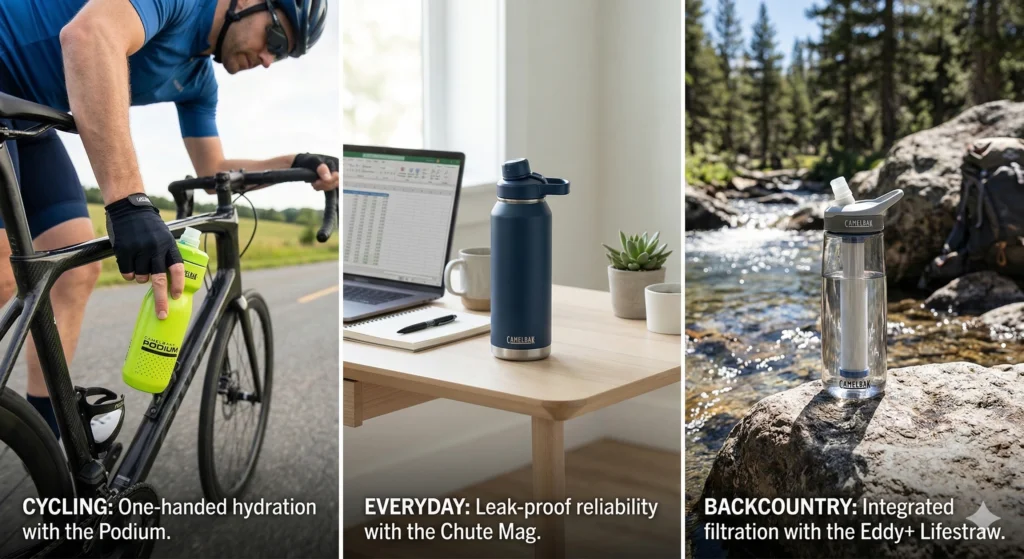
- For Cyclists: The CamelBak Podium Chill is unmatched. Its self-sealing Jet Valve and easy-squeeze body make it the safest and most efficient choice for drinking while riding.
- For Everyday Office & Gym Use: The CamelBak Chute Mag in insulated stainless steel provides excellent temperature retention and features a brilliant magnetic cap that reliably stays completely out of your face while you drink.
- For Hiking & Travel: The CamelBak Eddy+ Filtered by Lifestraw offers unparalleled peace of mind by actively filtering out bacteria and parasites from backcountry water sources right through the straw.
My final verdict is…
CamelBak remains a dominant force in the hydration market for a very good reason: their ergonomic designs prioritize rapid ease of drinking over purely minimalist aesthetics. While the Eddy+ and Podium models require a dedicated—and sometimes tedious—cleaning routine to prevent mold in the medical-grade silicone bite valves, the trade-off for spill-proof, high-flow, one-handed hydration is absolutely worth it for highly active individuals.
If you are tired of struggling with screw-off lids while driving or splashing water on yourself while running, upgrading to a CamelBak is a highly logical choice. For the absolute best all-around experience that perfectly balances easier cleaning with daily utility, the CamelBak Chute Mag stands out as the definitive top recommendation for 2026.
Frequently Asked Questions (FAQ)
What are the problems with Camelbak Podium bottles that you have?
The most universally reported issue with the Podium series is maintaining the cleanliness of the self-sealing Jet Valve. Because the medical-grade silicone valve contains tiny interior crevices, using sugary sports drinks or electrolyte powders can leave sticky residue. If not cleaned properly, this quickly turns into mold. To avoid this, you cannot just rinse it; you must completely disassemble the valve components for a deep scrub using specialized brushes.
Are water bladders worth investing in instead of multiple bottles?
If you are logging high mileage on a hiking trail or mountain bike, dedicated hydration reservoirs are absolutely worth the investment. Bladders centralize the water weight against your back, significantly improving your center of gravity compared to having heavy bottles sloshing around the sides of your pack. Furthermore, the accessible drinking tube encourages continuous, micro-hydration without forcing you to stop and unpack your gear.
Is it safe to put boiling water into CamelBak BPA-free water bottles?
No. While CamelBak’s Eastman Tritan plastic is highly durable and completely commercial-dishwasher safe, CamelBak explicitly advises against pouring rolling boiling water into their plastic vessels. Extreme heat can compromise the structural integrity of the lid seals and cause dangerous internal pressure buildup. If you need to store boiling water for coffee or tea on the trail, you must use their double-wall vacuum-insulated stainless steel variants.
Why would my CamelBak water bottle start leaking for no apparent reason?
If a previously watertight bottle suddenly starts leaking from the mouthpiece, it is almost always due to environmental pressure. When you experience rapid changes in altitude or temperature—such as driving up a mountain pass, taking a flight, or leaving the bottle in a hot car—the air inside the bottle expands. This internal pressure forces water up the internal straw and out the bite valve. To fix this, simply unscrew the main lid a quarter-turn to equalize the air pressure before flipping the mouthpiece open.

What are the pros and cons of Camelbak style hydration systems for running?
The biggest pro of a CamelBak running vest or soft flask system is that it allows for streamlined, hands-free hydration that never disrupts your natural running gait. You do not have to break your stride to drink. The main cons are the unavoidable “sloshing” sound of the water bouncing against your back as the reservoir empties, and the reality that cleaning the long, narrow drinking tubes requires dedicated tube brushes to prevent bacterial growth between runs.
Side Entry bottle cage with easy release for Camelbak Podium 24oz?
The CamelBak Podium 24oz bottle is relatively tall. If you ride a full-suspension mountain bike or a smaller road frame, pulling a 24oz bottle straight up and out of a standard cage will often result in the bottle hitting the top tube of your bike. To solve this, we highly recommend pairing the bottle with a side-load cage, such as the Specialized Zee Cage II. This allows you to smoothly slide the bottle out horizontally, making the taller Podium exceptionally easy to access while riding.