
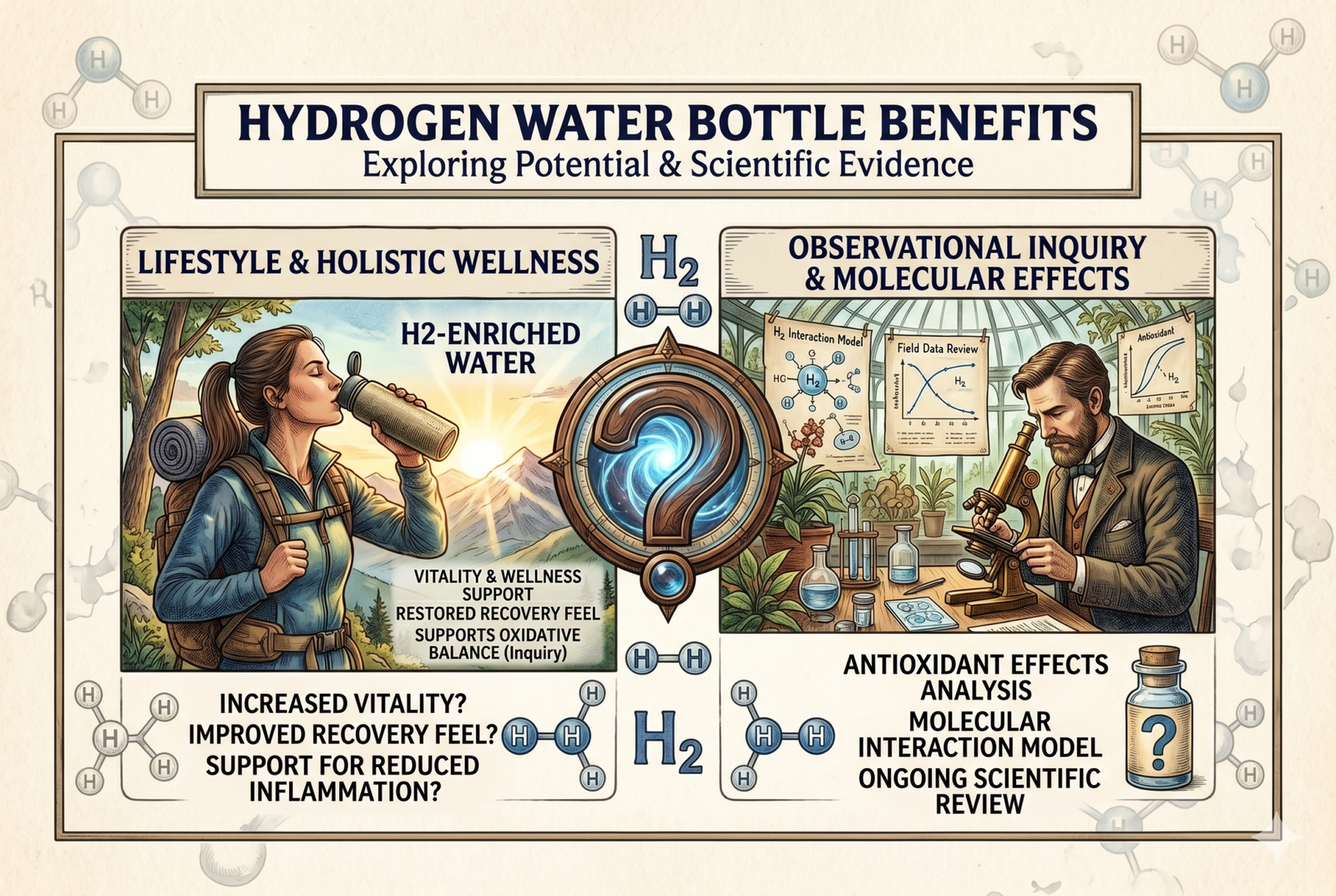
You’ve seen them everywhere: glowing blue bottles on gym floors, wellness influencers sipping from sleek glass cylinders, athletes swearing by them post-workout. Hydrogen water bottles have gone from niche health gadget to mainstream wellness staple. And if you’re wondering whether the hype is real or just clever marketing, you’re asking the right question.
Here’s the honest answer: the science is still developing, but there’s more to it than most people think.
Over 1,000 peer-reviewed studies have explored molecular hydrogen’s effects on the human body. Some of the results are genuinely surprising. A 2024 review published in Antioxidants, examining over 100 clinical studies, confirmed that hydrogen acts as a selective therapeutic antioxidant — one that neutralizes harmful free radicals without disrupting the beneficial signaling your cells actually need. That’s a distinction most antioxidant supplements can’t make.
This guide covers all the known hydrogen water bottle benefits, what the research actually says (including where the evidence is weak), who stands to gain the most, and how to get real results. No marketing fluff, just what’s been studied and what’s still being figured out.
In this guide, you’ll learn:
What Exactly Is Hydrogen Water?
Plain water is H₂O: two hydrogen atoms bonded to one oxygen atom. Hydrogen water is the same, but with extra molecular hydrogen gas (H₂) dissolved into it. Think of it like carbonated water, except instead of CO₂ bubbles, you’re dissolving H₂ molecules.
Molecular hydrogen is the smallest molecule in existence. That tiny size is actually the whole point — it crosses cell membranes, penetrates the blood-brain barrier, and reaches the mitochondria in ways most supplements simply can’t. Once inside your cells, it targets specific harmful reactive oxygen species (particularly hydroxyl radicals, the most damaging type) without touching the beneficial oxidants your immune system depends on.
That selectivity is what separates hydrogen from generic antioxidants like vitamin C or resveratrol, which neutralize free radicals indiscriminately. If you want the wider picture first, our hub covers everything about hydrogen water bottles, from the technology to the buying guides.
How a Hydrogen Water Bottle Creates This Effect
Modern hydrogen water bottles use a process called SPE/PEM electrolysis (Solid Polymer Electrolyte / Proton Exchange Membrane). Fill the bottle with water, press the button, and the built-in electrolysis cell splits water molecules, dissolves hydrogen gas directly into your water, and vents oxygen and any byproduct gases through a separate chamber.
The result: hydrogen-rich water with concentrations typically ranging from 1,000 to 8,000+ parts per billion (ppb), depending on the bottle’s technology and how long the cycle runs. Researchers generally consider 1,500–2,000 ppb the therapeutic threshold, though some studies have used higher concentrations. Those units trip people up, so it is worth fixing once: 1 ppm = 1 mg/L = 1,000 ppb. A bottle advertising 2 ppm and one advertising 2,000 ppb are claiming exactly the same thing.
One thing worth knowing: hydrogen gas escapes water quickly once exposed to air. Most of the beneficial concentration is gone within 30–60 minutes of the cycle ending. So drink it fresh.
One caveat worth carrying through the rest of this guide: a bottle is only one way to take molecular hydrogen. The research also uses hydrogen-generating tablets, hydrogen gas inhalation, and hydrogen-rich saline given intravenously in clinical settings, and those routes can deliver far more hydrogen than a consumer bottle does. When a study reports a strong result, it is worth checking which delivery method it used, because not all of that evidence transfers to a bottle on your desk.
The Key Benefits of Hydrogen Water Bottles
1. Powerful Antioxidant Protection
This is where the science is strongest.
Free radicals (unstable molecules produced by normal metabolism, sun exposure, pollution, stress and intense exercise) cause oxidative stress. Over time, oxidative stress damages DNA, accelerates aging, and contributes to conditions like heart disease, diabetes, and cancer.
Most antioxidants work by neutralizing any available free radical. Molecular hydrogen is different: it selectively targets hydroxyl radicals (•OH) and peroxynitrite (ONOO⁻), the two most destructive reactive oxygen species, while leaving hydrogen peroxide and superoxide (which your immune cells use for killing bacteria) mostly intact.
A landmark 2007 study published in Nature Medicine (Ohsawa et al.) was the first to document this selective mechanism in living models. It sparked a wave of follow-up research that’s still going strong nearly two decades later.
For everyday people, this means drinking hydrogen water from a good bottle can meaningfully reduce the oxidative burden your cells carry — particularly if your lifestyle involves stress, aging, or regular intense exercise.
2. Reduced Inflammation
Chronic low-grade inflammation is behind most major modern diseases: cardiovascular disease, type 2 diabetes, Alzheimer’s, autoimmune conditions, even some cancers. It’s also just responsible for a lot of day-to-day discomfort: joint pain, brain fog, slow recovery from workouts, and persistent fatigue.
Hydrogen water works on inflammation through several pathways. It suppresses pro-inflammatory cytokines, including TNF-α and IL-6, and modulates the Nrf2 pathway, which controls the body’s natural antioxidant enzyme production.
The clinical evidence here is encouraging. A randomized trial published in the Journal of Clinical Biochemistry and Nutrition found that healthy adults drinking hydrogen-rich water had measurably fewer inflammatory markers than a control group on regular water. A study in Medical Gas Research reported that rheumatoid arthritis patients drinking high-concentration hydrogen water showed reduced disease activity, with DAS28 scores falling from 3.83 to 3.02 over four weeks (Ishibashi et al.). Read that one carefully, though: it was an open-label pilot study in 20 patients with no control group, which is the weakest design in this list.
A randomised, double-blind controlled trial published in Scientific Reports in 2020 took this further. Healthy adults who drank 1.5 litres of hydrogen-rich water daily for four weeks showed reduced apoptosis of peripheral blood mononuclear cells and 605 differentially expressed genes compared with the plain-water group. It was a small trial: 20 people on hydrogen water, 18 on plain (Sim et al., 2020).
That’s not nothing. Especially for the large portion of the population dealing with chronic inflammation that conventional advice (eat well, sleep more, stress less) only partially addresses.
3. Athletic Performance and Faster Muscle Recovery
This is where hydrogen water bottles have built their strongest following, and honestly, the evidence holds up reasonably well.
During intense exercise, your muscles accumulate lactic acid and generate significant oxidative stress. That combination is what causes the burning sensation mid-workout, the soreness that sets in 24–48 hours later, and the energy crash that follows a tough session.
Hydrogen-rich water has been shown to reduce all three effects.
A study in the Journal of Strength and Conditioning Research found athletes who consumed hydrogen-rich water showed better endurance, lower blood lactate levels, and higher power output compared to those who drank regular water. A separate study involving elite soccer players found significantly lower blood lactate and reduced muscle fatigue after strenuous training in the hydrogen water group.
A 2024 review of hydrogen-rich water and exercise performance found that molecular hydrogen enhances mitochondrial ATP production while protecting against the oxidative damage that normally impairs that process during intense training.
In practical terms: some athletes report being able to train harder, recover faster, and show up to the next session feeling less beaten up. Whether that translates to measurable performance gains at the elite level is still being studied — but for recreational athletes and regular gym-goers, the recovery effects are probably the most immediately noticeable benefit.
4. Increased Energy Levels
A common report from hydrogen water bottle users is better energy, not a jittery, caffeine-type energy, but a cleaner, more sustained alertness.
The mechanism runs through mitochondria. Your mitochondria produce ATP (your cells’ energy currency) through a process that simultaneously generates reactive oxygen species as a byproduct. When those ROS build up faster than your body can clear them, mitochondrial function degrades and energy production drops.
Hydrogen’s ability to scavenge excess ROS in the mitochondria helps keep that production process running efficiently. There’s also early evidence that hydrogen activates certain mitochondrial biogenesis pathways, meaning it may support the growth of new mitochondria over time with consistent use.
A study from the Journal of Clinical Biochemistry and Nutrition found that sleep-deprived individuals reported significantly greater alertness after drinking hydrogen-rich water compared to a placebo group. Not a cure for sleep deprivation, obviously — but it suggests a real physiological effect on perceived energy levels.
5. Brain Health and Cognitive Function
This one is still early-stage, but the preliminary findings are interesting enough to mention honestly.
The brain is particularly vulnerable to oxidative stress because it consumes about 20% of the body’s oxygen while making up only 2% of its weight. Neuroinflammation, inflammation of brain tissue, is now understood to be a driver of conditions like Alzheimer’s, Parkinson’s, depression, and general cognitive decline.
Hydrogen water can cross the blood-brain barrier because the H₂ molecule is so small. Animal studies have shown it can reduce oxidative damage in hippocampal neurons (the part of the brain most affected by Alzheimer’s) and protect dopaminergic neurons in Parkinson’s models.
A PLoS ONE study demonstrated that hydrogen-rich water reduced oxidative stress and helped preserve neurons in a Parkinson’s model. Human trials on this are still limited, but a few small studies have reported improvements in cognitive test scores and reduced symptoms in early Parkinson’s patients.
For cognitively healthy people, the most commonly reported effect is reduced brain fog and better focus — which, given that both are likely rooted in oxidative stress and neuroinflammation, tracks mechanistically.
6. Skin Health and Anti-Aging Effects
Skin aging is largely oxidative. UV radiation, pollution, stress, and poor diet all accelerate free radical damage to skin cells, breaking down collagen, reducing elasticity, and causing the visible signs we associate with aging.
Hydrogen water addresses this at the cellular level. By reducing oxidative stress in skin cells, it helps protect collagen from breakdown and supports the activity of superoxide dismutase (SOD) — one of the body’s primary antioxidant enzymes responsible for maintaining skin elasticity.
Research published in the Journal of Photochemistry and Photobiology B found that psoriasis patients using hydrogen water baths showed measurable improvements in redness, itching, and scaling. A study published in Hydrogen (MDPI) reported reduced wrinkle scores in participants after several weeks of consistent hydrogen water use, along with improvements in skin moisture and oiliness balance.
Drinking hydrogen-rich water regularly isn’t a replacement for sunscreen or a good skincare routine — but it does appear to work as meaningful supporting biology for skin health, particularly in people with high oxidative stress loads.
7. Metabolic Health and Blood Sugar Support
Metabolic syndrome (the cluster of conditions including high blood sugar, excess abdominal fat, high cholesterol and elevated blood pressure) affects an estimated one in three adults in the US. Oxidative stress and chronic inflammation are central drivers.
Several studies have explored hydrogen water as a complementary support for metabolic health, with encouraging early results.
A study in the Journal of Clinical Biochemistry and Nutrition found that participants with metabolic syndrome who drank hydrogen-rich water for eight weeks showed significant reductions in LDL cholesterol and improved antioxidant enzyme levels compared to a control group. Separate research suggested potential improvements in insulin sensitivity in people with impaired glucose tolerance.
The mechanism involves hydrogen’s ability to reduce lipid peroxidation and support mitochondrial function in liver and muscle cells — both critical for healthy glucose metabolism.
This is one area where longer-term and larger-scale trials are still needed, so take these results as promising rather than conclusive. But for someone already working on metabolic health through diet and exercise, adding hydrogen water is a low-risk complement.
8. Cardiovascular Support
Heart disease is the world’s leading cause of death, and oxidative stress is a primary mechanism behind atherosclerosis, hypertension, and endothelial dysfunction (the breakdown of blood vessel walls).
Research on hydrogen water and cardiovascular health shows some genuinely promising signals, and the lipid evidence is the strongest part of it. A 2024 systematic review and meta-analysis of eight randomised controlled trials found that hydrogen-rich water reduced total cholesterol and triglycerides in people with metabolic disorders (meta-analysis, 2024). Separate trials report improved endothelial function, measured as the reactive hyperemia index, alongside reduced oxidative damage to arterial walls.
These are early findings. Hydrogen water isn’t a treatment for heart disease. But the biological mechanisms (reduced oxidative stress, reduced inflammation, improved lipid profiles) are exactly the ones cardiovascular medicine targets through drugs. The difference is that hydrogen water does it through a natural, non-pharmacological pathway.
9. Cellular Hydration
This benefit is frequently overstated in marketing materials, but there is a real underlying mechanism.
Hydrogen molecules are small enough to penetrate cell membranes directly, potentially improving intracellular hydration at a level that regular water (which must be transported in through aquaporin channels) doesn’t match. Whether this translates into a practically meaningful difference in daily hydration is debated among researchers.
What’s less debatable is the reported subjective experience: many hydrogen water users describe the water as tasting cleaner and lighter, with a smoother finish. That’s not in their heads — the absence of dissolved minerals and the presence of dissolved H₂ gas does change the water’s character, similar to how CO₂ gives sparkling water its distinct feel.
10. Gut Health
An emerging area of hydrogen water research involves the gut microbiome. Early studies suggest hydrogen-rich water may support a healthier balance of gut bacteria, reduce gut inflammation, and support the intestinal lining.
Some of this may operate through hydrogen’s direct antioxidant effects on gut tissue. Some may involve the relationship between hydrogen gas and the gut microbiome itself — your gut bacteria actually produce hydrogen as a fermentation byproduct, and hydrogen appears to interact with bacterial signaling in ways that are still being mapped.
The gut research is the most preliminary of everything covered here, but it’s one of the more exciting areas to watch in coming years.
The Ten Benefits, Ranked by Evidence
Not every benefit above rests on the same quality of evidence. Here is the same ten, sorted by how much support each actually has.
| Benefit | Evidence strength | What that rests on |
|---|---|---|
| Antioxidant protection | Strongest | Mechanism well established; selective targeting of hydroxyl radicals and peroxynitrite |
| Reduced inflammation | Strong | Randomised controlled trials in healthy adults; open-label pilot in rheumatoid arthritis |
| Athletic performance and recovery | Strong | Multiple trials on blood lactate, muscle fatigue and power output |
| Energy levels | Moderate | One placebo-controlled trial in sleep-deprived adults |
| Brain and cognitive function | Preliminary | Mostly animal models; a few small human trials |
| Skin health | Early | Small studies on wrinkle scores, skin moisture and psoriasis |
| Metabolic health and blood sugar | Moderate | 2024 meta-analysis of eight randomised trials on blood lipids |
| Cardiovascular support | Early | Endothelial function and lipid markers; no clinical outcome data |
| Cellular hydration | Weak | Mechanism plausible; practical effect debated among researchers |
| Gut health | Most preliminary | Early-stage research only |
What the Science Actually Says: An Honest Assessment
It would be easy to present all of the above as settled fact. It’s not.
Most hydrogen water studies are small, often 20–50 participants. Many use short intervention periods of four to twelve weeks. The field lacks large-scale, long-duration randomized controlled trials. There’s no regulatory body setting standards for hydrogen concentration in commercially sold bottles, which makes quality control inconsistent.
There is also an obvious alternative explanation these studies have to rule out. Participants typically drink 1 to 1.5 litres of water a day that they were not drinking before, so some of the benefit could simply be better hydration. The trials that handle this properly give the comparison group the same volume of plain water, which is what the 2020 Scientific Reports trial did. When you read a hydrogen water claim, check whether the control group drank the same amount.
The FDA has granted molecular hydrogen GRAS (Generally Recognized As Safe) status (it’s officially safe) but GRAS says nothing about therapeutic benefits.
Here’s how to think about it: the mechanism (selective antioxidant targeting of hydroxyl radicals) is solid and well-established chemistry. The short-term benefits (reduced oxidative stress markers, faster exercise recovery, lower inflammatory markers) have consistent support across multiple studies. The longer-term and disease-specific benefits (neuroprotection, cancer support, metabolic disease management) have promising preliminary findings but need more research.
The practical takeaway: hydrogen water is a low-risk, science-informed wellness intervention. It’s not a miracle cure, and anyone selling it as one is lying. But writing it off as pure hype ignores over a decade of peer-reviewed research with real findings.
Important Disclaimer: The benefits described here are based on early and emerging research. Hydrogen water is not a medicine and is not intended to diagnose, treat, cure, or prevent any disease. Always consult a qualified healthcare professional for medical advice, especially if you have an existing health condition.
Who Benefits Most from a Hydrogen Water Bottle?
The research consistently points to the highest-impact users being:
Athletes and active people: The exercise recovery and performance benefits have the most robust evidence base. If you train regularly, the reduction in lactic acid buildup, muscle soreness, and oxidative stress from exercise is where you’ll notice the most.
People with chronic inflammation: Joint pain, autoimmune conditions, or general inflammatory markers — hydrogen water’s anti-inflammatory mechanism is well-documented and likely relevant here.
Anyone 40+: Oxidative stress accumulates with age. Mitochondrial function declines. The cellular-level support hydrogen provides becomes increasingly meaningful as the body’s natural antioxidant production drops off.
People under high stress: Psychological and physical stress both elevate oxidative stress. Consistently high-stress individuals may notice the energy and cognitive clarity benefits most.
Those focused on skin health: The collagen protection and antioxidant support for skin cells has real research behind it, particularly for those in high-UV environments or with existing skin conditions.
How to Maximize the Benefits
Getting real results from a hydrogen water bottle isn’t just about pressing the button. A few things matter:
Drink it fresh. Hydrogen gas dissipates quickly. The concentration drops significantly within 30–60 minutes of the cycle ending. Drink immediately or keep the bottle tightly sealed until you’re ready.
Choose the right bottle. Look for SPE/PEM electrolysis technology (not basic electrode bottles that can produce chlorine and ozone byproducts), hydrogen output of at least 1,500 ppb, BPA-free food-grade materials, and third-party testing where possible. A cheap bottle producing low-concentration, contaminated water isn’t going to replicate what the studies show.
Be consistent. Most studies that show meaningful results use daily intake of 1–1.5 liters over periods of four to eight weeks. Occasional use is unlikely to produce the measurable benefits seen in trials.
Use filtered or purified water. Tap water minerals can affect electrolysis efficiency and hydrogen concentration. Filtered water generally produces higher and more consistent hydrogen output.
Time it strategically. If athletic recovery is your goal, drink within 30 minutes before or immediately after exercise. For cognitive benefits, first thing in the morning before coffee appears to be when most users report the clearest effect.
Side Effects and Safety
Hydrogen water is one of the safest wellness interventions available.
Molecular hydrogen is naturally produced in your gut through bacterial fermentation. You’ve been producing it your whole life. The FDA classifies it as Generally Recognized As Safe, and over 200 clinical studies have not identified significant adverse effects from regular consumption.
There are no known drug interactions. No toxicity at normal intake levels. No documented negative effects on kidneys, liver, or any other organ.
The main caveat is water quality from a poor-quality bottle. Cheap hydrogen water bottles that use uncoated or low-quality electrodes without proper SPE/PEM membrane technology can potentially produce ozone, chlorine, or metal particles as byproducts of electrolysis. This is why bottle quality matters — not because hydrogen itself is dangerous, but because what else is in your water can be.
Drink plenty of plain water alongside hydrogen water. Hydrogen water is not a replacement for your overall daily hydration. It’s an addition to it.
Hydrogen Water Bottle vs. Regular Water: Is It Worth It?
This is probably the most practical question.
Regular water, especially filtered tap water, is excellent for hydration and health. The baseline benefits of being well-hydrated (improved cognition, better physical performance, clearer skin, healthier kidneys) are well-established and not something hydrogen water replaces.
What hydrogen water potentially adds is the antioxidant and anti-inflammatory effect of dissolved molecular hydrogen. That’s meaningfully different from hydration itself. A well-hydrated person can still have high oxidative stress. A well-hydrated athlete still accumulates lactic acid during intense training.
Is it worth it? That depends on your goals, your current health context, and your budget.
If you’re already dealing with inflammation, training seriously, or focused on longevity and cellular health, the evidence suggests real potential value. If you’re just looking for basic hydration and already drink enough water, the case is weaker.
Feature | Regular Water | Hydrogen Water (quality bottle) |
|---|---|---|
Basic hydration | ✓ | ✓ |
Antioxidant properties | ✗ | ✓ |
Anti-inflammatory effect | ✗ | Research-supported |
Athletic recovery support | ✗ | Research-supported |
Brain health support | ✗ | Preliminary evidence |
Skin protection | ✗ | Early evidence |
Cost | Low | Medium-high ($200+) |
Evidence strength | Established | Growing |
Frequently Asked Questions
What does a hydrogen water bottle actually do?
It infuses regular water with dissolved molecular hydrogen gas through electrolysis. When you drink it, the hydrogen molecules act as selective antioxidants, targeting harmful free radicals in your cells without disrupting the body’s natural beneficial oxidants.
How long does it take to see benefits from hydrogen water?
Most studies that report measurable results use a consistent intake period of four to eight weeks. Some users report noticing improved energy and post-workout recovery within the first one to two weeks. Results vary based on individual health status and bottle quality.
How much hydrogen water should I drink per day?
Most research protocols use 1–1.5 liters per day. There’s no established upper limit, and excess hydrogen gas is simply exhaled or expelled. Drinking 1–2 full cycles from your bottle daily covers what the studies use.
Can you drink hydrogen water every day?
Yes. It’s safe for daily use. The FDA has granted molecular hydrogen GRAS (Generally Recognized As Safe) status, and no studies have found adverse effects from regular daily consumption.
Does hydrogen water actually work?
For oxidative stress reduction, exercise recovery, and inflammation, there’s consistent clinical evidence suggesting it works. For other areas like neuroprotection and metabolic health, the evidence is promising but still developing. It’s not a miracle cure, but it’s also not a scam.
Is hydrogen water better than alkaline water?
They’re different products addressing different things. Alkaline water adjusts pH levels and has limited evidence for distinct health benefits. Hydrogen water contains dissolved molecular hydrogen, which has substantially more research supporting specific biological mechanisms. They are not the same thing and should not be compared directly.
How many PPM (parts per million) of hydrogen is effective?
Most researchers consider 1.5–2.5 ppm (1,500–2,500 ppb) the effective range for biological effects. Some premium bottles produce 3–8+ ppm. Higher isn’t necessarily better past a point, since the body can only absorb so much at once.
Does hydrogen water help with weight loss?
There’s limited direct evidence for weight loss specifically. However, studies showing hydrogen water’s support for metabolic health, insulin sensitivity, and lipid profiles suggest it may be a useful complement to a weight management strategy — not a standalone solution.
Can hydrogen water help with skin?
Early research is encouraging. Studies show reduced wrinkle scores, improved skin moisture, and better outcomes in certain skin conditions (including psoriasis). The mechanism — protecting skin cells from free radical damage — is sound.
Are hydrogen water bottles safe?
Yes, when you choose a quality bottle. Look for SPE/PEM technology, platinum-coated electrodes, and BPA-free materials. Cheap bottles with uncoated electrodes may produce unwanted byproducts.
Is hydrogen water good for kidneys?
The honest answer is that the research is early and mostly is not about drinking from a bottle. The clearest work involves hydrogen-enriched dialysis solution in people receiving haemodialysis, and much of the remaining kidney research is in animals rather than humans. Molecular hydrogen has no established toxicity for healthy kidneys and the FDA recognises it as safe as a food additive, so a quality bottle is not a risk to them. But there is no good basis for treating hydrogen water as a kidney treatment, and anyone with chronic kidney disease should speak to their doctor before adding anything new.
The Bottom Line
Hydrogen water bottles aren’t magic. There’s no single supplement or device that is. But they’re also not the vague wellness theater that some skeptics dismiss them as.
The core benefit, molecular hydrogen acting as a selective antioxidant to reduce oxidative stress, is supported by solid biochemistry and a growing body of clinical research. The exercise recovery effects have the strongest evidence base. The anti-inflammatory effects are well-documented. The brain health and metabolic benefits are promising and actively being studied.
For most people, the question isn’t whether hydrogen water works — it’s whether the specific benefits are relevant to your health goals and worth the investment. If you train hard, deal with chronic inflammation, or care about cellular longevity, the case is genuinely strong.
If you want to try one, prioritize quality over price. A bottle producing inconsistent hydrogen at low concentrations isn’t going to replicate what the studies show. Look for SPE/PEM technology, verified concentration output, and materials you’d trust in contact with your drinking water.