
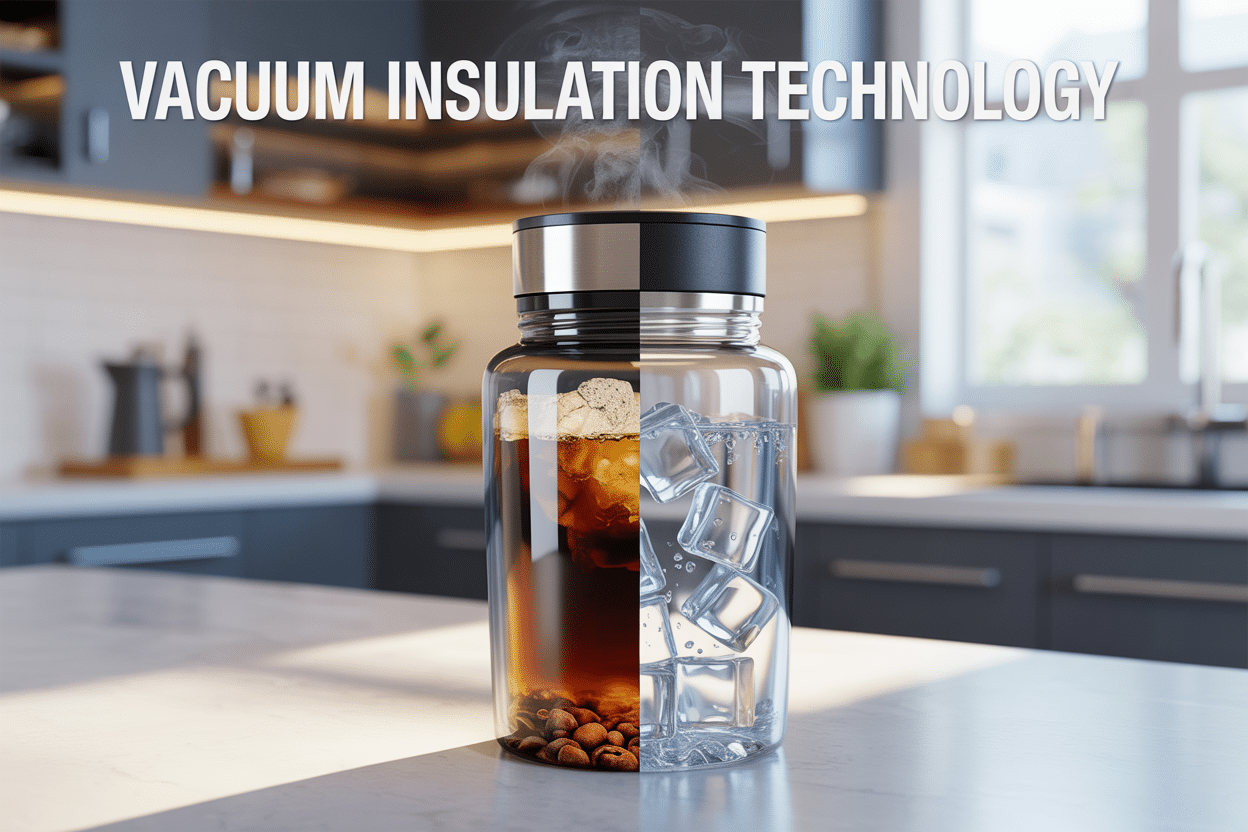
Everyone from busy commuters to outdoor adventurers has wondered how insulated water bottles keep drinks hot or cold for hours. These clever containers use vacuum insulation technology to create a barrier that prevents heat transfer, keeping your morning coffee steaming or your ice water refreshing all day long.
This guide is for anyone curious about the science behind their favorite stainless steel water bottles or considering upgrading from single-wall containers. We’ll break down how double wall vacuum bottles actually work, compare different insulation methods to show why vacuum technology beats the alternatives, and explore the real-world benefits for temperature retention of both hot and cold beverages.
- Understanding Vacuum Insulation Technology
- How Vacuum Insulated Bottles Outperform Alternatives
- Temperature Retention Benefits for Hot and Cold Beverages
- Durability and Long-term Performance
- Conclusion
- FAQs
- How long can insulated water bottles keep drinks hot or cold?
- Do all insulated water bottles use the same technology?
- Why do some insulated bottles work better than others?
- Can the vacuum seal break in insulated bottles?
- Are stainless steel water bottles better than other materials for insulation?
- How should I care for my vacuum insulated bottle?
Understanding Vacuum Insulation Technology
Double-walled construction creates barrier between temperature zones
The foundation of vacuum insulation technology lies in its innovative double-walled construction, which creates an effective barrier between two different temperature zones. This sophisticated design features two separate walls with a vacuum space between them, forming a critical barrier that prevents temperature molecules from moving between the interior and exterior of insulated water bottles.
The inner wall maintains direct contact with your beverage, whether hot or cold, while the outer wall remains at ambient temperature. This separation ensures that the temperature of your drink remains isolated from external environmental conditions. The double-wall vacuum bottles utilize this principle to create distinct temperature zones that operate independently of each other.
Vacuum space eliminates air molecules that transfer heat
The vacuum space between the two walls represents the core innovation of vacuum insulation technology. This space is void of air, effectively eliminating air molecules that would otherwise transfer heat between the inner and outer walls. By removing these air molecules, vacuum sealed water bottles create an environment where traditional heat transfer through air cannot occur.
This vacuum environment provides exceptional thermal insulation by creating a nearly empty space where heat has no medium through which to travel. The absence of air molecules means there are virtually no particles available to carry thermal energy from one wall to the other, making the vacuum space an incredibly effective insulator for temperature retention bottles.
Three heat transfer mechanisms blocked: conduction, convection, and radiation
Vacuum insulated bottles excel at blocking the three primary heat transfer mechanisms that typically cause temperature loss. Conduction is prevented by removing material contact between the walls, as heat cannot transfer through solid materials when there’s a vacuum barrier. The vacuum space eliminates the possibility of conduction occurring through direct material contact.
Convection is blocked through the removal of air molecules that would normally create convection currents. Without air or other gases present in the vacuum space, there can be no convection currents to transfer heat between the walls. This makes thermos bottle technology highly effective at maintaining beverage temperatures.
Radiation heat transfer is largely absorbed by the multiple layers of the double-walled construction. While radiation can still occur to some degree, the layered design of stainless steel water bottles significantly reduces radiative heat transfer, making it the least significant factor in temperature loss for these insulated bottle benefits.
How Vacuum Insulated Bottles Outperform Alternatives
Single wall bottles transfer temperature directly to your hands
Single-wall insulated water bottles represent the most basic construction method, offering minimal thermal protection between your beverage and the external environment. These bottles feature only one layer of material, typically stainless steel or plastic, which creates a direct thermal pathway from the liquid contents to your hands. When you pour hot coffee or tea into a single-wall bottle, the heat immediately conducts through the metal wall, making the exterior surface uncomfortably hot to hold within minutes. Conversely, when filled with ice-cold water, these bottles become cold to the touch, often creating condensation on the outside surface that can make them slippery and uncomfortable to grip.
The lack of any barrier between the contents and the outer shell means that single-wall bottles provide virtually no temperature retention capabilities. Your hot beverages will rapidly cool to room temperature, while cold drinks quickly warm up, especially in hot weather conditions.
Double wall bottles provide limited insulation without vacuum seal
Double wall vacuum bottles represent a step up from single-wall construction but still fall short of optimal thermal performance. These bottles feature two separate walls with an air gap between them, which provides some insulation properties compared to single-wall alternatives. The air space acts as a basic thermal barrier, slowing down heat transfer through conduction.
However, without a proper vacuum seal, double-wall bottles have significant limitations in their insulation capabilities. The air trapped between the walls can still conduct heat, albeit more slowly than direct contact. While these bottles can keep cold drinks cool for a reasonable period, they do not effectively keep hot drinks warm for extended periods. The thermal bridging that occurs where the inner and outer walls connect creates weak points that allow heat to escape, reducing overall temperature retention performance.
Vacuum insulation maintains drink temperature for up to 6 hours
Vacuum insulated bottles represent the pinnacle of thermal retention technology, significantly outperforming both single-wall and basic double-wall alternatives. By creating a vacuum between the two stainless steel walls, these bottles eliminate the primary method of heat transfer – conduction through air molecules. Without air molecules present in the vacuum space, thermal energy cannot easily move from the inner wall to the outer wall.
This vacuum insulation technology enables these bottles to maintain the temperature of their contents for up to 6 hours, dramatically extending the usability of both hot and cold beverages. The superior thermal insulation bottles performance means your morning coffee stays hot throughout your commute and well into your workday, while ice-cold water remains refreshingly cool during long outdoor activities. This extended temperature retention makes vacuum sealed water bottles the preferred choice for anyone serious about maintaining their beverage’s optimal temperature throughout the day.
Temperature Retention Benefits for Hot and Cold Beverages
Keep cold drinks refreshingly cool without freezing the bottle
Insulated water bottles excel at maintaining cold beverage temperatures through their sophisticated vacuum insulation technology. When you fill your double wall vacuum bottles with cold water and ice, the vacuum-sealed chamber between the walls prevents heat transfer from the external environment. This means your drinks stay refreshingly cool for hours without requiring you to freeze the bottle itself.
The beauty of vacuum sealed water bottles lies in their ability to preserve the initial temperature of cold beverages naturally. Unlike single-wall containers that quickly absorb ambient heat, thermal insulation bottles create an effective barrier that keeps your ice water, cold brew, or chilled beverages at their optimal temperature throughout the day.
Maintain hot beverages at optimal temperature for extended periods
Temperature retention bottles demonstrate their superior performance when it comes to hot beverages. The same vacuum insulation that keeps cold drinks cool works in reverse for hot liquids, creating an incredibly effective thermal barrier. Hot beverages can be maintained at an optimal temperature for up to 6 hours, even when exposed to cold conditions.
This extended heat retention capability makes stainless steel water bottles with vacuum insulation ideal for outdoor activities, long commutes, or situations where you need your coffee, tea, or hot chocolate to remain perfectly warm. The thermos bottle technology ensures that your morning coffee tastes just as hot and flavorful hours after brewing.
External bottle surface remains comfortable to hold regardless of contents
One of the most remarkable insulated bottle benefits is how the external surface remains comfortable to touch regardless of what’s inside. The two walls with an air void create a complete thermal separation, preventing you from feeling the temperature of the bottle’s contents through the outer surface.
This comfort feature means you can confidently grip your bottle whether it contains scalding hot coffee or ice-cold water, without discomfort or the need for additional sleeves or protective covers.
Durability and Long-term Performance
Well-maintained vacuum insulation never stops working
The vacuum insulation technology in double wall vacuum bottles operates on simple physics principles that remain constant over time. When properly maintained, the vacuum seal between the inner and outer walls of insulated water bottles continues to provide consistent temperature retention performance indefinitely. Unlike other insulation methods that can degrade, compress, or lose effectiveness, the vacuum chamber in thermal insulation bottles maintains its properties as long as the seal remains intact.
This permanent functionality makes vacuum sealed water bottles exceptionally reliable for long-term use. The absence of air molecules in the vacuum space means there are no materials to break down or deteriorate over time. Regular cleaning and careful handling are all that’s required to maintain optimal performance, making these bottles a dependable choice for daily use and extended adventures.
Stainless steel construction provides superior durability for adventures
Stainless steel water bottles equipped with vacuum insulation technology offer unmatched durability compared to regular water bottles. The robust construction withstands the rigors of outdoor adventures, camping trips, and daily wear without compromising the insulation performance. The stainless steel exterior resists dents, scratches, and corrosion while protecting the crucial vacuum seal that enables superior temperature retention.
This enhanced durability makes vacuum insulated bottles ideal for hiking, mountaineering, and other demanding activities where equipment reliability is essential. The combination of vacuum insulation and stainless steel construction ensures that these bottles can handle drops, impacts, and extreme conditions while continuing to keep beverages at the desired temperature for hours.
Investment value with lifetime performance and repair warranties
Insulated water bottles represent a worthwhile long-term investment due to their exceptional durability and performance consistency. Many manufacturers of high-quality thermos bottle technology back their products with comprehensive warranty programs, including lifetime performance guarantees and repair schemes. These warranties demonstrate the confidence manufacturers have in their vacuum insulation systems and stainless steel construction.
The investment value extends beyond the initial purchase price when considering the longevity of well-made vacuum insulated bottles. Rather than repeatedly replacing inferior bottles, users can rely on a single high-quality insulated bottle for years or even decades of consistent performance. Some manufacturers offer repair and replacement programs that further enhance the long-term value proposition, ensuring that minor issues don’t require complete bottle replacement.
Conclusion
Vacuum insulated water bottles represent a remarkable fusion of simple physics and practical engineering. By creating a double-walled barrier with a vacuum between layers, these bottles effectively eliminate the three primary mechanisms of heat transfer – conduction, convection, and radiation. This technology allows your beverages to maintain their intended temperature for up to 6 hours, whether you’re enjoying hot tea on a winter hike or cold water during summer activities.
The superior performance of vacuum insulation over single-wall and traditional double-wall alternatives makes these bottles a worthwhile investment for anyone seeking reliable temperature retention. With proper care, the insulation never stops working, and the durable stainless steel construction ensures years of dependable service. Whether you’re looking to keep your morning coffee hot during your commute or maintain ice-cold water throughout a long day, vacuum insulated bottles deliver consistent results that traditional containers simply cannot match.
FAQs
How long can insulated water bottles keep drinks hot or cold?
High-quality vacuum insulated bottles can keep drinks hot for 12-24 hours and cold for 24-48 hours. The exact duration depends on several factors including the bottle’s construction quality, initial temperature of the beverage, ambient temperature, and how often you open the bottle. Double wall vacuum bottles with premium stainless steel construction typically perform at the higher end of these ranges.
Do all insulated water bottles use the same technology?
Not all insulated bottles work the same way. While most quality bottles use vacuum insulation technology, cheaper alternatives might rely on foam insulation or air gaps, which are far less effective. True vacuum sealed water bottles create an airless space between inner and outer walls, preventing heat transfer through conduction and convection. Some bottles also include reflective coatings to minimize radiant heat transfer.
Why do some insulated bottles work better than others?
The performance difference comes down to construction quality and materials. Premium thermal insulation bottles use:
- Higher-grade stainless steel that’s more resistant to temperature transfer
- Better vacuum sealing processes that remove more air from the space between walls
- Thicker wall construction that provides more insulation space
- Quality control standards that prevent microscopic leaks in the vacuum seal
Cheaper bottles might have incomplete vacuum seals or use thinner materials that compromise temperature retention.
Can the vacuum seal break in insulated bottles?
Yes, vacuum seals can deteriorate over time, especially if the bottle experiences extreme temperature changes, physical damage, or manufacturing defects. Signs of a compromised vacuum include condensation forming on the outer wall when holding cold drinks or the bottle feeling warm when containing hot beverages. Quality thermos bottle technology is designed to maintain the vacuum seal for years with proper care.
Are stainless steel water bottles better than other materials for insulation?
Stainless steel dominates the insulated bottle market because it’s non-reactive, durable, and has excellent thermal properties. Unlike plastic or glass, stainless steel can withstand the manufacturing process needed to create reliable vacuum seals. It also doesn’t absorb flavors or odors and can handle both hot and cold beverages safely.
How should I care for my vacuum insulated bottle?
Proper maintenance keeps your bottle performing at peak efficiency:
- Hand wash with warm soapy water instead of using dishwashers
- Avoid dropping or denting the bottle, which can compromise the vacuum seal
- Don’t expose the bottle to extreme temperature differences rapidly
- Store with the cap off occasionally to prevent moisture buildup
- Replace rubber seals and gaskets when they show wear
Regular cleaning and gentle handling will keep your insulated water bottles working effectively for years.