

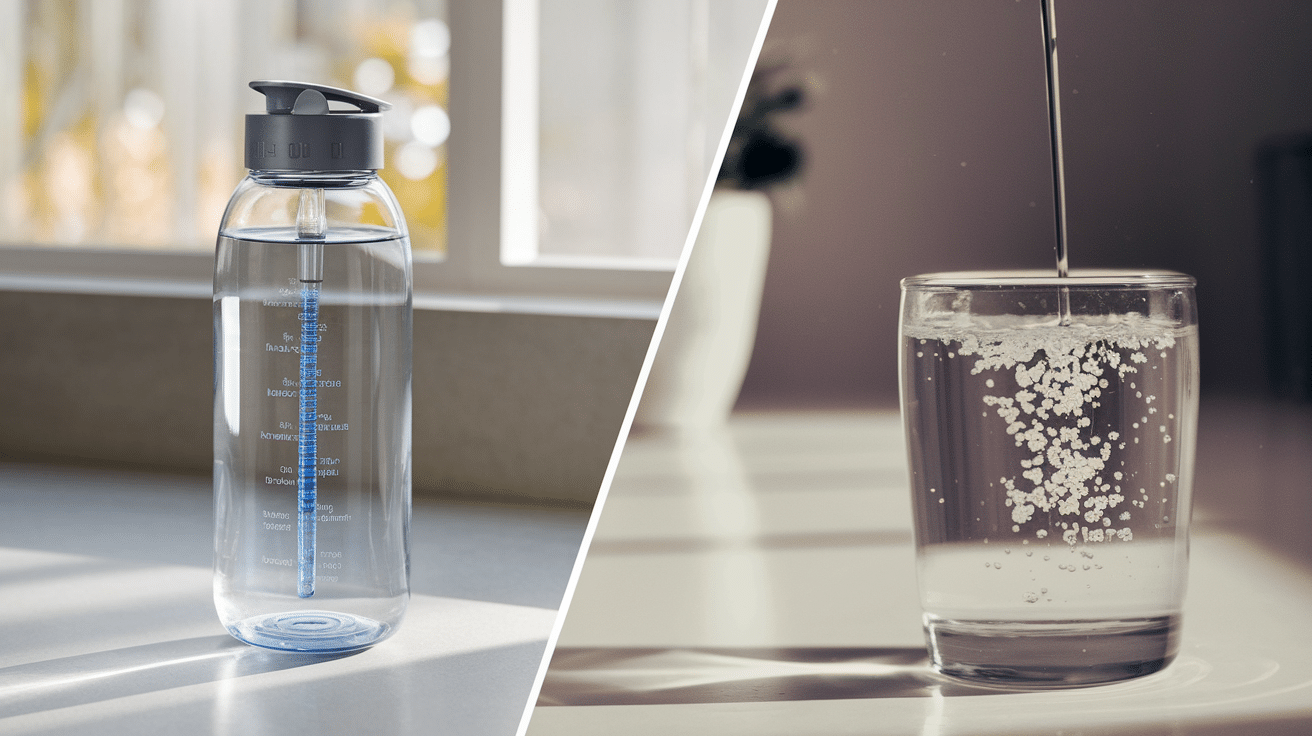
Are you confused about the best way to enjoy hydrogen-rich water? You’re not alone. With hydrogen water gaining popularity for its potential health benefits, consumers are faced with a choice: invest in a hydrogen water bottle with built-in electrolysis technology, or opt for the seemingly simpler hydrogen tablets? While both options can deliver molecular hydrogen (H2) to your drinking water, they differ significantly in taste, convenience, safety, and long-term value.
We spend most of our time on the bottle side of this market and none at all selling tablets, which makes this one easy to run straight. The hydrogen water bottle vs hydrogen tablets question comes down to three things: how much hydrogen each method actually delivers, how long it stays in the glass, and what else ends up in there with it. What follows is drawn from the published research and from what owners of both report, not from a lab we do not have.
- Hydrogen Water Bottle vs Hydrogen Tablets at a Glance
- How Bottles and Tablets Each Make Hydrogen
- Taste: Electrolysis vs a Dissolving Tablet
- Convenience: Which One Actually Fits Your Day
- Safety: What Each One Puts In Your Water
- Cost: Bottles vs Tablets Over Five Years
- Environmental Impact: Waste vs Electricity
- Does Any of This Actually Work?
- Conclusion
- FAQ
- When is the best time to consume hydrogen water?
- What is the recommended dosage for hydrogen tablets?
- Can hydrogen tablets be mixed with other beverages?
- Does water temperature affect hydrogen tablet effectiveness?
- What type of container should be used with hydrogen tablets?
- Which is more cost-effective: hydrogen water bottles or tablets?
- Is there a taste difference between hydrogen water from bottles versus tablets?
Hydrogen Water Bottle vs Hydrogen Tablets at a Glance
The short answer. Tablets win on peak concentration and on travel. Bottles win on cost per glass, on consistency, and on not adding magnesium to every drink. If you drink hydrogen water at home most days, buy a bottle. If you mainly want it on planes and in hotel rooms, buy tablets. If you want both, most people end up with a bottle at home and a strip of tablets in a bag.
| Hydrogen water bottle | Hydrogen tablets | |
|---|---|---|
| Peak concentration | Lower, steadier | Higher initial burst |
| Holds its concentration | Until you pour it | Escapes fast — drink at once |
| What it adds to the water | Nothing but H2 | Magnesium and a food acid |
| Cost pattern | One purchase | Recurring, every dose |
| Portability | Bottle-sized | Pocket-sized |
| Consistency | Repeatable each cycle | Varies with water and seal |
| FDA status | Not evaluated | Ingredients GRAS |
How Bottles and Tablets Each Make Hydrogen
Both routes end with dissolved hydrogen in your glass. They get there very differently, and that difference explains almost everything else on this page. If you want the wider background first, start with our hydrogen water bottle guide.
How Hydrogen Water Bottles Work Using Electrolysis (SPE and PEM Technology)
Cheap Hydrogen water bottles to premium ones, every bottle primarily utilize water electrolysis technology to infuse water with molecular hydrogen. The most common technologies employed in these portable devices are Solid Polymer Electrolyte (SPE) and Proton Exchange Membrane (PEM) systems. These technologies split water molecules (H₂O) into hydrogen (H₂) and oxygen through an electrochemical process.
The electrolysis process in hydrogen water bottles involves passing an electric current through water, causing a reaction that separates hydrogen from oxygen. The PEM technology specifically uses a semipermeable membrane that allows protons to pass through while blocking electrons, creating a pathway for hydrogen generation. This process enables the production of hydrogen-rich water directly in your bottle, offering a convenient way to access molecular hydrogen’s potential benefits.
How Hydrogen Tablets Dissolve to Release H₂ Gas
Tablets get there by chemistry instead. The active ingredient is magnesium hydride (MgH2), pressed together with a food acid, usually malic acid or citric acid. Drop one in water and the acid drives the reaction: the hydride releases hydrogen, the tablet fizzes, and the gas dissolves into the glass.
That is chemical reduction, not electrolysis, and the difference matters for one reason: the magnesium does not leave. The hydrogen comes off as gas, but the magnesium stays behind dissolved in your drink. A bottle splits the water itself and vents the oxygen out of the base, so nothing is added at all. This single distinction drives most of the safety and taste differences further down the page.
The Importance of Hydrogen Concentration for Health Benefits
The concentration of hydrogen in water is crucial for realizing its potential health benefits. Research suggests that hydrogen acts as a selective antioxidant with potential therapeutic applications. However, these benefits are closely tied to achieving adequate hydrogen concentration levels.
The efficacy of hydrogen water depends on its concentration, measured in parts per million (ppm) or milligrams per liter (mg/L). Both hydrogen water bottles and tablets aim to achieve concentrations that can deliver health benefits, though their ability to maintain these levels over time may differ. Higher hydrogen concentrations potentially offer greater antioxidant capacity and more pronounced health effects.
With this understanding of hydrogen water technology in mind, next, we’ll examine the “Taste and Quality Comparison” between hydrogen water bottles and tablets, exploring how these different technologies affect the drinking experience and overall water quality.
Taste: Electrolysis vs a Dissolving Tablet
Flavor Differences Between Bottle and Tablet-Generated Hydrogen Water
Hydrogen water is generally known for its neutral taste profile with subtle differences from regular water. While molecular hydrogen itself is tasteless and odorless, the delivery method can influence the perceived flavor:
Hydrogen Water Bottles: These often provide a silky texture and crisp, revitalizing aftertaste. Higher-quality bottles like the Echo Flask deliver a clean, velvety mouthfeel without chemical odors or metallic tastes. The materials used in premium hydrogen water bottles ensure that no unwanted flavors contaminate the water.
Hydrogen Tablets: Tablets may alter the taste more noticeably depending on their composition. Some users report a slight mineral taste when using tablets, which varies by brand and formulation.
The source water’s quality also plays a crucial role—whether it’s reverse osmosis, spring, or hard water, each contributes its own subtle notes to the final product.
Consistency of Hydrogen Concentration Across Methods
The concentration of molecular hydrogen in your water directly impacts both health benefits and sensory experience:
Hydrogen Water Bottles: Quality varies significantly between devices. Higher-end hydrogen water bottles maintain consistent hydrogen concentration through superior electrode materials and internal venting systems that prevent byproduct retention. This results in more reliable hydrogen levels from one use to the next.
Hydrogen Tablets: Tablets can provide controlled dosing with less variability between uses, but overall concentration may differ from bottle-generated hydrogen water.
A key factor affecting consistency is the purity of materials used in both methods. Lower-quality options often result in inconsistent hydrogen concentration and off-putting flavors.
Immediate Consumption Needs for Maximum Benefits
Hydrogen water goes flat fast, regardless of how it’s produced:
- Hydrogen dissipates quickly from water, meaning the benefits and sensory experience diminish over time
- Freshly generated hydrogen water feels “livelier” and provides optimal benefits
- Hydrogen water bottles produce water that should be consumed promptly
- Tablet-generated hydrogen water follows similar principles—best consumed soon after preparation
For optimal taste and benefits, both methods require relatively immediate consumption after hydrogen infusion.
With taste and quality considerations in mind, next we’ll explore the convenience and user experience factors that might influence your choice between hydrogen water bottles and tablets.
Convenience: Which One Actually Fits Your Day
One-button Operation of Hydrogen Water Bottles
Hydrogen water bottles offer superior convenience through their simple one-button operation. Users only need to:
- Fill the bottle with regular tap water
- Press a single button to activate the electrolysis process
- Wait approximately 5-10 minutes for the water to become infused with molecular hydrogen
This streamlined process requires minimal effort and attention from users. Once the electrolysis cycle completes, the hydrogen-rich water is immediately ready to drink with consistent H2 concentration levels between 5.0-10.0 PPM. The rechargeable lithium-ion battery that powers these devices typically provides multiple uses before requiring recharging, making them practical for daily use.
Preparation Process for Hydrogen Tablets
In contrast, hydrogen tablets require a more involved preparation process:
- Drop the tablet into water
- Monitor the dissolution process
- Stir occasionally to ensure even gas distribution
- Wait for the tablet to fully dissolve before consumption
This process demands more attention and time from users. Additionally, tablets must be consumed immediately after preparation due to the volatility of hydrogen gas. Any delay in consumption results in decreased effectiveness as the hydrogen dissipates quickly. Users must also ensure they have airtight containers to prevent gas loss during the preparation phase.
Portability Considerations for Both Options
On portability:
Hydrogen Tablets: More lightweight and easier to transport, making them convenient for travel. They require no charging and take up minimal space in a bag or pocket.
Hydrogen Water Bottles: Bulkier and require periodic charging. However, they eliminate the need to carry separate tablets and water containers. The bottle itself serves as both the generator and drinking vessel.
While tablets may seem more portable at first glance, hydrogen water bottles offer the advantage of immediate usability once charged. There’s no preparation time required when you’re on the go, which can be particularly valuable during busy days or while traveling.
With convenience and user experience in mind, next we’ll examine the important safety considerations for both hydrogen water options, including potential health implications and risk factors.
Safety: What Each One Puts In Your Water
Pure H2 Production in Bottles vs. Dissolved Minerals in Tablets
One regulatory point cuts the other way, and it is worth saying plainly. The ingredients in hydrogen tablets are generally recognised as safe (GRAS) by the FDA. Hydrogen water bottles are not evaluated by the FDA at all. That is not a finding that tablets work better, and “not evaluated” is not the same as “unsafe” — generators are simply appliances rather than food products. But if regulatory clearance matters to you, tablets have it and bottles do not.
Hydrogen water bottles offer a significant safety advantage through their electrolysis technology. These devices produce pure molecular hydrogen (H2) that infuses directly into the water without introducing additional compounds. The SPE and PEM technology employed in these bottles ensures that only hydrogen gas is added to your drinking water, maintaining its purity.
In contrast, hydrogen tablets work by dissolving in water, releasing hydrogen gas through a chemical reaction. During this process, various minerals and compounds from the tablet also dissolve into your water. While these aren’t necessarily harmful in moderation, they do alter the composition of your water beyond simply adding hydrogen gas.
Potential Digestive Issues with Excessive Tablet Consumption
The dissolved minerals and compounds present in hydrogen tablets can potentially lead to digestive discomfort if consumed in excess. Since tablets contain active ingredients that react to release hydrogen, these substances enter your system along with the hydrogen-rich water. Users who are sensitive to certain minerals or who consume multiple tablets daily may experience gastrointestinal issues.
Hydrogen water bottles eliminate this concern since they add only pure H2 gas to the water without introducing additional substances, making them a safer option for daily, long-term consumption.
Magnesium Content in Tablets: Benefits and Risks
Many hydrogen tablets contain magnesium as a key component in the chemical reaction that releases hydrogen gas. In appropriate amounts, magnesium offers health benefits, including supporting muscle and nerve function. However, excessive magnesium intake can pose health risks, particularly for individuals with certain medical conditions.
The magnesium content in tablets contributes to their effectiveness in producing hydrogen-rich water but requires careful monitoring of consumption. Users with kidney issues or those taking certain medications should be particularly cautious about regular tablet use due to the additional magnesium intake.
Important Disclaimer: The benefits described here are based on early and emerging research. Hydrogen water is not a medicine and is not intended to diagnose, treat, cure, or prevent any disease. Always consult a qualified healthcare professional for medical advice, especially if you have an existing health condition.
Hydrogen water bottles avoid this concern entirely as they don’t rely on magnesium reactions to produce hydrogen gas, instead using electrolysis powered by a rechargeable battery.
With these safety considerations in mind, next we’ll examine the cost analysis of both options to determine which provides better long-term value for those interested in hydrogen-rich water.
Cost: Bottles vs Tablets Over Five Years
Initial Investment vs. Long-Term Expenses
When comparing hydrogen water bottles and tablets, the upfront costs versus ongoing expenses reveal a significant contrast:
Hydrogen Water Bottles: One purchase, then almost nothing. Working bottles with a real SPE/PEM cell start around $30 and most of the ones we recommend sit under $100 — see our under-$100 roundup for the current picks. The honest caveat: electrode output degrades, so budget for a replacement somewhere in years three to five rather than assuming it lasts forever.
Hydrogen Tablets: Cheap to start, and then you buy them again every single day. At one tablet a day at typical retail pricing that is roughly $400 to $550 a year; at two a day it is closer to $1,000. That assumption matters, so we have stated it rather than quoting a single number as though it were a fact.
The difference becomes apparent when you consider that after just a few months of regular use, the total cost of tablets begins to exceed the one-time purchase of a hydrogen water bottle.
Lifespan Comparison (3-5 Years for Bottles vs. Recurring Tablet Purchases)
The durability of hydrogen water bottles provides additional value:
- A quality hydrogen water bottle typically lasts 3-5 years with proper care
- During this period, you’ll continuously generate hydrogen-rich water without additional purchases
- Tablet users must repeatedly buy new supplies, with costs accumulating indefinitely
The rechargeable lithium-ion batteries in hydrogen water bottles maintain their functionality for several years, allowing thousands of hydrogen generation cycles before replacement might be necessary.
Calculate Your Potential Savings Over Time
To understand the financial impact of your choice:
| Time period | Bottle (one purchase, $30–100) | Tablets (one a day) | Difference |
|---|---|---|---|
| 1 year | $30–100 | ~$450 | ~$350–420 |
| 3 years | $30–100 | ~$1,350 | ~$1,250–1,320 |
| 5 years | $60–200 (one replacement) | ~$2,250 | ~$2,050–2,190 |
Even if you purchase a premium hydrogen water bottle with concentrations of 3000-5000 ppb, the long-term savings remain substantial compared to the recurring costs of tablets.
For those concerned about getting the highest hydrogen concentration, it’s worth noting that while tablets can achieve up to 8 ppm, the financial trade-off is significant when considered over multiple years.
With these cost considerations in mind, next we’ll examine the environmental impact of both options, which presents another important dimension to this comparison.
Environmental Impact: Waste vs Electricity
Reduced Plastic Waste with Reusable Hydrogen Bottles
Hydrogen water bottles represent a significant step toward reducing plastic waste in our environment. As reusable devices, they eliminate the need for single-use plastic water bottles that contribute to the global plastic pollution crisis. A single hydrogen water bottle can replace hundreds or even thousands of disposable bottles over its lifetime, directly supporting sustainability goals outlined by the United Nations for reducing environmental impact.
Packaging Waste from Hydrogen Tablets
While hydrogen tablets offer convenience, they come with packaging considerations. Each tablet typically requires individual packaging to maintain efficacy and shelf life. This packaging, often made from plastic or composite materials, creates recurring waste with each use. When evaluating hydrogen tablets from an environmental perspective, the ongoing waste is worth weighing compared to the one-time manufacturing impact of a reusable bottle.
Sustainability Factors to Consider
When making an eco-conscious choice between these hydrogen water options, several sustainability factors deserve attention:
Life Cycle Assessment (LCA): Just as LCAs are used to evaluate hydrogen production methods mentioned in the reference materials, applying similar thinking to these consumer products reveals their true environmental footprint from manufacturing through disposal.
Energy Requirements: Hydrogen water bottles require electricity for operation, raising questions about the source of that energy. Using renewable energy sources (what would be classified as “green” hydrogen in industrial contexts) minimizes the environmental impact compared to fossil fuel power sources.
Material Sourcing: The materials used in manufacturing both bottles and tablets affect their environmental profile. Bottles made from recyclable or sustainable materials offer advantages over those using rare or toxic components.
End-of-Life Considerations: What happens when the hydrogen water bottle reaches the end of its useful life? Products designed for recycling or responsible disposal contribute less to environmental degradation than those destined for landfills.
Transportation Impacts: Tablets are lighter and more compact than bottles, potentially resulting in lower transportation-related emissions—a factor in their overall environmental footprint.
With these environmental considerations in mind, our next section will address frequently asked questions about hydrogen water bottles and tablets to help you make an informed decision based on both environmental impact and practical concerns.
Does Any of This Actually Work?
Worth addressing head-on, because it is the first thing most people ask. The research on molecular hydrogen is real and it is early. There is credible evidence that dissolved H2 behaves as a selective antioxidant, but most human studies so far are small, short, and not always placebo-controlled. A 2024 review indexed on PubMed Central walks through both the promise and the gaps: Hydrogen Water: Extra Healthy or a Hoax? Read it and judge for yourself.
What that means for the choice on this page is narrower than it sounds: neither a bottle nor a tablet can promise you an outcome. Both can only promise a dose. So the useful question is not which is healthier, it is which reliably delivers the hydrogen it claims — and on that you are not dependent on anyone’s marketing. H2 Blue is a methylene-blue titration reagent costing less than a month of tablets, and each drop stands for roughly 0.1 ppm. The published figures both industries quote come from gas chromatography, which neither we nor most vendors have run on the specific product in front of you.
Conclusion
There is no single winner here, and any page that hands you one is selling something. Buy a bottle if you drink hydrogen water most days at home or at work, you care about cost per glass, or you would rather not take magnesium with every serving. Buy tablets if you travel often, you want the highest single dose available, or you are still testing whether hydrogen water does anything for you before committing to a device.
For most people that resolves to a bottle at home and, if you fly a lot, a strip of tablets in the bag. A tablet clears airport security in a pocket; a lithium-battery generator is a different conversation at the scanner. If you have landed on the bottle side, our Cheap Hydrogen water bottles roundup is the cheapest sensible place to start.
FAQ
When is the best time to consume hydrogen water?
The optimal time to consume hydrogen water is typically before or during meals. This timing allows for maximum absorption and utilization of the molecular hydrogen benefits. Some users also prefer taking it before exercise to potentially enhance performance and recovery.
What is the recommended dosage for hydrogen tablets?
The recommended dosage varies by brand, but generally, 1-2 tablets per day is considered appropriate. It’s important to follow the specific instructions provided by the manufacturer for optimal results.
Can hydrogen tablets be mixed with other beverages?
While hydrogen tablets can technically be mixed with other beverages, it’s not recommended. The efficacy of the tablets may be compromised when mixed with beverages other than water, particularly those containing antioxidants which might neutralize the hydrogen gas.
Does water temperature affect hydrogen tablet effectiveness?
Yes, water temperature significantly impacts the effectiveness of hydrogen tablets. Cold or room temperature water is typically recommended, as hot water can accelerate the dissipation of hydrogen gas, reducing the concentration and benefits.
What type of container should be used with hydrogen tablets?
An airtight container is essential when using hydrogen tablets. This prevents the escape of hydrogen gas, which is volatile and can quickly dissipate. Many users prefer glass containers with secure lids for optimal hydrogen retention.
Which is more cost-effective: hydrogen water bottles or tablets?
While hydrogen water bottles have a higher initial cost, they are more cost-effective over time. With a typical lifespan of 3-5 years, bottles eliminate the recurring expense of purchasing tablets, making them a more economical long-term solution.
Is there a taste difference between hydrogen water from bottles versus tablets?
Yes, there’s a noticeable taste difference. Hydrogen water from bottles typically has a cleaner, more neutral flavor and maintains consistent H2 concentrations. In contrast, tablet-derived hydrogen water can have varying tastes depending on the brand and formulation, with some users reporting mineral aftertastes.
