

As an Amazon Associate we earn from qualifying purchases, at no additional cost to you. Water Bottle Info is reader-supported: we were not given these products and we do not accept payment for a favorable review.
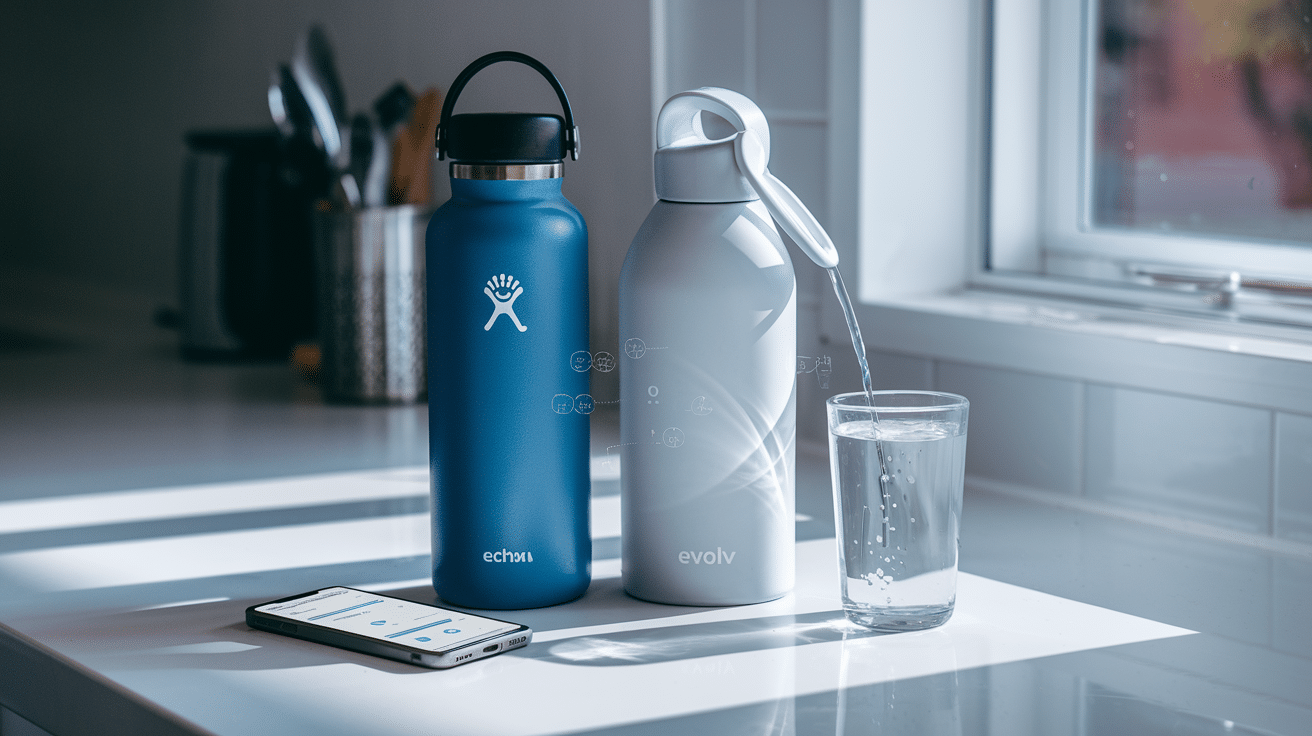
Echo Flask vs Evolv, the short answer: buy the EVOLV. On a matched 10-minute cycle EVOLV publishes 5.4 PPM (parts per million) against Echo’s own published up to 5 PPM, it holds the wider independent-certification record, and it costs roughly a quarter as much. Choose the Echo Flask only if you specifically want its 12 fl oz capacity, the LCD touchscreen and app tracking, or the higher 8 PPM ceiling that its longer 20-minute cycle reaches.
In a world where wellness technology evolves at lightning speed, hydrogen water bottles have emerged as the latest must-have hydration tool. But with options like the beginner-friendly EVOLV and the sophisticated Echo Flask dominating the market, how do you know which one delivers the molecular hydrogen benefits you’re seeking? The difference between settling for basic hydration and experiencing optimal molecular hydrogen concentration could come down to your choice of device.
Imagine taking a sip of water that not only quenches your thirst but potentially delivers powerful antioxidant properties directly to your cells. That’s the promise of hydrogen-infused water, though not all hydrogen bottles are created equal. While the colorful, portable EVOLV offers an accessible entry point with its simple one-button operation and a published 5.4 PPM on its 10-minute cycle, the Echo Flask reaches up to 8 PPM only on its longer 20-minute cycle. On a matched 10-minute cycle, Echo’s own specification page publishes up to 5 PPM. In this comprehensive comparison, we’ll explore how these two leading hydrogen water bottles stack up against each other, helping you determine which device aligns with your hydration goals, lifestyle needs, and budget considerations.
- Product Overview: Echo Flask vs Evolv
- The EVOLV Hydrogen Water Bottle: Perfect for Beginners
- The Echo Flask: Advanced Hydrogen Water Solution
- Making the Right Choice for Your Hydration Needs
- FAQ
- What is the capacity difference between EVOLV and Echo Flask?
- How do the hydrogen concentration levels compare?
- How long does the hydrogen concentration last in each bottle?
- Which device is more user-friendly for beginners?
- Does the Echo Flask offer any smart features?
- Which bottle is more portable?
- Is there a significant price difference?
- The Choice Is Clear: Finding Your Perfect Hydrogen Water Solution
Product Overview: Echo Flask vs Evolv
Side by Side Comparison
| What you are choosing on | Echo Flask | EVOLV | Source |
|---|---|---|---|
| Hydrogen, 10-minute cycle | Up to 5 PPM | 5.4 PPM | Each maker’s own specification page |
| Hydrogen, 20-minute cycle | Up to 8 PPM | 10.8 PPM run as two cycles back to back (EVOLV’s own claim) | Each maker’s own specification page |
| Independent lab measurement | 6.07 mg/L at 10 minutes and 8.25 mg/L at 20, quoted by retailers citing H2 Analytics; not published on Echo’s own site | 4.55 mg/L in 230 ml on the 10-minute cycle | H2HUBB test report, June 2024 |
| Water per cycle | 12 fl oz (350 ml) | 8 fl oz | Maker specification |
| Independent certification | None published on Echo’s specification page | H2 Analytics (reg. 24-0701-1-PB), H2HUBB and SGS, plus FCC, CE and RoHS | Maker sites and lab reports |
| Controls | LCD touchscreen, Bluetooth app | One button, built-in timer | Maker specification |
| Cycles per charge | Up to 7 | Up to 7 at 10 minutes | Maker specification |
| Charging | USB-C | USB-C | Maker specification |
| Warranty | Five years per retailers; not stated on Echo’s specification page | 13 months, plus a 45-day money-back period | Maker sites and retailers |
| Published hydrogen retention | None published by Echo | None published by EVOLV | Both specification pages |
| Price band | The premium option, roughly four times the EVOLV | The budget option | Live listings, checked 17 September 2026 |
One conflict is worth flagging rather than resolving: Echo’s own specification page says up to 5 PPM at 10 minutes, while retailers citing H2 Analytics give 6.07 mg/L on that same cycle. We have reported both and picked neither.
|
Premium Tech Integration

|
Premium Compact Option
|
|
Description: Echo rates the Echo Flask at up to 8 PPM on its 20-minute cycle and up to 5 PPM on a 10-minute cycle, using SPE/PEM electrolysis. It adds a touchscreen LCD and Bluetooth tracking through the Echo Water app. It is the dearer of the two by a wide margin, and Echo publishes neither a certification nor a hydrogen-retention figure for it. The benefits of hydrogen water are not fully established. |
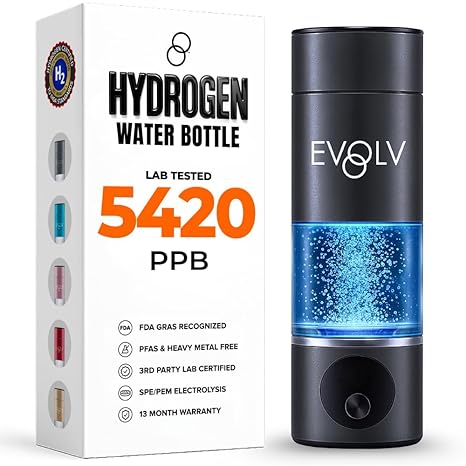
Description: EVOLV publishes 5.4 PPM on its 10-minute cycle, and the independent laboratory H2HUBB measured 4.55 mg/L on that same cycle in June 2024. One-button operation with a digital timer, a 45-day money-back period and a 13-month warranty. Capacity is 8 fl oz, and like any hydrogen bottle it is best drunk soon after generating. |
|
Key Features & Benefits:
|
Key Features & Benefits:
|
|
Pros:
|
Pros:
|
|
Cons:
|
Cons:
|
Echo rates the Echo Flask at up to 8 PPM on its 20-minute cycle and up to 5 PPM on a 10-minute cycle, using SPE/PEM electrolysis. It adds a touchscreen LCD and Bluetooth tracking through the Echo Water app. It is the dearer of the two by a wide margin, and Echo publishes neither a certification nor a hydrogen-retention figure for it. The benefits of hydrogen water are not fully established.
- Smart Hydration Monitoring: LCD touch screen tracks intake and syncs with the Echo Water app
- Hydrogen Output: Echo rates it up to 8 PPM on a 20-minute cycle, and up to 5 PPM at 10 minutes
- Construction: retailers list a PPSU inner bottle; Echo publishes no material on its specification page
- Portable Design: 12 fl oz (350 ml), fits bags and cup holders
- Adjustable Hydrogen Levels: selectable settings on the touchscreen
- Travel-Ready Build: light enough for gym, office and outdoors
- Smart technology integration with app tracking
- The larger capacity of the two at 12 fl oz
- The higher hydrogen ceiling, on its 20-minute cycle
- Easy-to-use touch screen interface
- USB-C charging
- Costs roughly four times what the EVOLV does
- Echo publishes no certification or hydrogen-retention figure for it
- The 8 PPM figure needs the full 20-minute cycle; at 10 minutes Echo publishes up to 5 PPM
EVOLV publishes 5.4 PPM on its 10-minute cycle, and the independent laboratory H2HUBB measured 4.55 mg/L on that same cycle in June 2024. One-button operation with a digital timer, a 45-day money-back period and a 13-month warranty. Capacity is 8 fl oz, and like any hydrogen bottle it is best drunk soon after generating.
- Hydrogen Output: brand-rated 5.4 PPM on the 10-minute cycle; H2HUBB measured 4.55 mg/L independently in June 2024
- Certification: H2 Analytics (reg. 24-0701-1-PB), H2HUBB and SGS, plus FCC, CE and RoHS
- Construction: aircraft-grade aluminum exterior with food-grade polycarbonate interior
- Built-in exhaust valve: vents chlorine and ozone produced during electrolysis
- Safe Materials: BPA-free and heavy-metal tested to SGS
- Capacity: 8 fl oz per cycle
- Higher published hydrogen figure than the Echo Flask on a matched 10-minute cycle (5.4 PPM)
- The better-certified of the two: H2 Analytics, H2HUBB and SGS
- Independently measured at 4.55 mg/L by H2HUBB
- Costs a fraction of what the Echo Flask does
- One-button operation with a built-in timer
- Smaller 8 fl oz capacity per cycle
- One-button interface, with no app or screen
- Requires regular cleaning and maintenance
Both makers publish hydrogen figures, but not for the same cycle length, and that is where almost every comparison of these two goes wrong. Every figure below carries the cycle it belongs to and where it came from: the manufacturer’s own specification page, a named independent laboratory, or not published at all.
A. Capacity and portability differences
The EVOLV hydrogen water bottle offers a more compact design with an 8 fl. oz. capacity. Made from durable polycarbonate and available in five attractive colors, it emphasizes portability and style. Its lightweight construction makes it ideal for on-the-go use. If the underlying technology is new to you, our guide to what hydrogen water bottles actually do covers how SPE/PEM electrolysis works before you spend anything.
In contrast, the Echo Flask provides a larger 12 fl. oz. capacity, giving users 50% more hydrogen-rich water per cycle. While slightly larger than the EVOLV, the Echo Flask maintains a sleek, futuristic design that doesn’t significantly compromise portability.
B. Hydrogen concentration and retention capabilities
The most decision-relevant difference between these bottles is hydrogen output, and it turns entirely on cycle length:
EVOLV: EVOLV publishes 5.4 PPM on its 10-minute cycle. An independent laboratory, H2HUBB, measured 4.55 mg/L in 230 ml on that same cycle in June 2024 — the only like-for-like independent reading either bottle has.
Echo Flask: Echo publishes up to 5 PPM on the 10-minute cycle and up to 8 PPM on the 20-minute cycle. Echo publishes no hydrogen-retention figure at all.
How these numbers are measured
Every hydrogen figure on this page comes from one of three places, and it is worth knowing which. Gas chromatography is the reference method both independent laboratories used, and it is what a number like H2HUBB’s 4.55 mg/L rests on. A manufacturer’s own PPM figure is a claim rather than a measurement until someone independent repeats it.
You can check a bottle yourself with an H2Blue titration kit: you count reagent drops until the blue stops changing, and each drop corresponds to roughly 0.1 ppm. An ORP meter will not do this. ORP measures oxidation-reduction potential, which moves for reasons unrelated to dissolved hydrogen, so a dramatic ORP reading tells you very little about how much H2 is actually in the water.
The units are interchangeable: 1 PPM is 1 mg/L, and 8 PPM is the same figure as the 8000 PPB you will sometimes see quoted on a product listing.
C. Technological features and ease of use
The EVOLV emphasizes simplicity with a one-button operation to initiate the electrolysis process and an integrated timer. This straightforward approach makes it particularly user-friendly for newcomers to hydrogen water.
The Echo Flask offers more sophisticated technology:
- Bluetooth connectivity
- Companion app for hydration tracking
- User-friendly touchscreen interface
- Advanced electrolysis system
These features provide a more customized and data-driven hydration experience for tech-savvy users.
D. Price point and value proposition
EVOLV is the cheaper bottle by a wide margin — roughly a quarter of what the Echo Flask costs at the listings we checked — while publishing the higher figure of the two on a matched 10-minute cycle.
The Echo Flask costs several times more. What that buys is capacity, an LCD touchscreen, app tracking and a higher ceiling on the 20-minute cycle. It does not buy more hydrogen on the 10-minute cycle, where Echo’s own specification page publishes a lower figure than EVOLV’s.
E. Ideal user profiles for each bottle
EVOLV is ideal for:
- First-time hydrogen water users
- Budget-conscious consumers
- Those prioritizing simplicity and portability
- Users wanting to test hydrogen water benefits before investing more
Echo Flask is perfect for:
- Experienced hydrogen water enthusiasts
- Those seeking maximum molecular hydrogen concentration
- Tech-savvy users who appreciate smart device integration
- People who need flexibility in when they consume their hydrogen water
The EVOLV Hydrogen Water Bottle: Perfect for Beginners
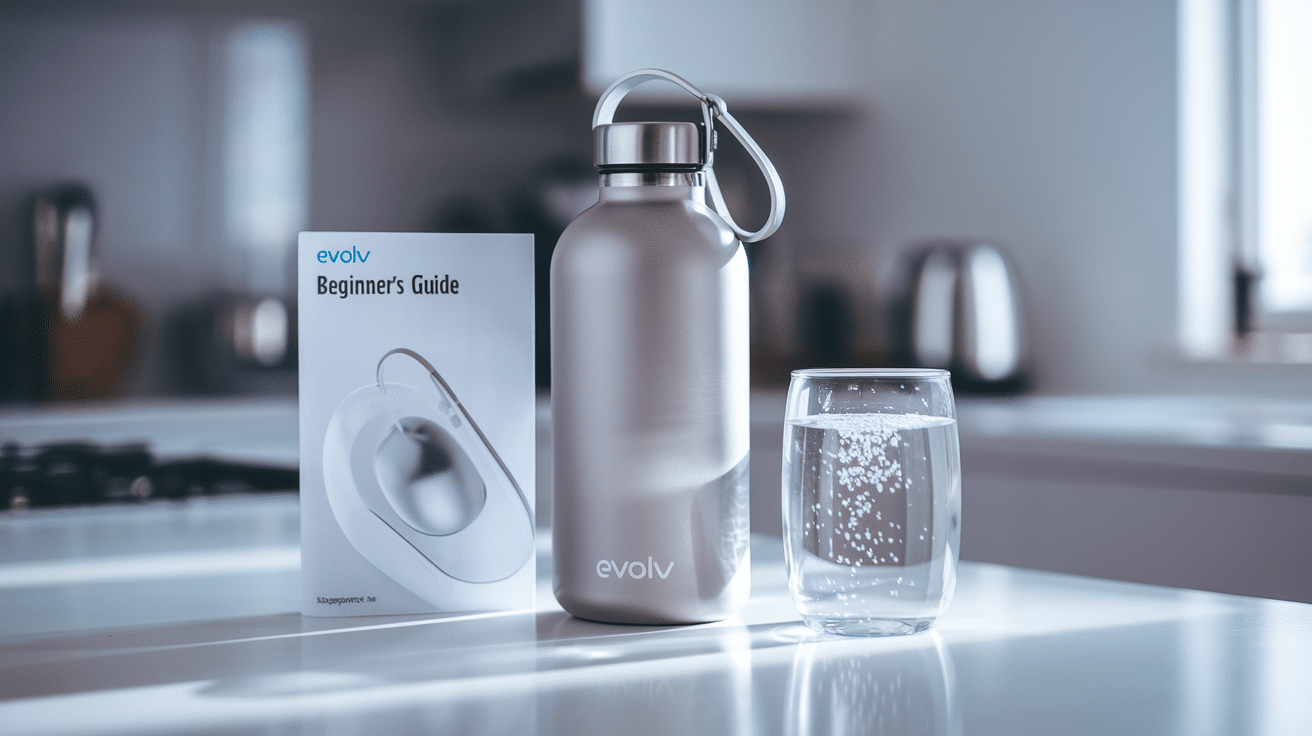
The EVOLV Hydrogen Water Bottle stands out as an excellent entry point for those new to hydrogen-enriched water. This portable solution effectively enhances your daily hydrogen water intake while offering convenience and simplicity that beginners will appreciate. We go through the specifications, the certification record and the owner complaints in our evolv review.
Compact and Stylish Design Available in Five Colors
The EVOLV bottle features a lightweight and compact design that makes it perfect for on-the-go hydration. Its sleek profile allows for easy transportation, fitting comfortably in bags, cup holders, or your hand. With five vibrant color options, you can select a bottle that matches your personal style while enjoying the benefits of hydrogen-rich water wherever you go.
Simple One-Button Operation with Built-in Timer
One of the most appealing aspects of the EVOLV bottle for beginners is its user-friendly interface. The device operates with a single button that starts the hydrogen generation process. The integrated digital timer eliminates guesswork, allowing you to track the 10-minute cycle needed to achieve optimal hydrogen concentration. This straightforward operation makes it accessible even for those with no prior experience with hydrogen water technology.
8 fl. oz. Capacity with Durable Polycarbonate Construction
While the 8 fl oz capacity may require frequent refills for heavy water drinkers, it’s perfectly sized for regular sipping throughout the day. The bottle is constructed from high-quality materials, including BPA-free polycarbonate and aircraft-grade aluminum, ensuring durability while maintaining a lightweight feel. The construction is solid enough for daily use.
Hydrogen output: 5.4 PPM on the 10-minute cycle
The EVOLV bottle uses high-pressure electrolysis to generate molecular hydrogen. After completing the 10-minute cycle, EVOLV publishes 5.4 PPM of dissolved hydrogen after the 10-minute cycle, and H2HUBB measured 4.55 mg/L independently in June 2024. The electrolysis process works without adding unpleasant tastes or odors to your water.
Quick Hydrogen Dissipation Requiring Immediate Consumption
One important consideration with the EVOLV bottle is that the hydrogen concentration gradually decreases after generation. No published test supports a specific figure for how quickly the EVOLV’s hydrogen falls away, so we are not going to invent one. This characteristic is common among portable hydrogen water generators but is particularly notable with smaller-capacity bottles like the EVOLV.
For beginners, the EVOLV offers additional advantages including low maintenance requirements, a supportive 45-day money-back guarantee, and a 13-month warranty backed by responsive customer service. The 1500 mAh rechargeable battery provides approximately seven cycles per charge, making it practical for active lifestyles.
The Echo Flask: Advanced Hydrogen Water Solution
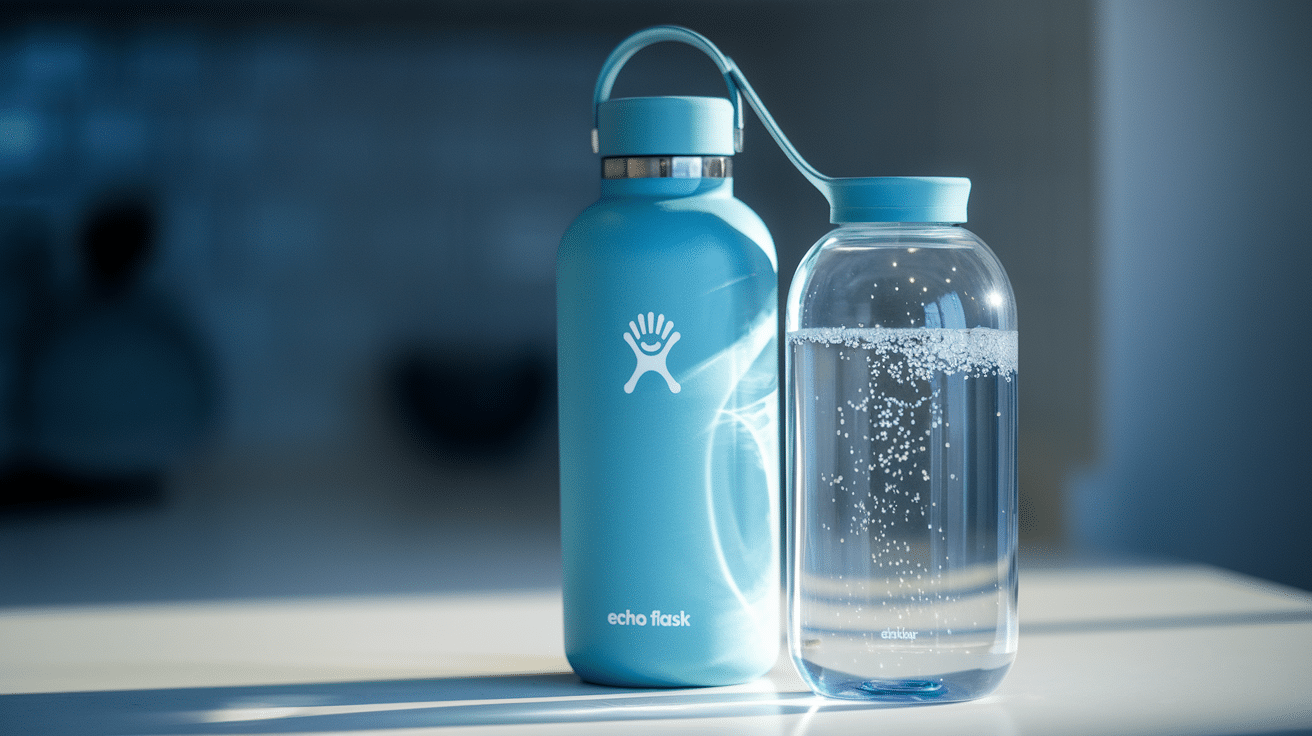
The Echo Flask is the larger and far more expensive of the two, and it is the model Echo puts at the top of its portable range. For the full breakdown of what Echo publishes and what it does not, see our standalone Echo Flask review.
Sophisticated Design with Larger 12 fl. oz. Capacity
The Echo Flask boasts a sleek, modern design crafted from high-performance PPSU plastic that eliminates the risks associated with glass while maintaining exceptional durability and safety. This generator holds 12 fl oz of water, half as much again as the EVOLV’s 8 fl oz. The elegant design features illuminated panels that give it a premium, tech-forward appearance worthy of its advanced capabilities.
Hydrogen output: 8 PPM at 20 minutes, 5 PPM at 10
Echo’s headline figure for the Flask is its hydrogen concentration. Using SPE/PEM electrolysis with platinum-coated titanium plates, the Echo Flask reaches up to 8 PPM on its 20-minute cycle. On the 10-minute cycle, Echo’s own specification page publishes up to 5 PPM. Research into molecular hydrogen is still early, and neither maker’s figures establish a health outcome. Treat a PPM number as a specification, not a promise.
How long the hydrogen lasts
Retention is where this comparison usually travels furthest beyond the evidence. Echo publishes no hydrogen-retention figure for the Flask on its specification page. The 10-hour number repeated across most comparisons traces back to one blogger’s informal readings, and even there it follows the 20-minute cycle rather than the 10-minute one. Dissolved hydrogen escapes any container over time, which is why both makers tell you to drink soon after generating. Treat an unopened bottle as a short window, not a day-long one.
Smart Features Including Bluetooth Connectivity and Companion App
Taking hydrogen water technology to the next level, the Echo Flask features Bluetooth connectivity that pairs with a dedicated companion app. This smart integration allows users to customize their hydrogen water experience, track their hydration habits, and monitor hydrogen concentration levels. Though the app occasionally experiences minor glitches, the developers regularly release updates to enhance functionality and user experience.
User-Friendly Touchscreen Interface for Enhanced Control
Despite its advanced technology, the Echo Flask remains accessible through an intuitive LCD touchscreen interface. Users can easily select different hydrogen concentration levels, monitor battery life, and initiate the self-cleaning cycle with just a few taps. The device is powered by a robust lithium-ion battery that supports up to seven electrolysis cycles per charge and features convenient USB-C charging.
Echo’s Echo Flask specification page publishes neither a warranty length nor a material, so the five-year warranty and PPSU inner bottle quoted by retailers are seller claims rather than published specifications. Independent certification is where the two genuinely diverge: EVOLV publishes H2 Analytics certification (registration 24-0701-1-PB, against IHSA and US EPA standards) alongside H2HUBB and SGS testing, plus FCC, CE and RoHS compliance. Echo publishes no certification on its Echo Flask specification page.
Making the Right Choice for Your Hydration Needs
Budget Considerations and Investment Value
When comparing these two hydrogen water bottles, price is a significant factor to consider:
EVOLV: The cheaper bottle by a wide margin, and the better-certified one. One-button operation, a built-in timer, and 5.4 PPM published on the 10-minute cycle.
Echo Flask: Several times the price. You are paying for the 12 fl oz capacity, the touchscreen and the app, plus a higher 8 PPM ceiling that needs the full 20-minute cycle to reach.
Usage Patterns and Lifestyle Compatibility
Your daily routine and lifestyle needs should heavily influence your choice:
For Active Individuals: The EVOLV’s lightweight design and portability (despite its smaller 8 fl. oz. capacity) make it suitable for on-the-go use. However, the requirement to consume hydrogen water immediately after production may not align with busy schedules.
For Technology Enthusiasts: The Echo Flask’s Bluetooth connectivity and companion app for hydration tracking offer a more integrated experience for those who value data-driven health management.
For Frequent Travelers: Consider that the EVOLV comes in five attractive colors and is more compact, while the Echo Flask offers greater capacity (12 fl. oz.) and longer hydrogen retention for flexible consumption throughout the day.
Technical Preferences and Feature Requirements
Your technical expectations will significantly impact satisfaction:
Simplicity Seekers: The EVOLV’s straightforward one-button operation and built-in timer make it exceptionally user-friendly for beginners or those who prefer minimalist functionality.
Advanced Users: The Echo Flask adds a touchscreen interface, app tracking, and a higher ceiling on its 20-minute cycle.
Material Considerations: The EVOLV is constructed from durable polycarbonate, balancing lightweight portability with adequate durability for daily use.
Long-term Benefits and Satisfaction Factors
Looking beyond immediate features to long-term value:
Hydrogen Concentration: Compare like with like. On the 10-minute cycle Echo publishes up to 5 PPM and EVOLV publishes 5.4 PPM. The Echo Flask only pulls ahead if you run its 20-minute cycle.
Retention Capabilities: Neither maker publishes a retention figure, so this is not a difference either brand stands behind. Drink it soon after generating, whichever you buy.
Adaptability: If you later want the 20-minute cycle’s higher ceiling, the app or the larger capacity, that is the upgrade the Echo Flask represents. Hydrogen output on the 10-minute cycle is not the reason to move.
Where each one genuinely wins
EVOLV is stronger on:
- Price. It costs roughly a quarter of what the Echo Flask does, and that is the single largest difference between them.
- Independent verification. It holds H2 Analytics, H2HUBB and SGS results plus FCC, CE and RoHS compliance, where Echo publishes no certification on its specification page.
- Hydrogen per 10-minute cycle. Its published 5.4 PPM is marginally ahead of Echo’s own up to 5 PPM on the same cycle.
The Echo Flask is stronger on:
- Capacity. 12 fl oz against 8, so fewer refills for the same daily intake.
- Peak output. Its 20-minute cycle reaches a higher ceiling than a single 10-minute EVOLV run.
- Interface. An LCD touchscreen and Bluetooth app tracking, where EVOLV gives you one button and a timer.
If neither of these is the right fit
Both bottles here are electrolysis generators in the same size class, so if neither suits you the useful next step is usually a different size or price tier rather than a different brand. Two adjacent models are covered elsewhere on this site: how the Echo Go compares, and where the Echo Go+ fits for the tier in between.
FAQ
These are the questions readers ask most when choosing between the two. Every figure below names the cycle length it belongs to and the source it came from.
What is the capacity difference between EVOLV and Echo Flask?
The EVOLV hydrogen water bottle has an 8 fl. oz. capacity, which some users might find limiting. In comparison, the Echo Flask offers a larger 12 fl. oz. capacity, making it more suitable for those who need more hydrogen-rich water throughout the day.
How do the hydrogen concentration levels compare?
On the same 10-minute cycle, EVOLV publishes 5.4 PPM and Echo publishes up to 5 PPM — so they are close, and EVOLV is marginally ahead on the makers’ own numbers. The Echo Flask’s headline 8 PPM needs its 20-minute cycle. Most comparisons miss this because they set Echo’s 20-minute figure against EVOLV’s 10-minute one.
How long does the hydrogen concentration last in each bottle?
Neither manufacturer publishes a retention figure, so we cannot give you a sourced number for either bottle. The widely repeated 10-hour claim for the Echo Flask traces to a single secondary source rather than to Echo. Dissolved hydrogen escapes any container over time, so drink it soon after generating.
Which device is more user-friendly for beginners?
The EVOLV is designed specifically with beginners in mind, featuring a simple one-button operation and a timer for the electrolysis process. The Echo Flask, while more advanced, offers a user-friendly touchscreen interface that’s intuitive despite its additional features.
Does the Echo Flask offer any smart features?
Yes, the Echo Flask includes Bluetooth connectivity and a companion app for hydration tracking, making it a high-tech solution for those interested in monitoring their hydrogen water consumption. The EVOLV does not offer these smart features.
Which bottle is more portable?
The EVOLV hydrogen water bottle is lightweight, compact, and available in five attractive colors, making it highly portable. The Echo Flask is the bigger unit. Echo lists it at 10 x 3 x 2 inches and 1 lb, against the EVOLV’s smaller 8 fl oz body.
Is there a significant price difference?
Yes, and it is a large gap — the Echo Flask costs roughly four times what EVOLV does. That premium buys capacity, the touchscreen and the app. It does not buy a higher hydrogen figure on the 10-minute cycle, where EVOLV’s published number is the higher of the two.
The Choice Is Clear: Finding Your Perfect Hydrogen Water Solution
For almost everyone, EVOLV is the one to buy. It publishes the higher hydrogen figure on a matched 10-minute cycle, it holds the broader independent-certification record, and it costs roughly a quarter of what the Echo Flask does. Buyers rate it higher too, on a larger sample.
Buy the Echo Flask only if you specifically want what the extra money actually buys: 12 fl oz instead of 8, an LCD touchscreen, app-based tracking, and the higher 8 PPM ceiling its 20-minute cycle reaches. Those are real differences and some people will want them. They are simply not the differences this comparison has been claiming.
