


We earn from qualifying purchases. As an Amazon Associate, waterbottleinfo.com earns a commission on qualifying purchases made through links on this page, at no extra cost to you.
The global reusable water bottle market is expanding rapidly, driven by eco-conscious consumers eager to eliminate single-use plastics while upgrading their daily hydration habits. However, stepping into the world of premium insulated drinkware often comes with unexpected sticker shock. As legacy name brands continue to push their prices upward—frequently charging $40 to $50 or more for a standard flask—finding a durable bottle that balances top-tier thermal performance with true affordability has become increasingly difficult.
Enter the Konokyo insulated water bottle; for the bigger names it competes with, see our insulated water bottle rankings. Operating firmly on a “form and function over logos” philosophy, Konokyo is rapidly gaining traction as a highly capable, budget-friendly alternative to the industry giants. Promising premium build materials like 18/8 food-grade stainless steel, robust double-wall vacuum insulation, and an incredibly versatile multi-lid system right out of the box, the brand aims to deliver high-end, all-day hydration without the premium price tag.
But does it actually hold its own against the rigors of daily use?
In this comprehensive review, we will break down exactly what makes this bottle stand out. We set out what Konokyo claims, what its own retail listings say, what more than nine thousand owners report, and how the bottle compares with the obvious budget and premium alternatives. No laboratory or field testing was carried out for this review, and every figure below is attributed to its source.
The Short Verdict
The Konokyo is a three-lid, 18/8 stainless steel insulated bottle sold well below the price of the premium brands it resembles. On paper it matches them: the same steel grade, the same published retention figures, and two more lids in the box than a Hydro Flask ships with.
What it does not have is independent verification. Konokyo publishes no test data, its care instructions contradict each other across its own channels, and owner reports on temperature retention and leaking divide rather than confirm. That is the trade you are making at this price.
Buy it if you want three lids and a low price and can live with that uncertainty. Choose Iron Flask if you want the same three-lid idea with a far larger body of owner feedback behind it. Choose Hydro Flask if you would rather pay more for a bottle whose listing states it is dishwasher safe and whose reputation is settled.

The Konokyo is an 18/8 stainless steel, double-wall vacuum bottle that ships with three lids: a sip lid, a straw lid and a flex-removable handle lid, where most bottles this size include one. Konokyo states up to 24 hours cold and up to 12 hours hot, the same figures Iron Flask and Hydro Flask publish for their own 32 oz bottles, and it sells well below either of them. What it lacks is independent verification. Konokyo publishes no test data, and its care instructions contradict each other across its own channels. Across a review base of more than nine thousand for the whole size range, quality and value draw the most consistent praise, while temperature retention, leaking and durability divide opinion rather than confirm the claims.
- 18/8 (Type 304) food-grade stainless steel with double-wall vacuum construction
- Three lids in the box: sip, straw and a flex-removable handle lid
- Maker states up to 24 hours cold and up to 12 hours hot
- Sold in 18, 22, 24, 32 and 40 oz; the 32 oz is the size reviewed here
- BPA-free lids, each sealing on a silicone gasket
- Non-sweat exterior; condensation rarely appears in owner complaints
- Three lids included, where most rivals this size ship one
- Quality and value are the two most-discussed aspects in the owner pool, both positively
- The same steel grade and the same published retention figures as bottles costing far more
- Wide size range, from 18 oz through 40 oz
- BPA-free lids sealing on silicone gaskets
- Care instructions contradict each other across Konokyo's own channels
- The handle is the most common specific durability complaint owners raise
- Temperature retention, leaking and ice retention all divide owner opinion
- The flex-removable lid ships in one of two styles at random, so you cannot choose it
- Konokyo publishes no measurement data of its own for any of its claims
How the Konokyo Compares
This review is about one bottle, but a value verdict only means something against alternatives. The two below are the obvious ones: Iron Flask sells the same three-lids-in-the-box idea a tier up, and Hydro Flask is the premium bottle Konokyo is priced against. All three publish the same headline retention figures, so the differences worth knowing are the lid count, the care instructions and how much owner feedback stands behind each.
|
The Bottle Reviewed Here
|
Most Owner Feedback

|
Premium Pick

|
|
Key Features & Benefits:
|
Key Features & Benefits:
|
Key Features & Benefits:
|
|
Pros:
|
Pros:
|
Pros:
|
|
Cons:
|
Cons:
|
Cons:
|
- 18/8 stainless steel, double-wall vacuum
- Three lids in the box: sip, straw and a flex-removable handle lid
- Maker states up to 24 hours cold and up to 12 hours hot
- Care instructions conflict across the maker's own channels
- Sold well below both rivals
- Three lids included, where most rivals this size ship one
- Quality and value are the two most-discussed aspects in the owner pool
- Same steel grade and same published retention figures as bottles costing far more
- Wide size range, 18 oz through 40 oz
- Care instructions contradict each other across Konokyo's own channels
- The handle is the most common specific durability complaint owners raise
- Temperature retention, leaking and ice retention all divide owner opinion
- The flex-removable lid ships in one of two styles at random
- 18/8 stainless steel, double-wall vacuum
- Three lids in the box: carabiner straw, flip and stainless
- Maker states up to 24 hours cold and up to 12 hours hot
- Listing states hand wash only
- Much the largest body of owner feedback of the three
- Three lids in the box, the same idea as the Konokyo
- Much the largest owner-feedback base of the three
- Maker states all three lids are leakproof
- Replacement lids easy to buy separately
- Listing states hand wash only, in capital letters
- Sits above the Konokyo on price
- Maker notes only the 14, 18 and 22 oz sizes fit a cup holder
- Pro-grade stainless steel with TempShield double-wall vacuum
- One Flex Cap in the box; other lids sold separately
- Maker states up to 24 hours cold and up to 12 hours hot
- Listing states dishwasher safe
- The premium anchor of the three
- Listing states the bottle is dishwasher safe, which neither rival's listing does
- TempShield double-wall vacuum insulation
- Maker states the Flex Cap is leakproof
- A long-established brand with a large owner base
- One Flex Cap in the box; other lids are sold separately
- The most expensive of the three
- Fewer owner reports than the Iron Flask
Why the Konokyo is Gaining Popularity
The Search for a Good Insulated Water Bottle
If you have spent any time in online forums or communities lately, you have likely seen the recurring question: “What is a good insulated water bottle to get?” The urgency behind this search goes far beyond simply wanting a cold drink at the gym. Consumers are becoming hyper-aware of the environmental and health risks associated with microplastics in disposable bottles. As a result, the global demand for stainless steel insulated bottles is surging. Shoppers are actively migrating away from plastic and single-wall aluminum toward double-wall vacuum-sealed options that offer durability, non-toxic materials, and reliable all-day temperature control.
However, as the demand for these sustainable daily drivers has grown, so has the baseline cost of entry. If you are still deciding which type of bottle suits you, our complete insulated water bottle guide covers how vacuum insulation works and what separates the tiers.
Premium Features Without the Premium Price
This is exactly where the Konokyo bottle has carved out its market share. It directly addresses the “Best Bang for the Buck” metric that savvy shoppers are looking for.
Historically, to get top-tier thermal retention and food-grade materials, you had to pay a premium for a recognizable logo. Konokyo disrupts this by offering the exact same baseline specifications as the most expensive brands on the market, but positioned at a budget-friendly price point.
Instead of stripping away features to lower the cost, Konokyo includes them as standard. When you purchase a Konokyo, you are not just getting the vacuum-insulated flask; you are getting the sweat-proof powder coating, the protective silicone base, and multiple interchangeable lids—accessories that other major brands often force you to buy separately for $10 to $15 each. This all-inclusive approach is the primary reason the brand is rapidly transitioning from an unknown alternative to a highly recommended daily hydration tool.
Material Quality & Insulation Performance
18/8 Stainless Steel & Build Durability
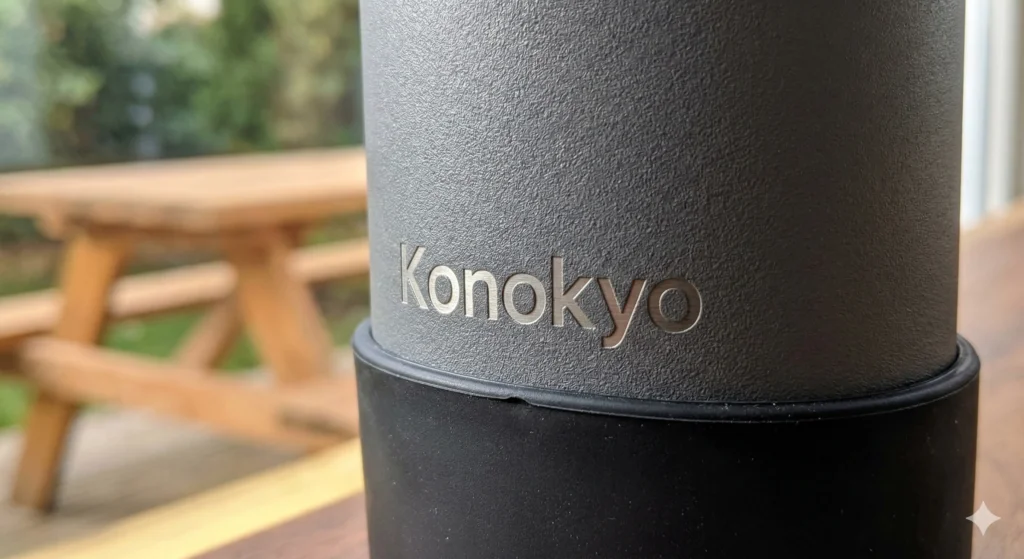
When evaluating any daily-use water bottle, the core construction material dictates both its lifespan and its safety. Konokyo utilizes 18/8 food-grade stainless steel, also known in the metallurgical industry as Type 304. The “18/8” designation refers to its composition: 18% chromium and 8% nickel.
This specific alloy is the gold standard for high-end kitchenware and medical equipment for a reason. The chromium binds with oxygen to create a highly durable, invisible layer that prevents rust and corrosion, while the nickel adds structural strength and a sleek finish. More importantly for daily hydration, 18/8 stainless steel is non-reactive. This means it will not leach harmful chemicals or retain phantom flavors from yesterday’s pre-workout mix or coffee, so water stored in it does not pick up stray flavors.
Konokyo takes this premium steel core and wraps it in a sweat-proof, textured powder coating. To further bolster its durability, they include a specialized rubberized silicone boot that protects the base from drops and prevents the loud “clank” when setting the bottle down on hard surfaces—a thoughtful addition that drastically extends the bottle’s aesthetic lifespan.
What Konokyo Claims on Temperature
What matters most in an insulated bottle is thermal retention, and Konokyo advertises 24 hours for cold beverages and 12 hours for hot ones. These numbers are made possible through the thermodynamics of double-wall vacuum insulation.
Here is how the science works in practical terms: the bottle is actually constructed of two stainless steel walls nested within each other. During manufacturing, the air between these two walls is completely extracted, creating a vacuum. Because heat requires a medium (like air molecules) to travel through, this vacuum effectively eliminates heat transfer via conduction and convection.
No independent measurement of the Konokyo was available for this review, and none was carried out here. What can be reported is the pattern in owner feedback. Across the roughly 850 owner reports that discuss temperature retention, opinion divides rather than settles: many describe all-day cold retention, and a meaningful number say it fell short of the claim. Reports about ice retention split the same way. Treat the 24-hour and 12-hour figures as Konokyo’s design target rather than a result you should count on.
Design, Sizes, and Versatility
Capacity Options for Every Need
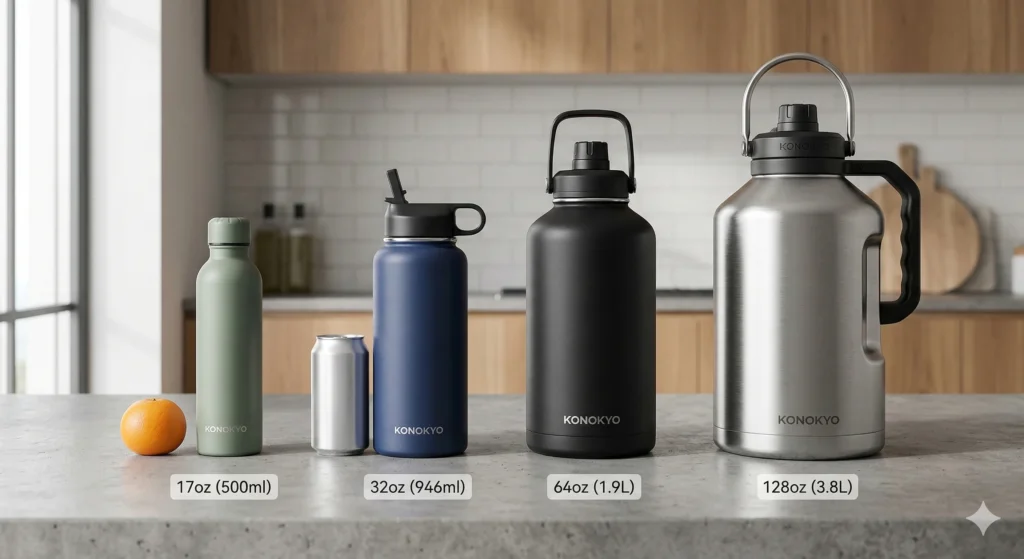
One of the most significant advantages of the Konokyo lineup is its vast array of sizing options, ensuring there is a perfect fit for every specific lifestyle and hydration goal.
Medical professionals and institutions like the Mayo Clinic note that daily fluid intake needs vary significantly based on activity level and environment, generally recommending between 11.5 to 15.5 cups of fluids a day for healthy adults. Trying to meet this goal with a standard, small-capacity bottle often leads to the frustration of constant refilling, which is where Konokyo’s sizing variety shines.
For standard daily commuting or fitting into a car cup holder, their 18oz, 22oz and 24oz models are ideal. They are lightweight and highly portable. If you want a great deal more capacity, Konokyo also sells 64oz, 87oz and 128oz jugs. Those are a separate product line with their own handle design rather than larger versions of the bottle reviewed here, so treat them as a different purchase.
Coupled with a wide array of aesthetics—ranging from tactical solid colors to vibrant patterns like “Marble Blossom” and “Bamboo Grove”—it is incredibly easy to find a bottle that matches both your physical needs and your personal style.
The 3-Lid System Explained
Perhaps the most universally praised feature in user reviews is Konokyo’s inclusion of multiple lids. While premium competitors typically force you to purchase specialized lids as aftermarket accessories, Konokyo includes a 3-lid system right in the box for most of their standard sizes.
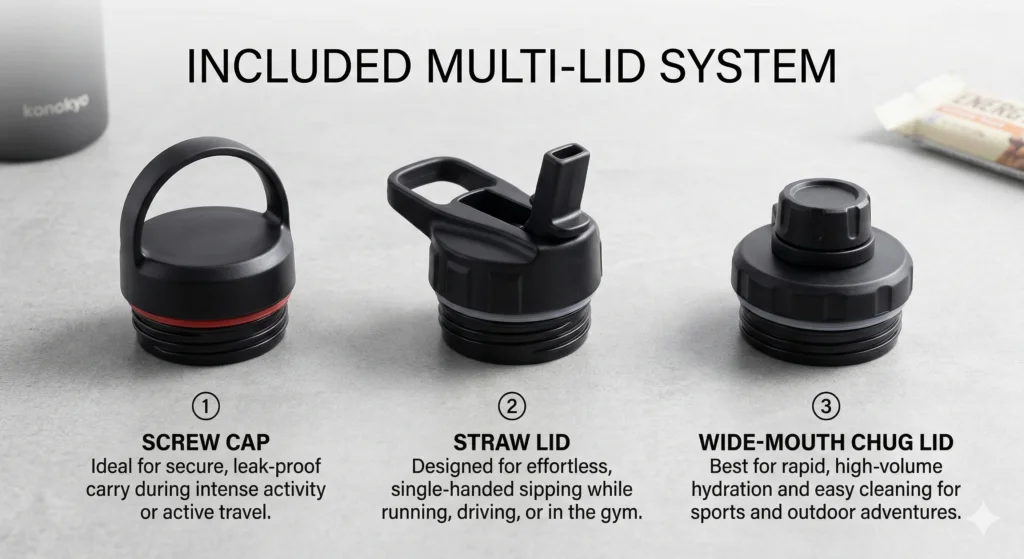
- The Straw Lid: Perfect for upright, one-handed drinking. This is the go-to choice for driving or running on a treadmill, where tilting a bottle back would be distracting or dangerous.
- The Sip / Hot Lid: Specifically engineered with a smaller, controlled opening. Because the vacuum insulation keeps coffee or tea scalding hot for hours, this lid prevents you from accidentally taking a massive, burning gulp.
- The Flex-Removable Handle Lid: A lidded carry handle for moving the bottle around. Konokyo notes that this one ships in one of two handle styles, chosen at random, so the exact lid in your box is not something you can pick.
Importantly, all of these lids are manufactured from BPA-free plastics, ensuring that even when the bottle is left in a hot car, no harmful bisphenol-A chemicals will leach into your drinking water. Furthermore, each lid features a high-quality silicone gasket, which is what Konokyo’s leak-proof description rests on.
Konokyo vs. Top Name Brands
Price Comparison
When you compare the Konokyo water bottle directly against industry giants like Yeti, Hydro Flask, or Stanley, the most glaring difference is the price tag. A standard 32oz or 36oz bottle from a premium name brand will typically set you back anywhere from $40 to $55. In stark contrast, a similarly sized Konokyo bottle frequently retails for less than half that amount.
Why is the price gap so massive? It largely comes down to the economic principle of brand equity and premium pricing. Legacy hydration brands spend millions of dollars annually on aggressive lifestyle marketing, celebrity endorsements, and massive retail displays. As a consumer, you are paying a significant markup simply for the logo stamped on the side of the steel.
Konokyo, on the other hand, operates with a much leaner marketing budget. By minimizing these overhead costs, they can offer the same core materials at a fraction of the price. In practical terms, this means you could purchase a Konokyo bottle for the gym, another for the office, and still spend less than you would on a single name-brand flask. Furthermore, as discussed earlier, the inclusion of three lids and a silicone boot saves you the extra $15 to $20 that premium brands charge for aftermarket accessories and lid upgrades.
Performance Differences
The natural assumption is that a cheaper bottle must perform worse. However, when it comes to insulated stainless steel, the technology is universal.
Almost all modern insulated water bottles, regardless of the brand, rely on the exact same scientific foundation: the Dewar flask invention from 1892. Because the physics of creating a vacuum between two walls of 18/8 stainless steel cannot be patented or monopolized by one company today, the brands all publish very similar retention claims.
Konokyo, Iron Flask and Hydro Flask all publish the same headline figures for their 32 oz bottles: up to 24 hours cold and up to 12 hours hot. That is claim parity, not measured parity, and no independent comparison of the three was carried out for this review.
So, what are the actual differences?
- Finish Durability: Some users report that the powder coating on premium brands like Yeti might withstand commercial dishwasher cycles slightly better over a period of several years, whereas Konokyo is best maintained with hand washing.
- Color Exclusivity: Giant brands offer limited-edition seasonal colors that drive collector markets.
- Warranty: Legacy brands often have heavily established, streamlined lifetime warranty programs, whereas budget-friendly brands may have a slower customer service pipeline.
Ultimately, if your primary goal is temperature retention, leak-proof design, and durability without paying the “logo tax,” the specifications Konokyo publishes are close to what the top-tier brands publish.
Pros and Cons of the Konokyo Bottle
To provide a truly balanced review, it is essential to look beyond the marketing claims and look at what owners report after months of ownership. While the Konokyo gets almost everything right for its price point, no product is entirely without flaws. Here is our honest breakdown of where the bottle excels and where it falls slightly short.
What Owners Consistently Praise
- Exceptional Overall Value: The most obvious advantage is the cost-to-performance ratio. By offering premium thermal retention at a fraction of the cost, Konokyo makes it significantly easier for consumers to transition away from harmful single-use plastic bottles, saving money in the long run while reducing environmental waste.
- All-Inclusive Lid System: Unlike brands that nickel-and-dime you for accessories, having the straw, sip and handle lids included straight out of the box is a massive win. It allows you to seamlessly transition from sipping hot coffee on your morning commute to chugging cold water at the gym without needing to buy extra parts.
- Reliable Temperature Retention: Konokyo states up to 24 hours cold and up to 12 hours hot; owner reports on whether it holds are mixed. This reliability is crucial for outdoor enthusiasts or those working long shifts who need consistent hydration to maintain physical performance.
- A non-sweat exterior: Konokyo describes the double-wall design as non-sweating, and owners rarely raise condensation as a complaint, which keeps a desk dry and the bottle easier to grip.
What Could Be Improved
- The Weight of High-Capacity Models: While the massive 87oz and 128oz sizes are fantastic for all-day hydration, they become exceptionally heavy when fully loaded. Because a single gallon of water weighs approximately 8.34 pounds, a fully filled 128oz Konokyo jug (plus the weight of the stainless steel itself) can be quite cumbersome for one-handed use, even with the included paracord handle.
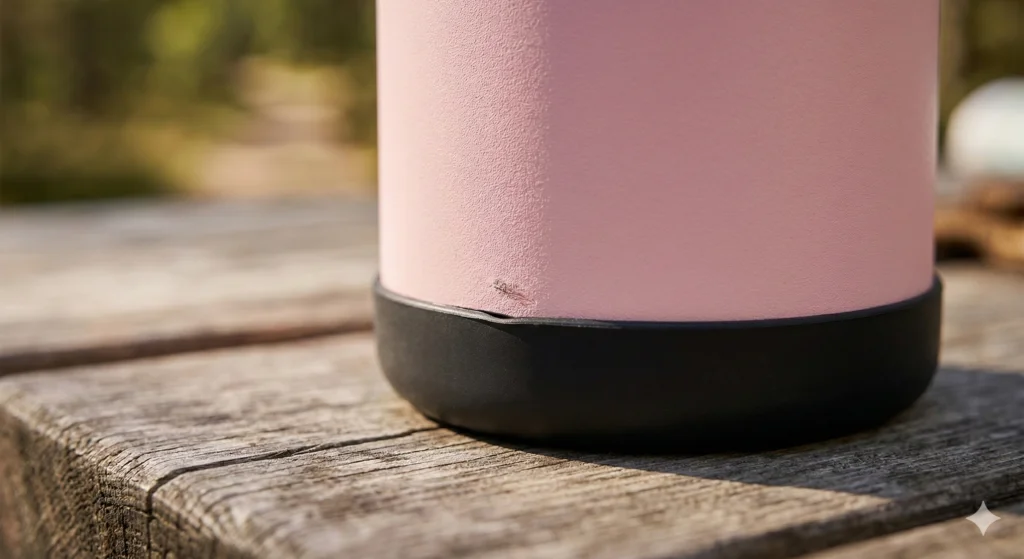
- Silicone Boot Stretching: The included rubberized base is excellent for preventing dents and dampening noise. However, silicone rubber can gradually stretch or lose its elasticity over time when subjected to constant friction or extreme temperature changes. Some users report that after several months of heavy use, the boot can become loose and occasionally slip off.
- Lid Maintenance: While having three lids is a major pro, the straw and sip lids feature small, moving plastic components. If not scrubbed and completely dried regularly, these tight, damp crevices can become susceptible to mildew or mold growth. They require more diligent cleaning than a simple, wide-mouth screw cap.
Frequently Asked Questions (FAQ)
What is the best water bottle on the market right now?
The “best” bottle is highly subjective and depends entirely on your daily routine. According to market research on consumer preferences for reusable bottles, the ideal choice balances capacity, insulation, and lifestyle fit. If you need a status symbol with endless colorways, premium brands like Yeti or Hydro Flask often take the crown. However, if your definition of “best” means securing premium thermal retention, durable 18/8 stainless steel, and multiple lid options without overpaying, the Konokyo bottle is currently one of the strongest contenders on the market.
What are your favorite stainless steel water bottles?
For everyday use we point readers toward Type 304 (18/8) food-grade stainless steel, double-wall vacuum insulation and a modular lid system, because those three things account for most of the difference between bottles at this price. The Konokyo meets all three on paper, which is what makes it interesting at its price; what it lacks is any independent verification of the performance those specifications imply.
Is the Konokyo water bottle leak-proof?
Konokyo describes all three lids as leak-proof, and each seals on a silicone gasket. Owner reports are more mixed than that: across roughly 350 reports that mention leaking, most describe no problem while a persistent minority report leaks. Treat leak-proof as the design intent rather than a guarantee, and check the gasket is seated before a lid goes into a bag.
This is achieved through the use of high-quality, food-grade silicone O-rings integrated into each of the three lids. When you screw the lid onto the stainless steel threads, the silicone compresses, creating an airtight and watertight mechanical seal. Whether you are using the straw lid on a treadmill or tossing the tightly sealed handle lid into a backpack, you do not have to worry about spills ruining your gear.
Are Konokyo bottles dishwasher safe?
Konokyo’s own sources do not agree, so it is worth setting this out plainly rather than giving you a single answer.
Konokyo’s website lists the bottle as dishwasher safe, top rack recommended. On Amazon, the care field reads Machine Wash on some colourways of the same 32 oz model and Hand Wash Only on others. Owners add a fourth voice, and some report running it through the dishwasher without trouble. Four sources, three different instructions, one product line. Until Konokyo resolves that, hand washing is the only option that is safe under every one of those instructions, and it is what the most restrictive of them requires. For comparison, Hydro Flask’s listing states its bottle is dishwasher safe and Iron Flask’s states hand wash only in capital letters, so inconsistency across this category is not unusual.
Final Verdict: Should You Buy It?

If you are tired of paying a premium just for a logo, the Konokyo water bottle is absolutely worth your money. It successfully bridges the gap between high-end performance and everyday affordability. By delivering true double-wall vacuum insulation, durable food-grade materials, and an incredibly generous 3-lid system right out of the box, it effectively renders the $50 name-brand alternatives largely unnecessary for the average consumer.
Whether you are trying to meet your daily hydration goals at the office, looking for a rugged companion for weekend hikes, or simply trying to embrace the economic and environmental benefits of reducing waste, the Konokyo is a smart, reliable investment. It proves that you do not need to empty your wallet to secure top-tier performance.